Oreochromis aureus
Blue tilapia
(c) Juan Paulo Carbajal-Borges, some rights reserved (CC BY-SA) · licence
Family: Cichlidae · Class: Teleostei · Order: Perciformes
Oreochromis aureus (Blue tilapia) is a California animal in the Cichlidae family.
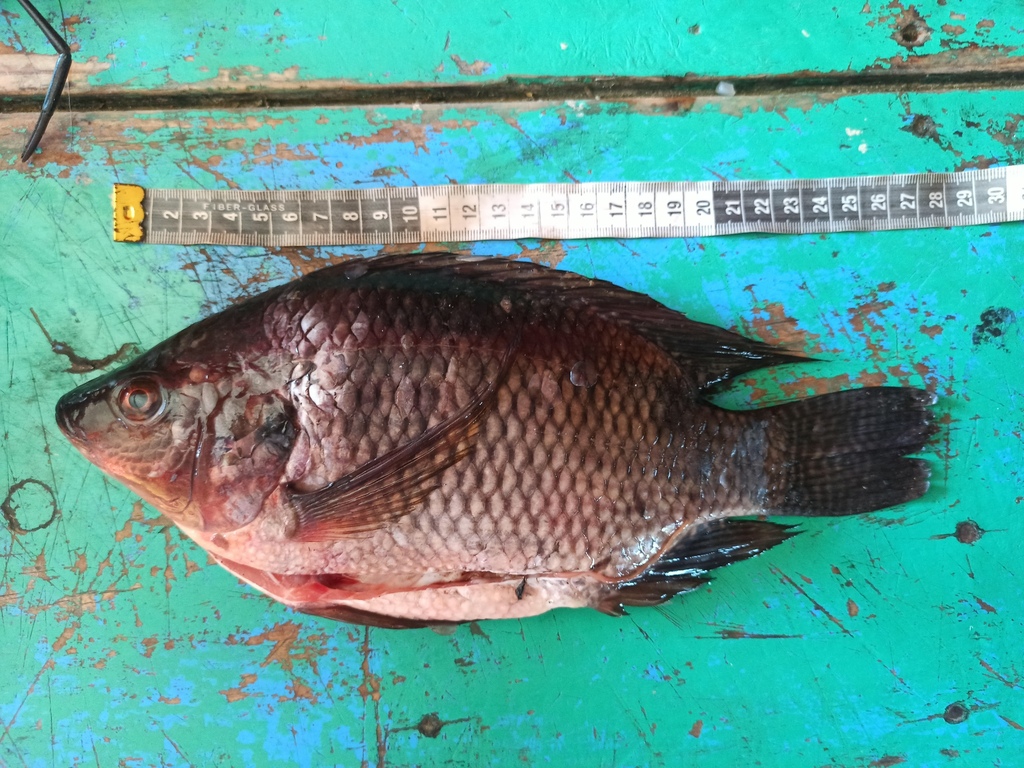
The blue tilapia is a medium-sized freshwater cichlid fish native to the Middle East and North Africa. Adults typically measure 200 to 300 mm (7.9 to 11.8 inches) in total length, with some individuals reaching up to 400 mm (15.7 inches). The body is laterally compressed and deep, with a relatively small head and terminal mouth. Coloration varies with age and breeding condition: juveniles and non-breeding adults display a blue-gray body with faint vertical bars, while breeding males develop intense blue coloration on the head and anterior body with bright yellow fins. The dorsal fin contains 15 to 17 spines followed by 10 to 12 soft rays, and the anal fin has 3 spines and 8 to 10 soft rays. Blue tilapia were introduced to California waters in the 1960s and have established populations in several regions. The species is present in the Colorado River system along California's eastern border, including the Salton Sea, where it supports recreational and subsistence fisheries. Populations also occur in various irrigation canals, agricultural drains, and warm-water reservoirs throughout the Central Valley and Southern California. The species has been documented in San Diego County reservoirs and the Los Angeles River system. This species inhabits warm freshwater and slightly brackish environments, tolerating temperatures from 10 to 42 degrees Celsius (50 to 108 degrees Fahrenheit). Blue tilapia prefer shallow areas with soft substrates and abundant vegetation, typically at depths less than 3 meters (10 feet). They demonstrate high salinity tolerance, surviving in waters with salt concentrations up to 30 parts per thousand. The species thrives in eutrophic conditions with high nutrient levels and can tolerate low dissolved oxygen concentrations that would stress most native fish species. Blue tilapia are omnivorous, feeding on algae, aquatic plants, detritus, small invertebrates, and occasionally small fish. Adults exhibit strong parental care behavior, with males constructing circular nests 30 to 60 cm (12 to 24 inches) in diameter in shallow water. Females deposit 1,000 to 5,000 eggs in these nests, and both parents guard the eggs and fry. The species is a mouthbrooder, with females carrying eggs and newly hatched fry in their mouths for protection. Breeding occurs when water temperatures exceed 20 degrees Celsius (68 degrees Fahrenheit), with multiple spawning events possible during warm seasons. Blue tilapia is not native to California and is considered an established non-native species. While not currently listed under federal or state endangered species legislation, the species is regulated under California's non-native fish policies. The California Department of Fish and Wildlife monitors populations and their potential impacts on native fish communities. Blue tilapia can compete with native species for food and spawning habitat, particularly in shallow, warm-water environments where native species like desert pupfish occur. Management efforts focus on preventing further introductions and limiting expansion into sensitive aquatic habitats containing threatened or endangered native species.
Classification
Class: Teleostei · Order: Perciformes · Family: Cichlidae
Frequently asked questions
How is Oreochromis aureus classified?
Oreochromis aureus belongs to class Teleostei, order Perciformes, family Cichlidae.
What family does Oreochromis aureus belong to?
Oreochromis aureus is in the Cichlidae family.
What is Oreochromis aureus?
The blue tilapia is a medium-sized freshwater cichlid fish native to the Middle East and North Africa.
Is Oreochromis aureus found in California?
Yes. Oreochromis aureus is recorded in California in The California Species Project's catalogue.
Related species
Other California species in the same genus, family, or bioregion.
Data from The California Species Project — 14,000+ California species with verified data from CNPS, CDFW, USFWS, and more.