Oreortyx pictus
Mountain Quail
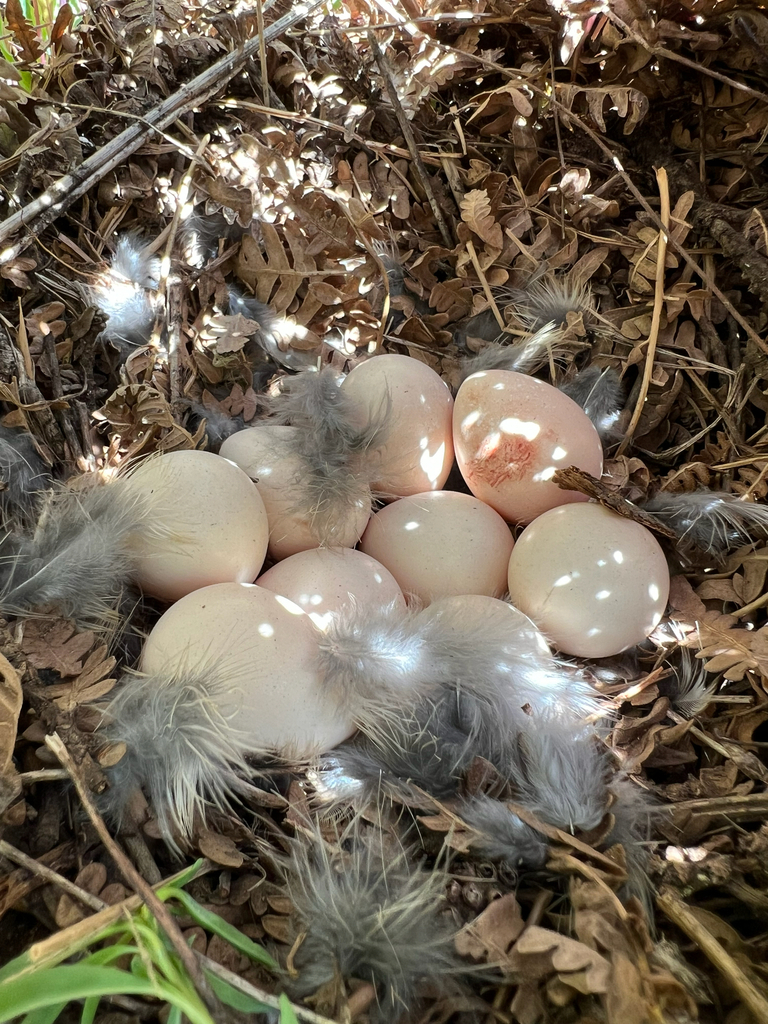
(c) Ryan Donnelly, some rights reserved (CC BY) · licence
Family: Odontophoridae · Class: Aves · Order: Galliformes
Oreortyx pictus (Mountain Quail) is a California animal in the Odontophoridae family.
The Mountain Quail is the largest quail species in North America, measuring 26 to 28 cm (10 to 11 inches) in length and weighing 200 to 250 grams (7 to 9 ounces). Adults display distinctive plumage with a blue-gray head and breast, chestnut throat bordered by white stripes, and brownish-olive back and wings. The species is most recognizable by its prominent, straight black plume extending vertically from the crown, which can reach 7.6 cm (3 inches) in length. Males and females appear similar, though males typically show slightly brighter coloration and longer head plumes. The flanks are marked with bold white bars on a chestnut background, and the belly displays white scaling on gray. Mountain Quail inhabit mountainous regions of western North America, with their primary range extending from British Columbia through Washington, Oregon, California, and into Baja California. In California, they occur throughout the Sierra Nevada, Cascade Range, Coast Ranges, and isolated mountain ranges in southern California including the San Gabriel, San Bernardino, and Peninsular Ranges. The species has been successfully introduced to portions of Washington, Idaho, and Nevada. This species occupies diverse montane habitats from sea level to elevations of 3,200 meters (10,500 feet). Mountain Quail prefer areas with dense shrub cover, including chaparral, manzanita thickets, oak woodlands, and mixed coniferous forests. They require adequate ground cover for nesting and escape from predators, favoring brushy slopes, forest edges, and riparian zones with adjacent steep terrain. During winter, populations typically migrate to lower elevations to access unfrozen water sources and available food. Mountain Quail are primarily ground-dwelling birds that exhibit strong seasonal migration patterns, moving altitudinally between breeding and wintering areas. They are one of the few quail species that migrate on foot rather than by flight, traveling in coveys along established routes. Breeding occurs from April through August, with peak activity in May and June. Females construct ground nests in dense cover and lay 8 to 12 cream-colored eggs spotted with brown. Incubation lasts 21 to 25 days, and both parents tend the precocial young. The diet consists primarily of plant material including seeds, berries, leaves, and flowers of shrubs and forbs, with green vegetation comprising up to 90% of their intake during spring and summer. Mountain Quail are not federally listed and maintain stable populations throughout most of their range as of December 2025. However, some peripheral populations have experienced declines due to habitat loss from urban development, altered fire regimes, and livestock grazing. The species benefits from forest management practices that maintain understory vegetation and from fire management that creates mosaic patterns of vegetation density. Climate change poses potential long-term threats through shifts in precipitation patterns and temperature regimes that may affect food availability and suitable habitat at different elevations.
Classification
Class: Aves · Order: Galliformes · Family: Odontophoridae
Frequently asked questions
How is Oreortyx pictus classified?
Oreortyx pictus belongs to class Aves, order Galliformes, family Odontophoridae.
What family does Oreortyx pictus belong to?
Oreortyx pictus is in the Odontophoridae family.
What is Oreortyx pictus?
The Mountain Quail is the largest quail species in North America, measuring 26 to 28 cm (10 to 11 inches) in length and weighing 200 to 250 grams (7 to 9 ounces).
Is Oreortyx pictus found in California?
Yes. Oreortyx pictus is recorded in California in The California Species Project's catalogue.
Related species
Other California species in the same genus, family, or bioregion.
Data from The California Species Project — 14,000+ California species with verified data from CNPS, CDFW, USFWS, and more.