Orohermes crepusculus
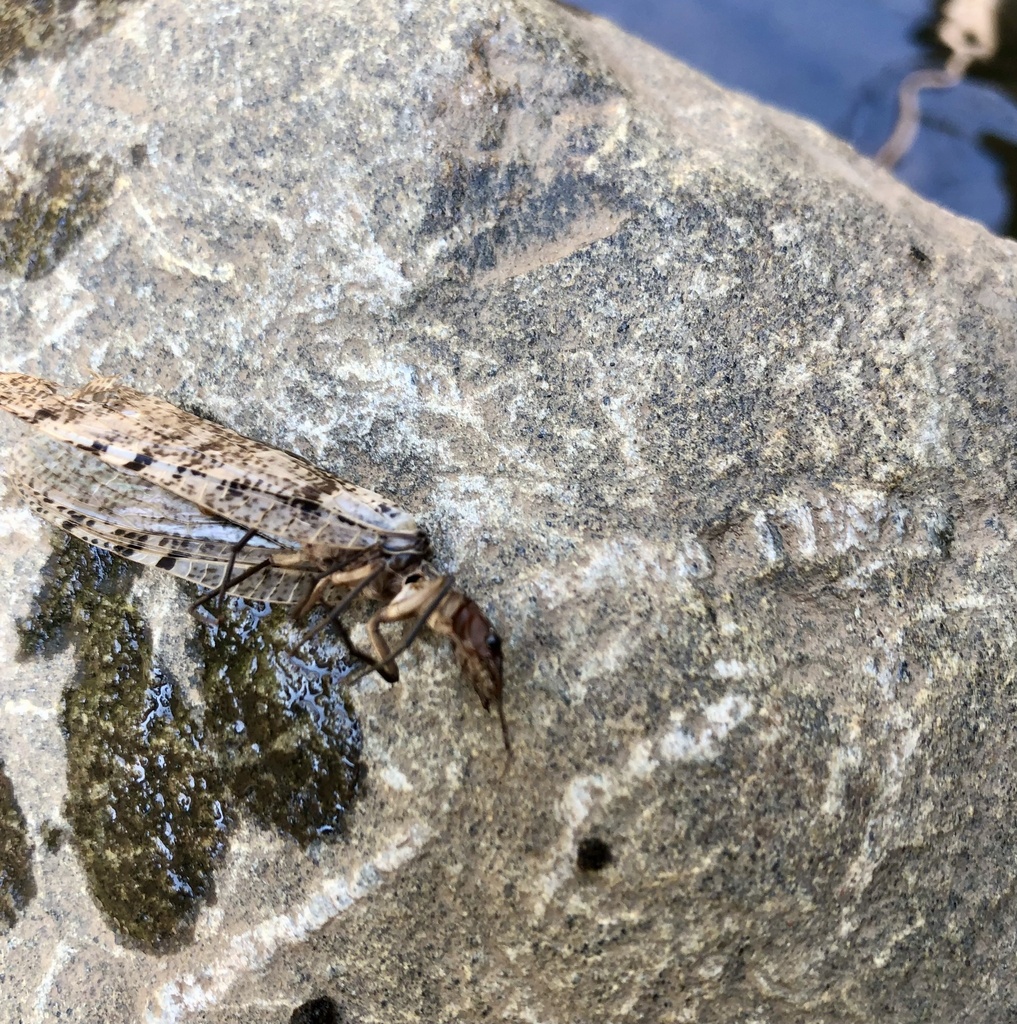
(c) graham_coop, some rights reserved (CC BY) · licence
Family: Corydalidae · Class: Insecta · Order: Megaloptera
Orohermes crepusculus is a California animal in the Corydalidae family.
Orohermes crepusculus, commonly known as the Southern Oregon fishfly, is a large megalopteran insect belonging to the family Corydalidae. Adults measure approximately 50-60 mm (2.0-2.4 inches) in length with a wingspan that can extend beyond 100 mm. The species exhibits typical fishfly morphology with broad, membranous wings held roof-like over the body when at rest, prominent antennae, and strong mandibles. Males possess longer, more feathery antennae compared to females, a characteristic used for distinguishing sexes in this group. The species was historically known from Arizona and Texas according to U.S. Fish and Wildlife Service records, but recent documentation indicates its presence extends into southwestern Oregon, specifically in the western Siskiyou Mountains of Josephine County (BugGuide.Net). This represents a significant range extension from the originally described distribution. The genus Orohermes was established specifically for this species when it was first described by Evans in 1984, highlighting its distinctive characteristics within the Chauliodinae subfamily. Orohermes crepusculus inhabits mountainous regions with permanent or semi-permanent water sources. In Oregon, specimens have been documented at elevations consistent with montane forest ecosystems, particularly in areas near Cave Junction in the Siskiyou Mountains. Like other fishflies, larvae are aquatic predators that require clean, well-oxygenated water for development. Adults are typically found near streams, rivers, or other freshwater bodies where larvae develop. The species exhibits crepuscular behavior, becoming active during twilight hours as its specific epithet suggests. Adults are attracted to artificial lights during their brief reproductive period. The aquatic larvae are predatory, feeding on various invertebrates in stream substrates. Larval development likely spans multiple years, as is typical for larger megalopterans in temperate regions. Adults emerge during summer months, with July records documented in Oregon populations. The species presumably follows the typical fishfly life cycle with eggs laid near water, aquatic larval stages, pupation in moist soil or debris near water sources, and short-lived terrestrial adults focused on reproduction. Orohermes crepusculus was listed as threatened under the Endangered Species Act on August 21, 2023, with jurisdiction under the U.S. Fish and Wildlife Service Southwest Region. The listing covers the species "wherever found," indicating conservation concerns across its entire range (USFWS ECOS). Primary threats likely include habitat degradation from water management activities, climate change impacts on montane aquatic systems, and the species' apparently limited distribution. The recent federal listing suggests population declines or habitat threats significant enough to warrant protection under federal law. Conservation efforts will likely focus on protecting aquatic habitats and maintaining water quality in the streams and rivers where larvae develop. The species' restricted range and specialized habitat requirements make it particularly vulnerable to environmental changes affecting montane aquatic ecosystems in the southwestern United States.
Classification
Class: Insecta · Order: Megaloptera · Family: Corydalidae
Frequently asked questions
How is Orohermes crepusculus classified?
Orohermes crepusculus belongs to class Insecta, order Megaloptera, family Corydalidae.
What family does Orohermes crepusculus belong to?
Orohermes crepusculus is in the Corydalidae family.
What is Orohermes crepusculus?
Orohermes crepusculus, commonly known as the Southern Oregon fishfly, is a large megalopteran insect belonging to the family Corydalidae.
Is Orohermes crepusculus found in California?
Yes. Orohermes crepusculus is recorded in California in The California Species Project's catalogue.
Related species
Other California species in the same genus, family, or bioregion.
Data from The California Species Project — 14,000+ California species with verified data from CNPS, CDFW, USFWS, and more.