Orthodon microlepidotus
Sacramento blackfish
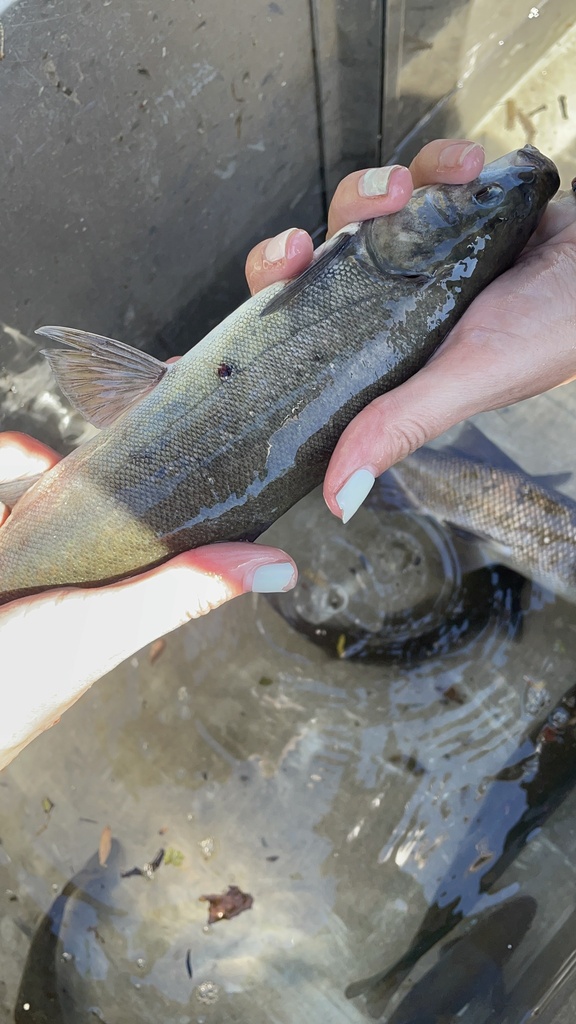
no rights reserved · CC0
Family: Leuciscidae · Class: Actinopterygii · Order: Cypriniformes
Orthodon microlepidotus (Sacramento blackfish) is a California animal in the Leuciscidae family.
The Sacramento blackfish (Orthodon microlepidotus) is a medium-sized cyprinid fish endemic to California's Central Valley. Adults typically measure 200 to 400 mm (8 to 16 inches) in total length, with the largest individuals reaching up to 550 mm (22 inches). The species has an elongated, moderately compressed body with a distinctive humped back profile behind the head. Coloration is generally dark olive to blackish on the dorsal surface, fading to silvery-white on the ventral side. The scales are small, as indicated by the species name microlepidotus, meaning "small scales." The mouth is subterminal with thick lips adapted for bottom feeding. Historically, Sacramento blackfish were widely distributed throughout the Central Valley of California, including the Sacramento River system, San Joaquin River system, and their tributaries. The species also occurred in Clear Lake in Lake County and the Russian River system in Sonoma and Mendocino counties. Currently, populations are greatly reduced and fragmented compared to historical distributions. Remnant populations persist in the Sacramento River and some tributaries, isolated sections of the San Joaquin River system, and a few other Central Valley waterways. The species has been extirpated from much of its former range due to habitat modification and water diversions. Sacramento blackfish inhabit slow-moving rivers, sloughs, backwaters, and lake margins with soft substrates. They prefer areas with aquatic vegetation and typically occur in water depths of 0.5 to 3 meters (1.6 to 10 feet). The species tolerates a wide range of water temperatures and can survive in waters with low dissolved oxygen levels. Adults are often found in deeper pools during summer months and move to shallower areas during cooler periods. This species is omnivorous, feeding primarily on algae, detritus, aquatic insects, small crustaceans, and plant material. Sacramento blackfish use their specialized pharyngeal teeth to process tough plant material and their thick lips to scrape algae from surfaces. Spawning occurs from March through June when water temperatures reach 15 to 20°C (59 to 68°F). Females deposit adhesive eggs over gravel or rocky substrates in shallow water. Clutch sizes range from 4,000 to 20,000 eggs depending on female size. The species can live up to 10 years and reaches sexual maturity at 2 to 3 years of age. Sacramento blackfish currently hold no federal or state listing status, though populations have declined significantly from historical levels. Primary threats include habitat loss from water diversions, channelization of rivers, and competition with introduced fish species. Dam construction has fragmented remaining populations and altered natural flow regimes essential for spawning. Water quality degradation from agricultural runoff and urban development poses additional challenges. Despite these pressures, some stable populations persist in protected areas and river segments with suitable habitat conditions.
Classification
Class: Actinopterygii · Order: Cypriniformes · Family: Leuciscidae
Frequently asked questions
How is Orthodon microlepidotus classified?
Orthodon microlepidotus belongs to class Actinopterygii, order Cypriniformes, family Leuciscidae.
What family does Orthodon microlepidotus belong to?
Orthodon microlepidotus is in the Leuciscidae family.
What is Orthodon microlepidotus?
The Sacramento blackfish (Orthodon microlepidotus) is a medium-sized cyprinid fish endemic to California's Central Valley.
Is Orthodon microlepidotus found in California?
Yes. Orthodon microlepidotus is recorded in California in The California Species Project's catalogue.
Related species
Other California species in the same genus, family, or bioregion.
Data from The California Species Project — 14,000+ California species with verified data from CNPS, CDFW, USFWS, and more.