Orthonopias triacis
Snubnose Sculpin
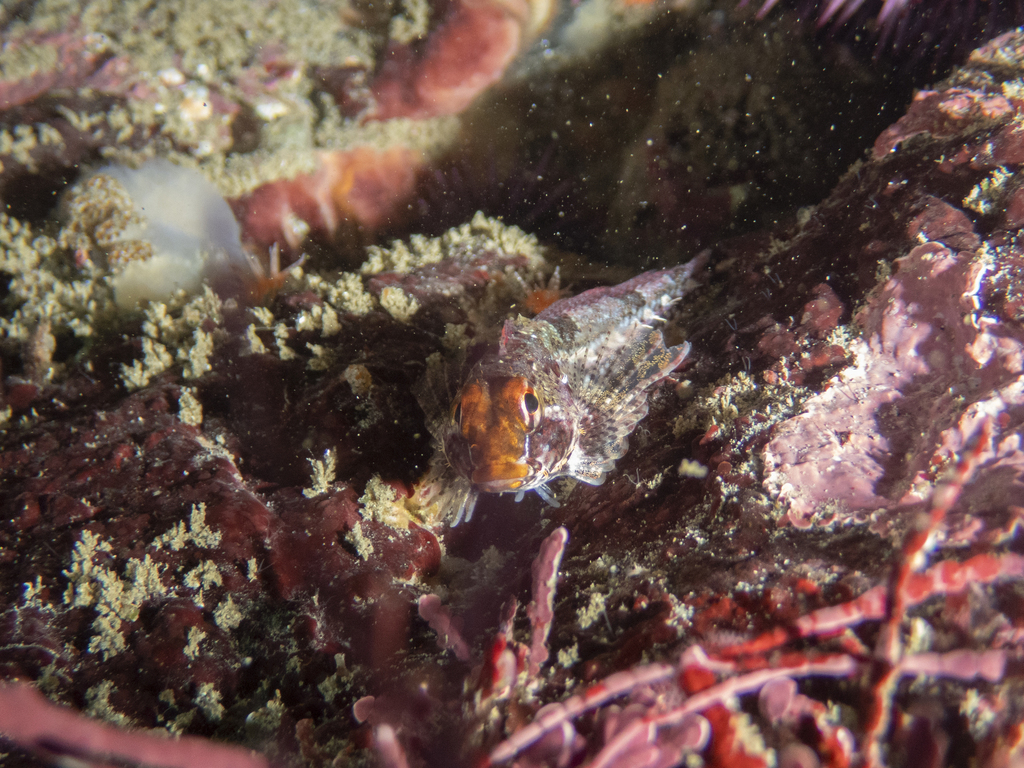
(c) Nathan, some rights reserved (CC BY) · licence
Family: Psychrolutidae · Class: Actinopterygii · Order: Perciformes
Orthonopias triacis (Snubnose Sculpin) is a California animal in the Psychrolutidae family.
The Snubnose Sculpin (Orthonopias triacis) is a small marine fish belonging to the family Psychrolutidae within the order Perciformes. This sculpin species exhibits the characteristic features of its family, with a robust head, tapering body, and large pectoral fins adapted for bottom-dwelling life. The species is distinguished by its notably shortened, blunt snout that gives it its common name, along with a compressed body form typical of intertidal sculpins. Orthonopias triacis occurs along the Pacific coast, with populations documented in both the United States and Mexico. In California, the species inhabits rocky intertidal and shallow subtidal zones along the coastline. The distribution extends into Mexican waters, indicating a broader Pacific coastal range that spans international boundaries. This transboundary distribution requires coordinated management approaches between the two countries. The Snubnose Sculpin occupies rocky intertidal habitats where it utilizes crevices, tide pools, and areas with complex substrate for shelter and foraging. These environments provide the structural complexity necessary for the species' cryptic lifestyle, offering protection from predation and wave action. The rocky substrates also support diverse invertebrate communities that serve as prey resources. The species is adapted to the dynamic conditions of intertidal zones, including periodic exposure to air during low tides and varying salinity levels. Like other sculpins, Orthonopias triacis is primarily a benthic predator, feeding on small invertebrates found within its rocky habitat. The species likely consumes amphipods, small crabs, marine worms, and other benthic organisms that inhabit crevices and spaces between rocks. Reproductive behavior follows typical sculpin patterns, with males likely establishing and defending territories during breeding seasons. The species exhibits the cryptic coloration and behavior characteristic of intertidal sculpins, remaining motionless when threatened and blending with surrounding rocky surfaces. The conservation status of the Snubnose Sculpin has not been formally assessed under federal or state endangered species programs. However, like many intertidal species, it faces potential threats from coastal development, pollution, and climate change impacts such as ocean acidification and sea level rise. Rocky intertidal habitats are particularly vulnerable to human disturbance, oil spills, and changes in water quality. The species' limited mobility and specific habitat requirements may make populations vulnerable to localized impacts. Marine protected areas along the California coast may provide some protection for populations within their boundaries, though comprehensive population assessments and monitoring programs would be needed to fully evaluate the species' conservation needs. The transboundary nature of its distribution highlights the importance of international cooperation in any future conservation efforts.
Classification
Class: Actinopterygii · Order: Perciformes · Family: Psychrolutidae
Frequently asked questions
How is Orthonopias triacis classified?
Orthonopias triacis belongs to class Actinopterygii, order Perciformes, family Psychrolutidae.
What family does Orthonopias triacis belong to?
Orthonopias triacis is in the Psychrolutidae family.
What is Orthonopias triacis?
The Snubnose Sculpin (Orthonopias triacis) is a small marine fish belonging to the family Psychrolutidae within the order Perciformes.
Is Orthonopias triacis found in California?
Yes. Orthonopias triacis is recorded in California in The California Species Project's catalogue.
Related species
Other California species in the same genus, family, or bioregion.
Data from The California Species Project — 14,000+ California species with verified data from CNPS, CDFW, USFWS, and more.