Orthosia behrensiana
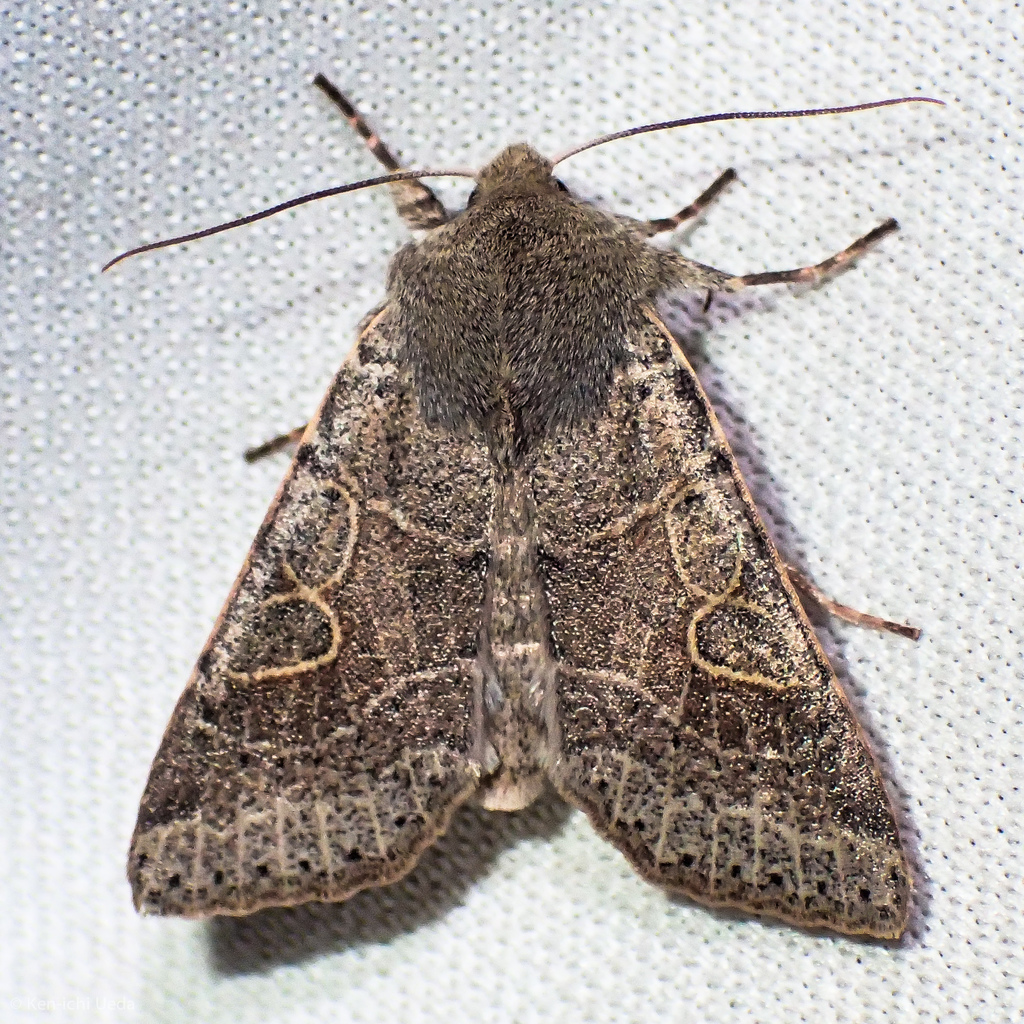
(c) Ken-ichi Ueda, some rights reserved (CC BY) · licence
Family: Noctuidae · Class: Insecta · Order: Lepidoptera
Orthosia behrensiana is a California animal in the Noctuidae family.
Orthosia behrensiana is a moth species in the family Noctuidae, belonging to the cutworm and dart moth subfamily. This species was first described by Henry Edwards in 1881 and named in honor of James Behrens, a German-American entomologist who collected extensively in California during the late 19th century. The moth exhibits the typical noctuid body plan with forewings that are mottled gray-brown with subtle darker markings and pale hindwings that are largely concealed when at rest. Adult moths have a wingspan ranging from approximately 32 to 38 mm (1.3 to 1.5 inches). The forewings display a complex pattern of transverse lines and reniform spots characteristic of the genus Orthosia. The ground color varies from pale gray to brown, often with darker scaling along the wing margins. Males can be distinguished from females by their more feathery antennae and slightly smaller size. When at rest, the moths fold their wings roof-like over the abdomen, creating a triangular profile. This species is endemic to California, where it occurs in coastal and inland regions. Historical records indicate the species was collected from the San Francisco Bay Area, including localities in San Francisco, Marin, and Alameda counties. The current distribution and population status remain poorly documented, with few recent specimen records in museum collections. Orthosia behrensiana inhabits areas with native shrublands and woodland edges, typically at elevations below 500 meters (1,640 feet). The species appears to be associated with Mediterranean climate zones characterized by wet winters and dry summers. Adults are active during the cooler months, with flight periods documented from November through March, coinciding with the winter rains that promote new plant growth. Like other Orthosia species, adults are nocturnal and attracted to artificial lights. Males locate females using pheromone trails, and mating typically occurs during the late evening hours. Females lay eggs on or near host plants, though the specific larval host plants for O. behrensiana have not been definitively identified. Based on the ecology of related species in the genus, larvae likely feed on deciduous trees or shrubs, possibly including native oaks (Quercus species) or other hardwoods. The caterpillars develop during spring months, pupating in soil chambers before emerging as adults the following winter. The conservation status of Orthosia behrensiana is not well established due to limited recent survey data. The species lacks federal or state protection status, and its global conservation rank has not been assessed. The apparent restriction to California's Mediterranean climate regions makes the species potentially vulnerable to habitat modification and climate change impacts. Urban development in coastal California has eliminated much historical habitat, particularly in the San Francisco Bay Area where the species was originally described. Recent moth surveys in California have focused primarily on more conspicuous or economically important species, leaving the status of many endemic noctuids poorly understood. Additional field surveys and taxonomic work are needed to assess current populations and determine conservation priorities for this endemic California moth.
Classification
Class: Insecta · Order: Lepidoptera · Family: Noctuidae
Frequently asked questions
How is Orthosia behrensiana classified?
Orthosia behrensiana belongs to class Insecta, order Lepidoptera, family Noctuidae.
What family does Orthosia behrensiana belong to?
Orthosia behrensiana is in the Noctuidae family.
What is Orthosia behrensiana?
Orthosia behrensiana is a moth species in the family Noctuidae, belonging to the cutworm and dart moth subfamily.
Is Orthosia behrensiana found in California?
Yes. Orthosia behrensiana is recorded in California in The California Species Project's catalogue.
Related species
Other California species in the same genus, family, or bioregion.
Data from The California Species Project — 14,000+ California species with verified data from CNPS, CDFW, USFWS, and more.