Orthosia hibisci
Speckled Green Fruitworm Moth
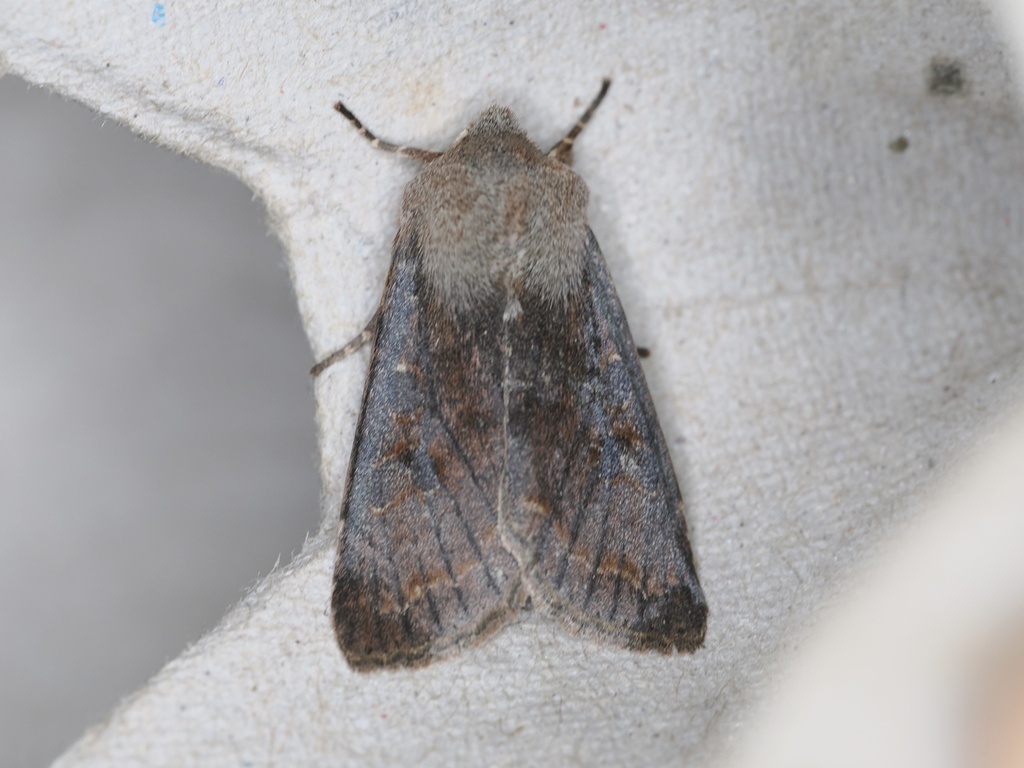
(c) Alan Macnaughton, some rights reserved (CC BY) · licence
Family: Noctuidae · Class: Insecta · Order: Lepidoptera
Orthosia hibisci (Speckled Green Fruitworm Moth) is a California animal in the Noctuidae family.
The Speckled Green Fruitworm Moth (Orthosia hibisci) is a member of the family Noctuidae, commonly known as owlet moths. Adults typically display mottled brown and gray coloration with distinctive speckled patterning that gives the species its common name. The forewings show variable markings with subtle green tints, while the hindwings are generally paler. Wing coloration and pattern intensity can vary among individuals, providing effective camouflage against tree bark and forest substrates. This species occurs throughout eastern North America, with its range extending across most of the continent except desert regions (iNaturalist). The distribution includes much of the eastern United States and southeastern Canada, where suitable habitat conditions exist. In California, the species appears to have limited presence, likely restricted to moister regions that support its habitat requirements. Orthosia hibisci inhabits moist forests, riparian areas, agricultural zones, and urban environments (iNaturalist). The species shows preference for areas with adequate moisture and diverse vegetation, avoiding arid desert regions. Adults are typically found in wooded areas where host plants are abundant, particularly in mixed deciduous forests and forest edges. The species adapts well to human-modified landscapes, including orchards and suburban areas with appropriate tree cover. As suggested by its common name, larvae function as fruitworms, feeding on a wide variety of plants including apple, crabapple, cherries, plums, and other trees. The polyphagous nature of the larvae allows the species to exploit diverse food resources across its range. Adults are nocturnal and attracted to artificial lights during their flight period. The species follows a typical noctuid life cycle, with larvae developing through several instars before pupating. Timing of adult emergence varies with latitude and local climate conditions, generally occurring during spring and early summer months. The larvae can occasionally cause economic damage to fruit crops, particularly when populations are high. However, the species also plays an ecological role as prey for various predators and parasitoids. Birds, spiders, and other arthropods feed on both larval and adult stages, while parasitic wasps and flies help regulate population levels naturally. Currently, Orthosia hibisci has no special conservation status and appears to maintain stable populations across its range. The species' broad host plant range and adaptability to various habitat types, including human-modified environments, contribute to its widespread distribution and apparent population stability. Climate change and habitat modification may affect local populations, particularly in marginal habitats, but the species' ecological flexibility likely provides resilience against moderate environmental changes. No specific conservation measures are currently identified as necessary for this species.
Classification
Class: Insecta · Order: Lepidoptera · Family: Noctuidae
Frequently asked questions
How is Orthosia hibisci classified?
Orthosia hibisci belongs to class Insecta, order Lepidoptera, family Noctuidae.
What family does Orthosia hibisci belong to?
Orthosia hibisci is in the Noctuidae family.
What is Orthosia hibisci?
The Speckled Green Fruitworm Moth (Orthosia hibisci) is a member of the family Noctuidae, commonly known as owlet moths.
Is Orthosia hibisci found in California?
Yes. Orthosia hibisci is recorded in California in The California Species Project's catalogue.
Related species
Other California species in the same genus, family, or bioregion.
Data from The California Species Project — 14,000+ California species with verified data from CNPS, CDFW, USFWS, and more.