Orthosia mys
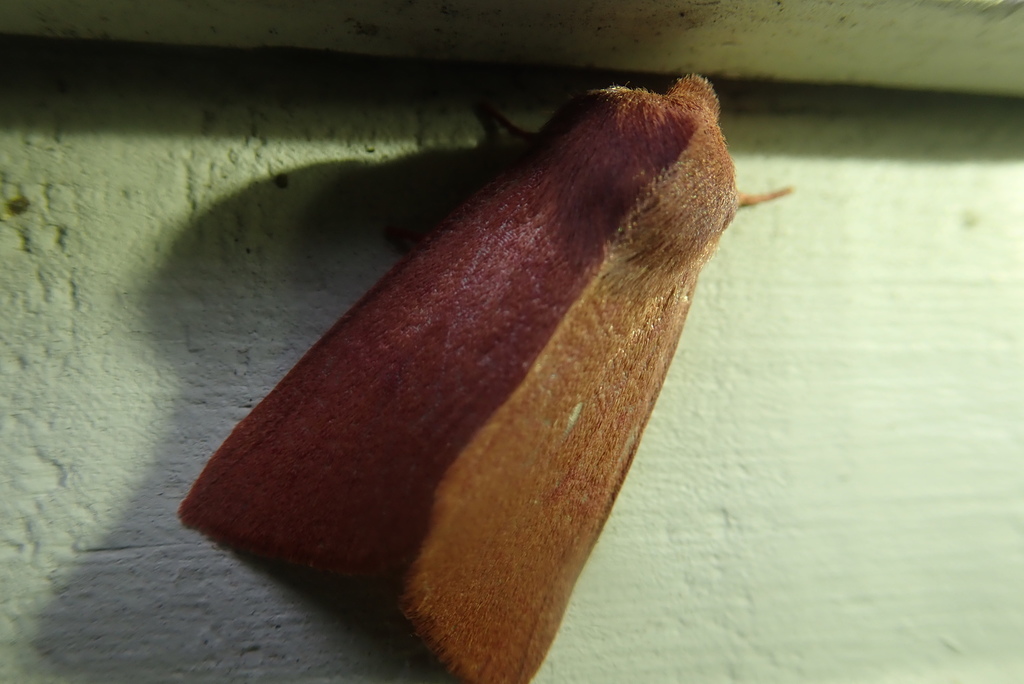
(c) Corvi Zeman, some rights reserved (CC BY) · licence
Family: Noctuidae · Class: Insecta · Order: Lepidoptera
Orthosia mys is a California animal in the Noctuidae family.
Orthosia mys is a moth species belonging to the family Noctuidae, commonly known as owlet moths or cutworm moths. This species is part of the genus Orthosia, which comprises several North American moth species that are active during spring months. Adults typically measure 15 to 20 mm in forewing length, with wingspan ranging from 30 to 40 mm. The forewings display a mottled pattern of gray and brown coloration with darker markings, including reniform and orbicular spots characteristic of noctuids. The hindwings are pale gray to whitish with darker marginal borders. Males can be distinguished from females by their more feathery antennae and slightly smaller size. Orthosia mys occurs in western North America, with documented populations in California, Oregon, and Washington. In California, the species has been recorded from coastal and inland mountain regions, though specific distribution data remains limited. Historical records suggest the species may have had a broader range, but current populations appear restricted to areas with suitable host plant communities. The species' distribution closely follows the range of its host plants and appropriate habitat conditions. The species inhabits mixed coniferous and deciduous forest communities, typically at elevations ranging from sea level to approximately 1,500 meters. Adults are associated with areas containing oak woodlands, riparian zones, and forest edges where host plants are abundant. The species shows preference for habitats with moderate moisture levels and partial canopy cover. Microhabitat selection appears linked to the presence of suitable oviposition sites and nectar sources for adults. Orthosia mys follows a univoltine life cycle, with adults emerging in early spring, typically from March through May. Adults are nocturnal and are attracted to artificial lights. Females deposit eggs on or near host plant foliage, where larvae develop through summer months. Caterpillars feed on various deciduous trees and shrubs, including species in the families Rosaceae and Salicaceae. Larvae undergo five to six instars before pupating in soil or leaf litter, where they overwinter as pupae. Adults feed on nectar from early-blooming flowers and may also feed on tree sap and other sugar sources. Orthosia mys currently lacks formal conservation status designation at federal or state levels. Population trends remain poorly documented due to limited survey efforts and taxonomic confusion within the genus. The species may face threats from habitat loss due to urban development, forest management practices, and climate change impacts on host plant communities. Fire suppression and altered fire regimes may affect habitat quality in some areas. Conservation challenges include the need for comprehensive surveys to determine current population status and distribution, as well as identification of critical habitat requirements. Further research is needed to assess population trends and develop appropriate conservation strategies for this species.
Classification
Class: Insecta · Order: Lepidoptera · Family: Noctuidae
Frequently asked questions
How is Orthosia mys classified?
Orthosia mys belongs to class Insecta, order Lepidoptera, family Noctuidae.
What family does Orthosia mys belong to?
Orthosia mys is in the Noctuidae family.
What is Orthosia mys?
Orthosia mys is a moth species belonging to the family Noctuidae, commonly known as owlet moths or cutworm moths.
Is Orthosia mys found in California?
Yes. Orthosia mys is recorded in California in The California Species Project's catalogue.
Related species
Other California species in the same genus, family, or bioregion.
Data from The California Species Project — 14,000+ California species with verified data from CNPS, CDFW, USFWS, and more.