Orthosia praeses
Praeses Quaker
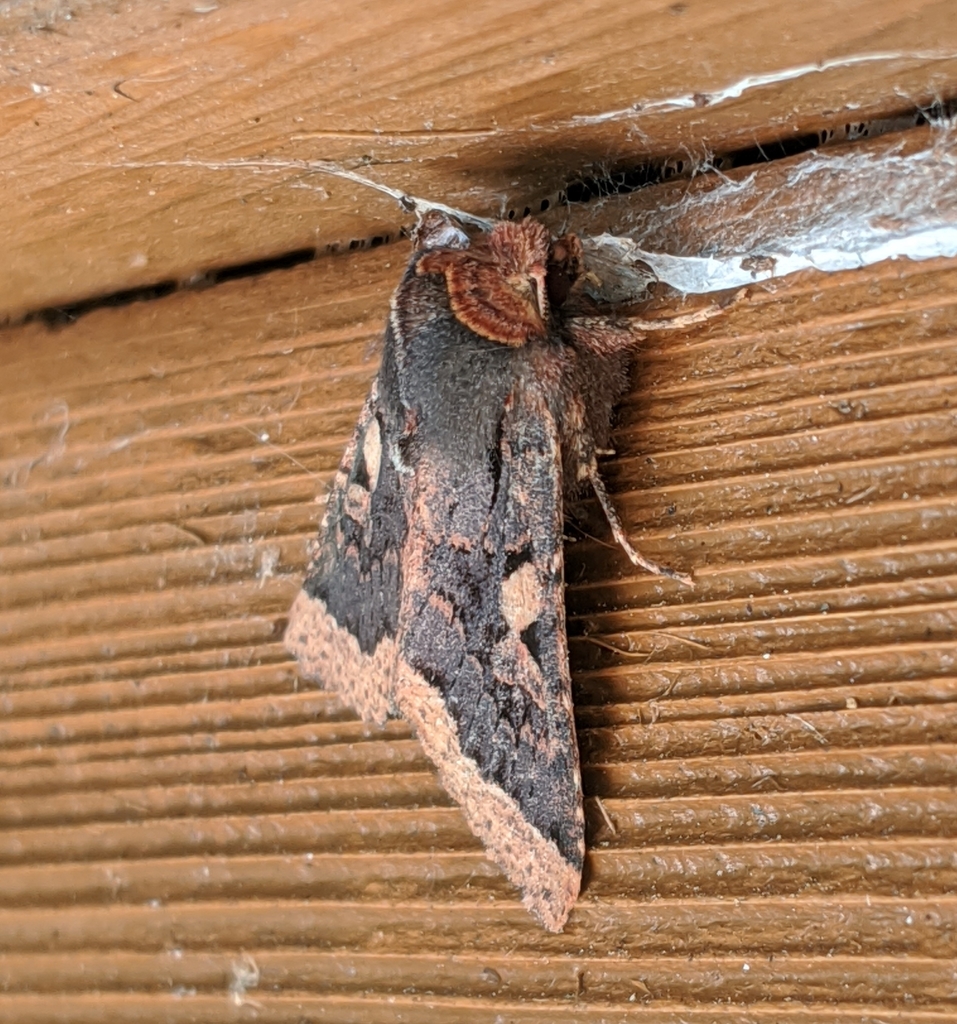
no rights reserved · CC0
Family: Noctuidae · Class: Insecta · Order: Lepidoptera
Orthosia praeses (Praeses Quaker) is a California animal in the Noctuidae family.
Orthosia praeses, commonly known as the Praeses Quaker, is a moth in the family Noctuidae. This species belongs to the genus Orthosia, which includes several North American quaker moths that are active during cooler months of the year. The Praeses Quaker displays the typical morphology of its genus, with forewings that are generally mottled in earth tones. Like other Orthosia species, adults have a robust build with a wingspan typically measuring 30-40 mm (1.2-1.6 inches). The forewings show variable coloration patterns that can range from gray-brown to reddish-brown, often with darker markings that provide effective camouflage against tree bark and dead vegetation. The hindwings are typically paler than the forewings, appearing whitish to light gray. This species occurs across northern North America, with documented populations extending from the northeastern United States into Canada. According to BugGuide, O. praeses has been recorded in New York, where it is listed as a Species of Greatest Conservation Need (SGCN) under the state's Wildlife Action Plan (Quinn 2016). The species' range likely extends into other northeastern states and southeastern Canada, though comprehensive distribution data remains limited. Orthosia praeses inhabits deciduous and mixed forests, particularly areas with mature hardwood trees. Adults are typically found in woodland environments where they rest on tree trunks during daylight hours. The species appears to prefer cooler, moist forest conditions typical of northern temperate regions. Elevation preferences and specific microhabitat requirements have not been well documented in the available literature. As with other Orthosia species, the Praeses Quaker is univoltine, producing one generation per year. Adults are active during early spring, typically emerging when temperatures begin to warm but before full leaf-out occurs. This timing allows them to take advantage of early spring nectar sources and mate before warmer weather brings increased predation pressure. Flight period generally occurs from March through May, depending on local climate conditions. Larvae likely feed on deciduous trees, following the typical host plant relationships observed in related Orthosia species, though specific larval host plants for O. praeses have not been definitively documented. Adults are attracted to artificial lights and can be found at moth collecting stations during their flight period. The conservation status of Orthosia praeses remains poorly understood due to limited survey data and taxonomic uncertainty within the genus. Its designation as a Species of Greatest Conservation Need in New York suggests potential population concerns, though specific threats have not been identified (New York State 2015). Climate change may pose risks to this northern species through warming temperatures and shifting forest composition. Forest fragmentation and loss of mature hardwood habitat could also impact populations. Comprehensive surveys and taxonomic clarification are needed to better assess the species' conservation needs and population trends across its range.
Classification
Class: Insecta · Order: Lepidoptera · Family: Noctuidae
Frequently asked questions
How is Orthosia praeses classified?
Orthosia praeses belongs to class Insecta, order Lepidoptera, family Noctuidae.
What family does Orthosia praeses belong to?
Orthosia praeses is in the Noctuidae family.
What is Orthosia praeses?
Orthosia praeses, commonly known as the Praeses Quaker, is a moth in the family Noctuidae.
Is Orthosia praeses found in California?
Yes. Orthosia praeses is recorded in California in The California Species Project's catalogue.
Related species
Other California species in the same genus, family, or bioregion.
Data from The California Species Project — 14,000+ California species with verified data from CNPS, CDFW, USFWS, and more.