Osmia aglaia
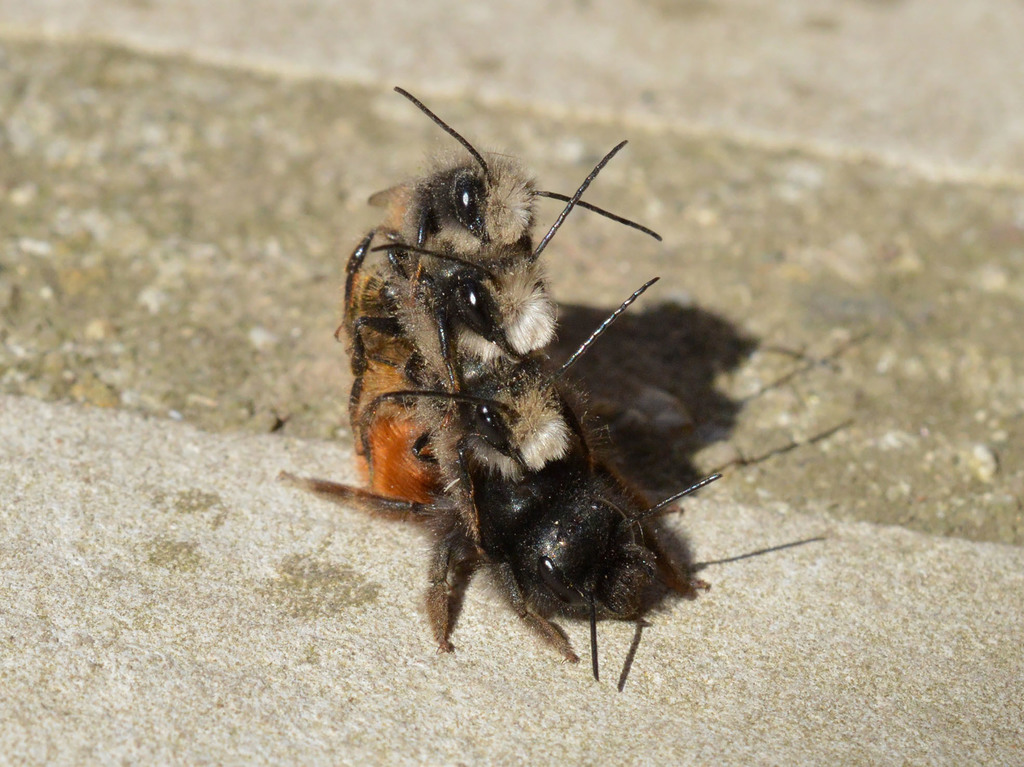
(c) Dimitǎr Boevski, some rights reserved (CC BY) · licence
Family: Megachilidae · Class: Insecta · Order: Hymenoptera
Osmia aglaia is a California animal in the Megachilidae family.
Osmia aglaia is a mason bee in the subgenus Melanosmia, distinguished by its metallic dark coloration and robust build typical of Osmia species. As a member of the family Megachilidae, this species exhibits the characteristic scopa (pollen-collecting hairs) on the underside of the abdomen rather than on the legs, which is used to transport pollen back to nesting sites. This species occurs in Oregon and California, representing a western North American distribution pattern (NatureServe 2011). The range appears to be concentrated along the Pacific Coast region, though specific county-level distribution data within California remains incompletely documented. According to NatureServe assessments, O. aglaia maintains a global conservation rank of G4, indicating the species is apparently secure with populations likely stable across its range. Osmia aglaia inhabits diverse terrestrial environments where suitable nesting sites and floral resources coincide. Like other mason bees, this species likely utilizes existing cavities in wood, stems, or potentially soil for nest construction. The species constructs individual brood cells using mud or clay mixed with saliva, creating partitions between developing larvae. Specific habitat preferences, elevation ranges, and microhabitat requirements have not been well documented in the scientific literature. As a solitary bee, O. aglaia exhibits typical megachilid reproductive behavior. Females construct individual nests without the social structure found in honey bees or bumble bees. Each female provisions individual brood cells with pollen and nectar before laying a single egg and sealing the cell. The species likely has a single generation per year, with adults emerging in spring or early summer to coincide with peak flowering of preferred plant species. Males typically emerge before females and may engage in territorial behavior around nesting areas. Specific host plant relationships, flight periods, and detailed ecological requirements remain poorly studied. The conservation status of O. aglaia appears stable based on current assessments. The G4 global rank suggests populations are not experiencing significant decline range-wide. However, like many native bee species, O. aglaia potentially faces threats from habitat loss, pesticide use, and competition from managed honey bees. Urban development and agricultural intensification in California and Oregon may reduce available nesting sites and floral resources. Climate change could alter the timing of emergence relative to host plant flowering, potentially disrupting pollination relationships. Detailed ecological studies of this species are lacking. The above information synthesizes available data from taxonomic databases and regional assessments. Research gaps include specific host plant preferences, detailed life history timing, nesting substrate requirements, and population trends. We welcome contributions of verified scientific data, photographs, or field observations to enhance this species account.
Classification
Class: Insecta · Order: Hymenoptera · Family: Megachilidae
Frequently asked questions
How is Osmia aglaia classified?
Osmia aglaia belongs to class Insecta, order Hymenoptera, family Megachilidae.
What family does Osmia aglaia belong to?
Osmia aglaia is in the Megachilidae family.
What is Osmia aglaia?
Osmia aglaia is a mason bee in the subgenus Melanosmia, distinguished by its metallic dark coloration and robust build typical of Osmia species.
Is Osmia aglaia found in California?
Yes. Osmia aglaia is recorded in California in The California Species Project's catalogue.
Related species
Other California species in the same genus, family, or bioregion.
Data from The California Species Project — 14,000+ California species with verified data from CNPS, CDFW, USFWS, and more.