Ostrea lurida
Olympia Oyster
no rights reserved · CC0
Family: Ostreidae · Class: Bivalvia · Order: Ostreoida
Ostrea lurida (Olympia Oyster) is a California animal in the Ostreidae family.
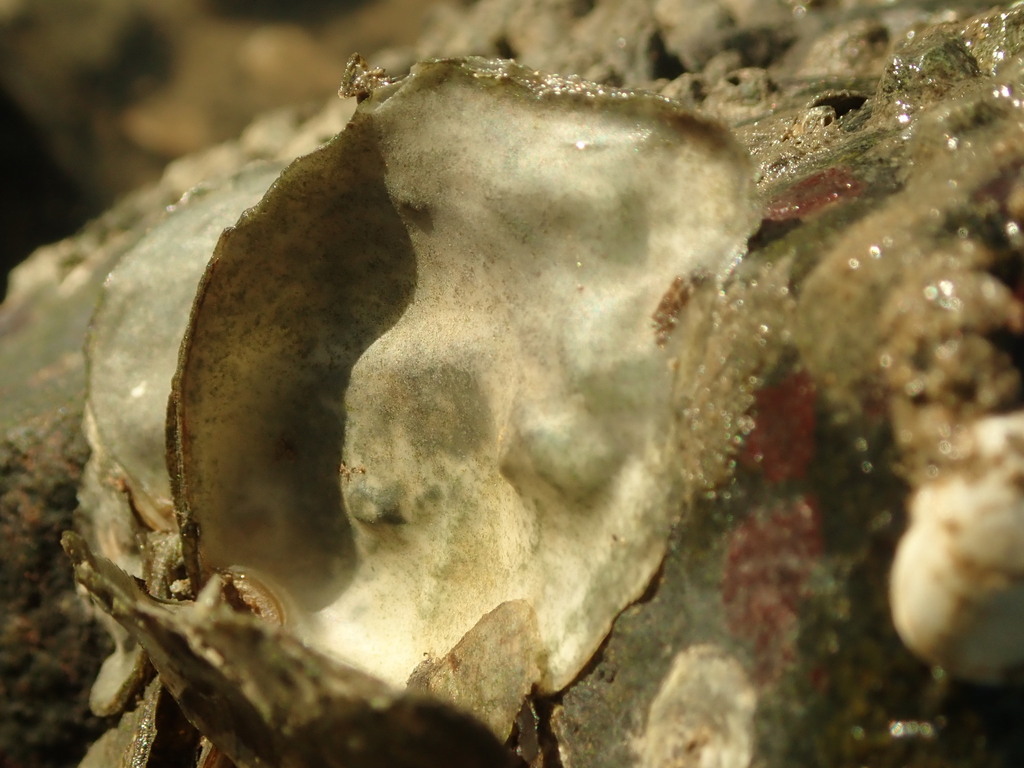
The Olympia oyster is the only native oyster species on the Pacific Coast of North America and the smallest commercially harvested oyster in the world. Adults typically measure 25 to 75 mm (1 to 3 inches) in shell length, with a rounded, irregularly shaped shell that varies from gray to brown or purple in coloration. The shell surface is rough with concentric growth rings, and the interior displays a distinctive purple or gray nacre. Unlike larger Pacific oysters, Olympia oysters have a deep cupped shell with a small, pointed hinge area. Historically, Olympia oysters ranged from British Columbia to Baja California, inhabiting virtually every bay and estuary along the Pacific Coast. In California, populations once thrived in San Francisco Bay, Humboldt Bay, Elkhorn Slough, Tomales Bay, and San Diego Bay. The species has experienced severe population decline throughout its range, with many populations eliminated entirely. Current California populations are fragmented and reduced to small remnant groups in select estuaries including Elkhorn Slough, where only a few thousand individuals remain as of 2025 (California Department of Fish and Wildlife). Olympia oysters inhabit the intertidal and shallow subtidal zones of protected bays and estuaries, typically in areas with moderate salinity levels between 14 to 28 parts per thousand. They require hard substrates for attachment, including rock, shell, pier pilings, and other oyster shells. The species tolerates a wide temperature range but requires areas protected from heavy wave action. Optimal habitat includes locations with good water circulation and adequate food supply in the form of phytoplankton. As filter feeders, Olympia oysters consume phytoplankton, bacteria, and organic detritus by pumping water through their gills. A single adult can filter more than 50 gallons of water daily, significantly improving local water quality. The species is a protandric hermaphrodite, beginning life as males and later developing female reproductive organs. Spawning occurs during warmer months, typically from May through September, when water temperatures exceed 16°C (61°F). Larvae spend two to three weeks in the water column before settling on suitable substrate to metamorphose into juvenile oysters. The Olympia oyster does not hold federal or state listing status but is considered a species of conservation concern throughout California. Historical populations were decimated by intensive harvesting during the California Gold Rush era and subsequent decades, combined with habitat loss from coastal development and water quality degradation. Current restoration efforts include the San Diego Bay Oyster Living Shoreline Project, which received $960,533 in federal funding to restore 10 acres of native oyster reef habitat (U.S. Fish and Wildlife Service). The California Department of Fish and Wildlife is conducting groundbreaking research at Elkhorn Slough National Estuarine Research Reserve, using shellfish farming techniques to restore native oyster populations for the first time in California history.
Classification
Class: Bivalvia · Order: Ostreoida · Family: Ostreidae
Frequently asked questions
How is Ostrea lurida classified?
Ostrea lurida belongs to class Bivalvia, order Ostreoida, family Ostreidae.
What family does Ostrea lurida belong to?
Ostrea lurida is in the Ostreidae family.
What is Ostrea lurida?
The Olympia oyster is the only native oyster species on the Pacific Coast of North America and the smallest commercially harvested oyster in the world.
Is Ostrea lurida found in California?
Yes. Ostrea lurida is recorded in California in The California Species Project's catalogue.
Related species
Other California species in the same genus, family, or bioregion.
Data from The California Species Project — 14,000+ California species with verified data from CNPS, CDFW, USFWS, and more.