Otala lactea
Milk Snail
no rights reserved · CC0
Family: Helicidae · Class: Gastropoda · Order: Stylommatophora
Otala lactea (Milk Snail) is a California animal in the Helicidae family.
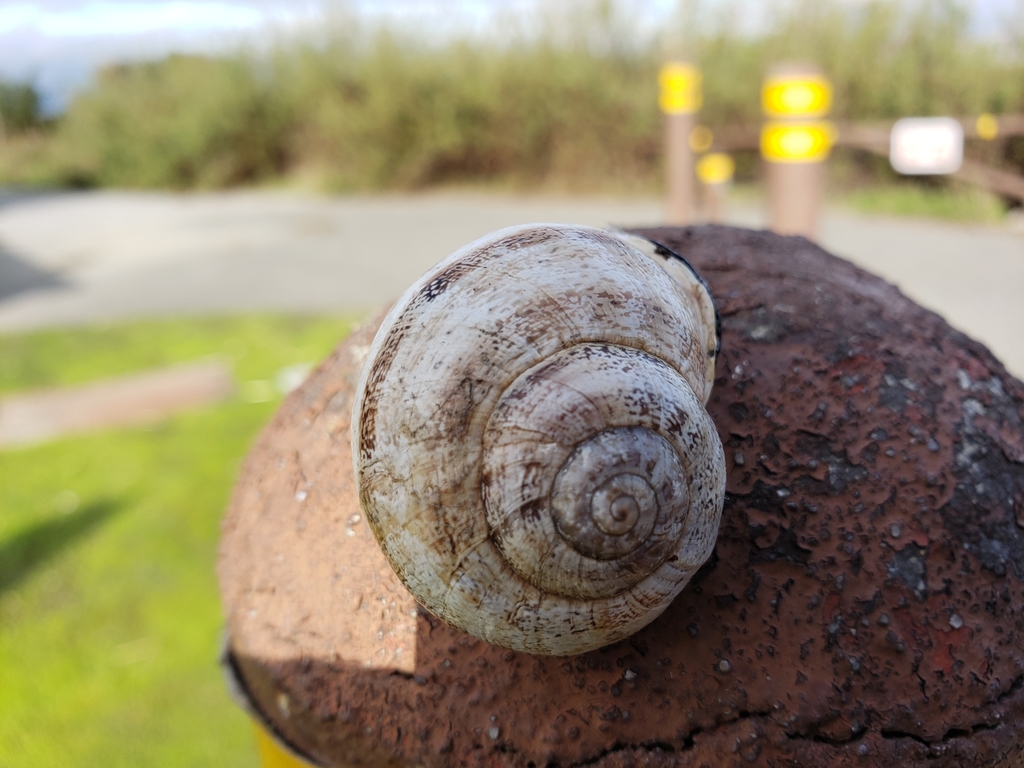
The milk snail (Otala lactea) is a large terrestrial gastropod mollusk in the family Helicidae, native to the Mediterranean region but now established as an introduced species in California. Adult shells typically measure 25 to 35 mm in diameter and 20 to 30 mm in height, with a globular, moderately depressed shape. The shell displays a characteristic creamy white or pale yellow base color with distinctive brown spiral bands, usually three to five in number, giving the species its common name. The shell surface is relatively smooth with fine growth lines and a slightly glossy appearance when fresh. In California, milk snails occur primarily in coastal and near-coastal areas from San Diego County north to the San Francisco Bay Area. The species has been documented in urban and suburban environments, including residential gardens, parks, and disturbed habitats. According to California Department of Fish and Wildlife records, populations are established in the greater Los Angeles area, including the Ballona Wetlands where densities of approximately one individual per square meter have been recorded during wet conditions (Carter 1991). The species has spread inland to some degree but remains most abundant in Mediterranean climate zones with mild, wet winters. Milk snails inhabit a variety of terrestrial environments, showing particular preference for areas with calcium-rich soils that support shell development. They are commonly found in ornamental gardens, agricultural areas, vacant lots, and along fence lines where vegetation provides both food and shelter. The species tolerates a range of elevations but is most abundant below 500 meters elevation. During dry periods, milk snails estivate by sealing their shell opening with a calcareous epiphragm, allowing them to survive extended drought conditions typical of California's Mediterranean climate. This species exhibits typical helicid land snail behavior, becoming active during cool, moist conditions, particularly at night and during foggy or rainy weather. Milk snails are herbivorous, feeding on a wide variety of plant material including garden vegetables, ornamental plants, and native vegetation. Field observations at Ballona Wetlands documented active feeding on pickleweed (Salicornia) during summer months, with some plants showing complete defoliation (Carter 1991). Reproduction occurs during the wet season, with individuals being hermaphroditic but requiring cross-fertilization. Eggs are laid in shallow soil depressions, typically numbering 30 to 80 per clutch. As a non-native species, the milk snail has no conservation status in California but is considered an established introduced species of ecological concern. The species can impact native plant communities through herbivory and may compete with native gastropods for resources and habitat. In agricultural settings, milk snails can cause economic damage to crops and ornamental plants. Management typically involves mechanical removal, habitat modification, and in some cases, targeted molluscicide application in sensitive areas. The species' ability to estivate during dry conditions and reproduce rapidly under favorable conditions contributes to its persistence in California ecosystems.
Classification
Class: Gastropoda · Order: Stylommatophora · Family: Helicidae
Frequently asked questions
How is Otala lactea classified?
Otala lactea belongs to class Gastropoda, order Stylommatophora, family Helicidae.
What family does Otala lactea belong to?
Otala lactea is in the Helicidae family.
What is Otala lactea?
The milk snail (Otala lactea) is a large terrestrial gastropod mollusk in the family Helicidae, native to the Mediterranean region but now established as an introduced species in California.
Is Otala lactea found in California?
Yes. Otala lactea is recorded in California in The California Species Project's catalogue.
Related species
Other California species in the same genus, family, or bioregion.
Data from The California Species Project — 14,000+ California species with verified data from CNPS, CDFW, USFWS, and more.