Otiorhynchus rugosostriatus
Rough strawberry root weevil
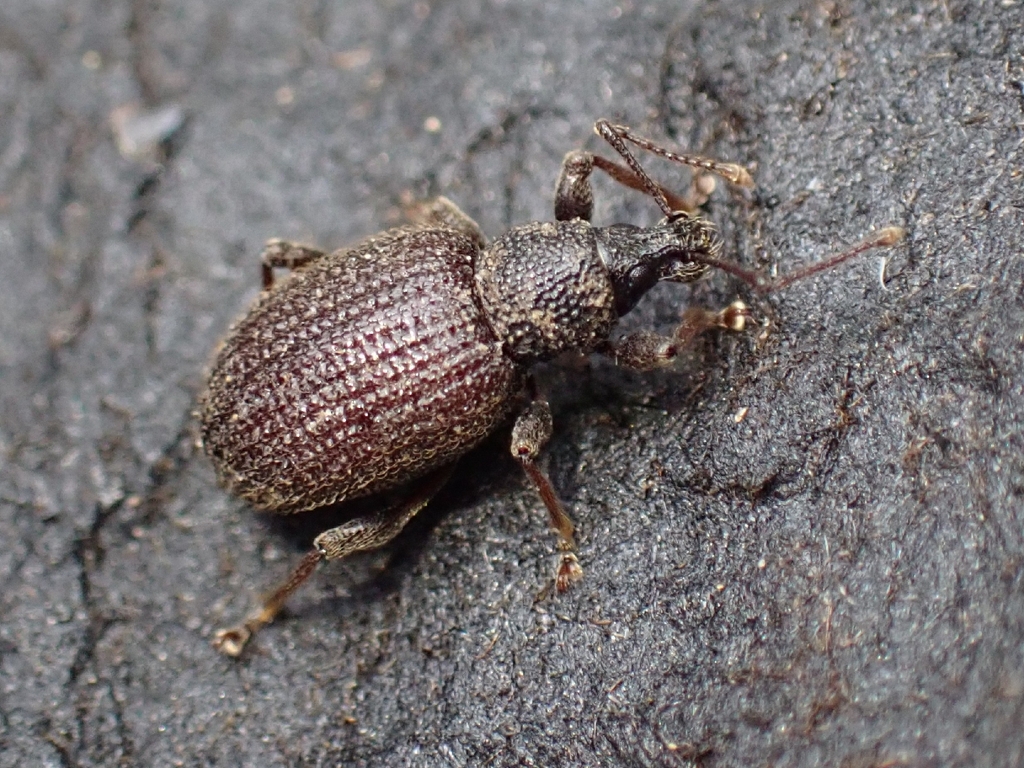
(c) Adrien Cozannet, some rights reserved (CC BY) · licence
Family: Curculionidae · Class: Insecta · Order: Coleoptera
Otiorhynchus rugosostriatus (Rough strawberry root weevil) is a California animal in the Curculionidae family.
The rough strawberry root weevil is a small, flightless beetle in the family Curculionidae, subfamily Entiminae. Adults typically measure 5-8 mm in length and display the characteristic elongated snout typical of weevils. The body is dark brown to black with a rugose (rough) surface texture that gives the species its common name. The elytra (wing covers) are fused and lack functional wings, making adults incapable of flight. The antennae are elbowed and clubbed at the tips, inserted on the rostrum. This species is non-native to North America, having been introduced from Europe (BugGuide). In California, the rough strawberry root weevil has established populations primarily in coastal and valley regions where suitable host plants and moderate climatic conditions exist. The species has spread throughout much of the western United States since its introduction. The rough strawberry root weevil inhabits gardens, agricultural areas, and disturbed habitats where its host plants are present. Adults are commonly found in strawberry beds, nurseries, and ornamental plantings. The species tolerates a range of soil types but requires adequate moisture for larval development. Adults are typically active during cooler periods and seek shelter under plant debris, mulch, or soil cracks during hot weather. Adults are nocturnal feeders that consume foliage, creating characteristic notched feeding damage along leaf margins of host plants. Primary hosts include strawberry plants, but the species also feeds on various other plants including raspberry, grape, rhododendron, and numerous ornamental species. Females deposit eggs in soil near host plant roots during spring and summer months. Larvae develop in the soil, feeding on plant roots and organic matter. The species typically completes one generation per year in most climatic zones, though development timing varies with temperature and moisture conditions. Adults can live for several months and may overwinter in protected locations. As a non-native species, the rough strawberry root weevil is not afforded conservation protection and is instead considered an agricultural and horticultural pest. The species causes economic damage to strawberry crops and ornamental plants through both adult foliar feeding and larval root damage. Management typically involves cultural practices such as removing plant debris, reducing moisture around susceptible plants, and targeted pesticide applications when populations reach damaging levels. The species' establishment and spread represent typical patterns of successful invasive arthropod colonization in suitable habitat. Detailed ecological studies specific to California populations remain limited, though the species' pest status has prompted research into management strategies. The weevil's flightless nature means local spread occurs primarily through ground movement and human-mediated transport via infested plant material or soil.
Classification
Class: Insecta · Order: Coleoptera · Family: Curculionidae
Frequently asked questions
How is Otiorhynchus rugosostriatus classified?
Otiorhynchus rugosostriatus belongs to class Insecta, order Coleoptera, family Curculionidae.
What family does Otiorhynchus rugosostriatus belong to?
Otiorhynchus rugosostriatus is in the Curculionidae family.
What is Otiorhynchus rugosostriatus?
The rough strawberry root weevil is a small, flightless beetle in the family Curculionidae, subfamily Entiminae.
Is Otiorhynchus rugosostriatus found in California?
Yes. Otiorhynchus rugosostriatus is recorded in California in The California Species Project's catalogue.
Related species
Other California species in the same genus, family, or bioregion.
Data from The California Species Project — 14,000+ California species with verified data from CNPS, CDFW, USFWS, and more.