Otospermophilus beecheyi
California Ground Squirrel
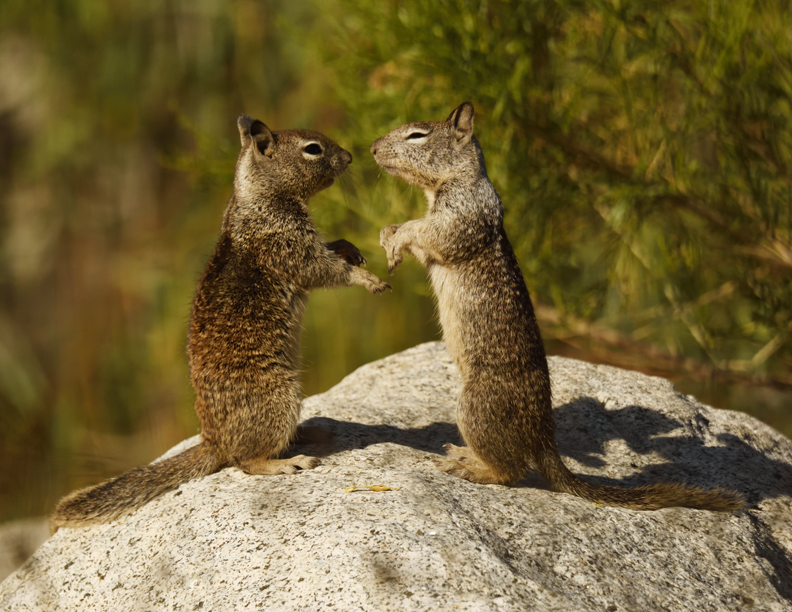
(c) smeckert, some rights reserved (CC BY) · licence
Family: Sciuridae · Class: Mammalia · Order: Rodentia
Otospermophilus beecheyi (California Ground Squirrel) is a California animal in the Sciuridae family.
The California ground squirrel is a medium-sized rodent measuring 380 to 490 millimeters (15 to 19 inches) in total length, with a tail comprising approximately 40% of total body length. Adults weigh between 280 to 738 grams (10 to 26 ounces), with males typically larger than females. The dorsal pelage is mottled gray-brown with whitish flecking, creating a grizzled appearance. A distinctive whitish to pale gray mantle extends from the head and shoulders down the sides, bordered by darker fur. The underside is buff to whitish. The bushy tail displays alternating dark and light bands, with white-edged hairs giving it a frosted appearance. California ground squirrels occur throughout California from sea level to elevations of 2,290 meters (7,500 feet), extending into Oregon, Washington, Nevada, and Baja California. Within California, the species is found in all counties except those in the southeastern deserts. The range encompasses the Central Valley, Coast Ranges, Sierra Nevada foothills, and southern California mountains. Populations are absent from high-elevation areas above the montane zone and from the Mojave and Sonoran deserts. This species inhabits open and semi-open areas including grasslands, oak woodlands, chaparral edges, agricultural fields, parks, and suburban areas. They prefer areas with well-drained soils suitable for burrow construction. Burrows are typically excavated on slopes, embankments, or beneath rocks and tree roots, extending 1.5 to 9 meters (5 to 30 feet) in length with multiple entrances. Colony burrow systems can be extensive, with interconnected tunnels serving multiple individuals. California ground squirrels are diurnal and social, living in loose colonies. They are primarily granivorous, consuming seeds, nuts, fruits, and green vegetation. The diet includes acorns, grass seeds, wildflower seeds, bulbs, and occasionally insects, eggs, and small vertebrates. Breeding occurs once annually, typically from February through April. After a 25 to 30-day gestation period, females produce litters of 3 to 9 young, with an average of 7 pups. Young emerge from burrows at approximately 6 weeks of age and reach sexual maturity at 10 to 11 months. The species exhibits seasonal activity patterns, with peak activity during spring and early summer. In areas with hot summers or cold winters, ground squirrels may enter estivation or hibernation, respectively. They are known for their alarm call system, with different vocalizations indicating various types of threats. The California ground squirrel is not listed under state or federal endangered species acts and maintains stable populations throughout most of its range. The species is considered abundant and is classified as a game animal in California. In agricultural areas, ground squirrels are sometimes considered pests due to crop damage and burrow-related issues. Population management occurs in some regions through hunting and control programs. Climate change may affect high-elevation populations, but the species' adaptability and broad habitat tolerance suggest overall population stability.
Classification
Class: Mammalia · Order: Rodentia · Family: Sciuridae
Frequently asked questions
How is Otospermophilus beecheyi classified?
Otospermophilus beecheyi belongs to class Mammalia, order Rodentia, family Sciuridae.
What family does Otospermophilus beecheyi belong to?
Otospermophilus beecheyi is in the Sciuridae family.
What is Otospermophilus beecheyi?
The California ground squirrel is a medium-sized rodent measuring 380 to 490 millimeters (15 to 19 inches) in total length, with a tail comprising approximately 40% of total body length.
Is Otospermophilus beecheyi found in California?
Yes. Otospermophilus beecheyi is recorded in California in The California Species Project's catalogue.
Related species
Other California species in the same genus, family, or bioregion.
Data from The California Species Project — 14,000+ California species with verified data from CNPS, CDFW, USFWS, and more.