Otospermophilus douglasii
Douglas' Ground Squirrel
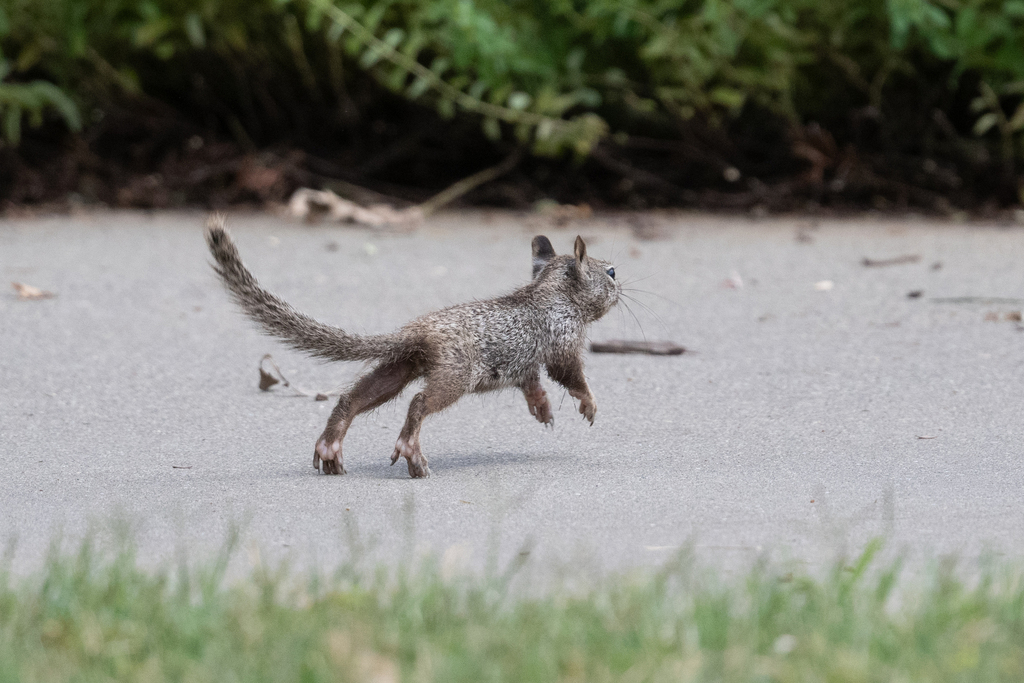
(c) Jonathan Eisen, some rights reserved (CC BY) · licence
Family: Sciuridae · Class: Mammalia · Order: Rodentia
Otospermophilus douglasii (Douglas' Ground Squirrel) is a California animal in the Sciuridae family.
Douglas' ground squirrel (Otospermophilus douglasii) is a medium-sized rodent belonging to the family Sciuridae. Adults typically measure 230 to 290 mm (9.1 to 11.4 inches) in total length, including a tail that comprises approximately 40% of the body length. The dorsal pelage is grayish-brown with indistinct mottling, while the ventral surface is lighter buff or cream-colored. The species exhibits sexual dimorphism, with males generally larger than females. A distinguishing feature is the relatively short ears and robust build compared to tree squirrels. Historically, Douglas' ground squirrel was distributed throughout much of California's Central Valley and adjacent foothills, ranging from Tehama County in the north to Kern County in the south. The species also occurred in coastal regions from the San Francisco Bay area south to Santa Barbara County. However, current distribution has contracted significantly due to habitat conversion and fragmentation. Today, the species persists primarily in remnant grassland and oak woodland patches, with the most stable populations occurring in the Sierra Nevada foothills and portions of the Coast Range. Douglas' ground squirrel inhabits open grasslands, oak woodlands, and chaparral communities at elevations ranging from sea level to approximately 1,200 meters (3,937 feet). The species requires well-drained soils suitable for burrow construction and areas with adequate herbaceous vegetation for foraging. Preferred habitats include annual grasslands dominated by non-native grasses and forbs, blue oak (Quercus douglasii) savannas, and edges between grassland and shrubland communities. Burrow systems can extend 1 to 3 meters below ground and feature multiple entrances. This species is primarily granivorous, feeding on seeds of grasses, forbs, and shrubs, though it also consumes green vegetation, bulbs, and occasionally insects. Douglas' ground squirrels are active during daylight hours, with peak activity occurring in morning and late afternoon. The species exhibits a pronounced seasonal activity pattern, becoming dormant during hot summer months and cold winter periods. Breeding occurs from late winter through early spring, typically February through April. Females produce a single annual litter of 4 to 12 young after a gestation period of approximately 28 days. Young emerge from burrows at 6 to 7 weeks of age. Douglas' ground squirrel is not currently listed under federal or state endangered species legislation, though populations have declined substantially throughout the species' range. The primary threats include conversion of native grasslands to agriculture and urban development, habitat fragmentation, and competition from non-native species. According to the California Department of Fish and Wildlife, the species has experienced significant range reduction, particularly in the Central Valley where less than 5% of historic grassland habitat remains. Climate change may pose additional challenges through altered precipitation patterns affecting food availability and suitable habitat conditions. Conservation efforts focus on protecting remaining grassland habitats and implementing grazing management practices that maintain appropriate vegetation structure for the species.
Classification
Class: Mammalia · Order: Rodentia · Family: Sciuridae
Frequently asked questions
How is Otospermophilus douglasii classified?
Otospermophilus douglasii belongs to class Mammalia, order Rodentia, family Sciuridae.
What family does Otospermophilus douglasii belong to?
Otospermophilus douglasii is in the Sciuridae family.
What is Otospermophilus douglasii?
Douglas' ground squirrel (Otospermophilus douglasii) is a medium-sized rodent belonging to the family Sciuridae.
Is Otospermophilus douglasii found in California?
Yes. Otospermophilus douglasii is recorded in California in The California Species Project's catalogue.
Related species
Other California species in the same genus, family, or bioregion.
Data from The California Species Project — 14,000+ California species with verified data from CNPS, CDFW, USFWS, and more.