Ovis canadensis
Bighorn sheep
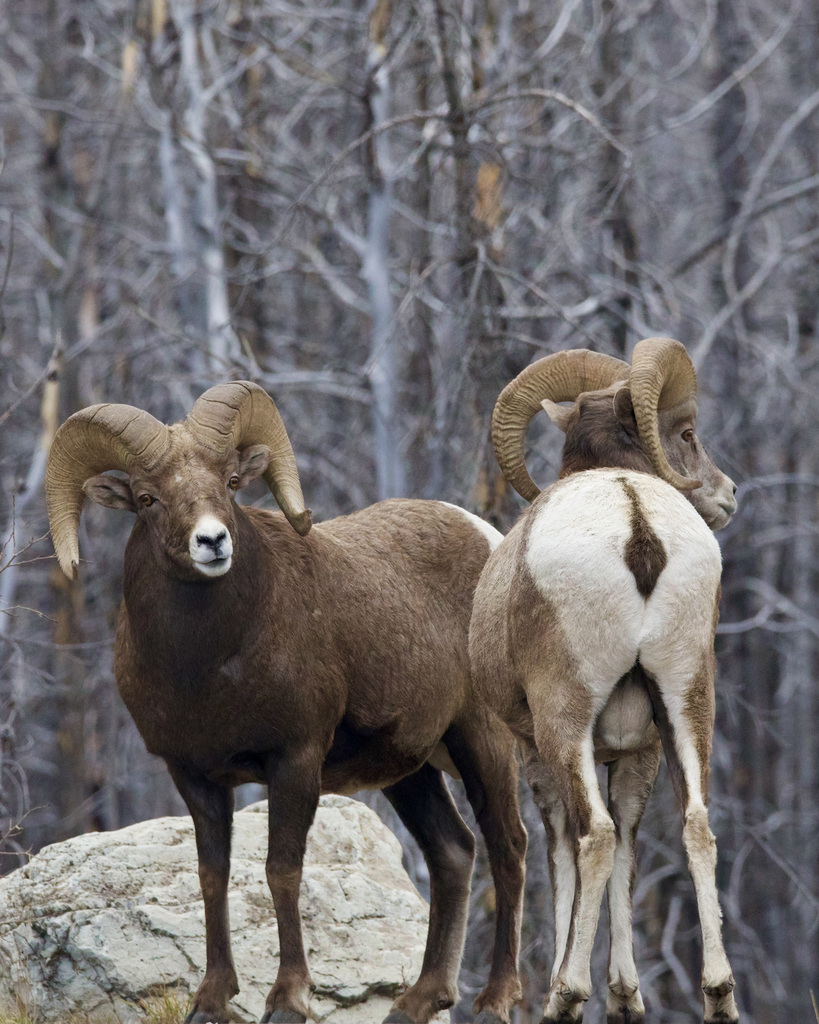
(c) John Krampl, some rights reserved (CC BY) · licence
Family: Bovidae · Class: Mammalia · Order: Artiodactyla
Conservation status: FP
Ovis canadensis (Bighorn sheep) is a California animal in the Bovidae family.
Bighorn sheep are large, muscular ungulates distinguished by their massive curved horns and robust build. Adult rams weigh 58 to 143 kilograms (128 to 315 pounds) and stand 81 to 106 centimeters (32 to 42 inches) at the shoulder. Ewes are smaller, weighing 34 to 91 kilograms (75 to 200 pounds). Both sexes have brown to grayish-brown coats with lighter-colored rumps, bellies, and leg patches. Rams possess distinctive curved horns that can reach over 76 centimeters (30 inches) in length and weigh up to 14 kilograms (30 pounds). Ewes have shorter, more slender horns that curve only slightly backward. In California, bighorn sheep historically ranged throughout the Sierra Nevada, Cascade Range, and desert mountain ranges of southern California. Current populations are fragmented, occurring primarily in the Sierra Nevada from Mono County south to Tulare County, the Peninsular Ranges of Riverside and Imperial counties, and scattered desert mountain ranges including the Panamint, Inyo, and White mountains. The species has been extirpated from much of its historical range, particularly in coastal and Central Valley regions. Bighorn sheep inhabit steep, rocky terrain typically at elevations ranging from sea level to over 4,267 meters (14,000 feet). They prefer areas with rugged topography that provides escape terrain from predators, including cliff faces, rocky outcrops, and steep slopes. Desert populations utilize water sources within 1.6 kilometers (1 mile) of feeding areas. Sierra Nevada populations move seasonally between high-elevation summer ranges and lower winter ranges, following traditional migration routes. Bighorn sheep are gregarious, forming separate male and female groups except during breeding season. Ewes live in maternal bands with their offspring, while adult rams form bachelor groups or remain solitary. The rutting season occurs from October through December, when rams engage in head-butting contests to establish dominance. Ewes typically give birth to single lambs after a 175-day gestation period, usually between March and June. Lambs remain with mothers for their first year. The species feeds on grasses, forbs, and shrubs, with diet varying seasonally and by habitat type. Desert populations consume palo verde, brittlebush, and desert lavender, while mountain populations graze on grasses and browse on mountain mahogany and bitterbrush. Bighorn sheep are designated as Fully Protected under California law, according to the California Department of Fish and Wildlife, with the exception of Nelson bighorn sheep subspecies and legal hunting conducted under specific regulations. Primary threats include habitat fragmentation, disease transmission from domestic sheep, predation, human disturbance, and climate change effects on water availability. Population estimates suggest fewer than 6,000 individuals remain in California across all subspecies. Conservation efforts focus on habitat connectivity, disease prevention, water source maintenance, and population monitoring through GPS collaring studies.
Classification
Class: Mammalia · Order: Artiodactyla · Family: Bovidae
Conservation status
FP
Frequently asked questions
How is Ovis canadensis classified?
Ovis canadensis belongs to class Mammalia, order Artiodactyla, family Bovidae.
What family does Ovis canadensis belong to?
Ovis canadensis is in the Bovidae family.
Is Ovis canadensis protected or of conservation concern?
Ovis canadensis carries the following status: FP.
What is Ovis canadensis?
Bighorn sheep are large, muscular ungulates distinguished by their massive curved horns and robust build.
Is Ovis canadensis found in California?
Yes. Ovis canadensis is recorded in California in The California Species Project's catalogue.
Related species
Other California species in the same genus, family, or bioregion.
Data from The California Species Project — 14,000+ California species with verified data from CNPS, CDFW, USFWS, and more.