Oxybelus uniglumis
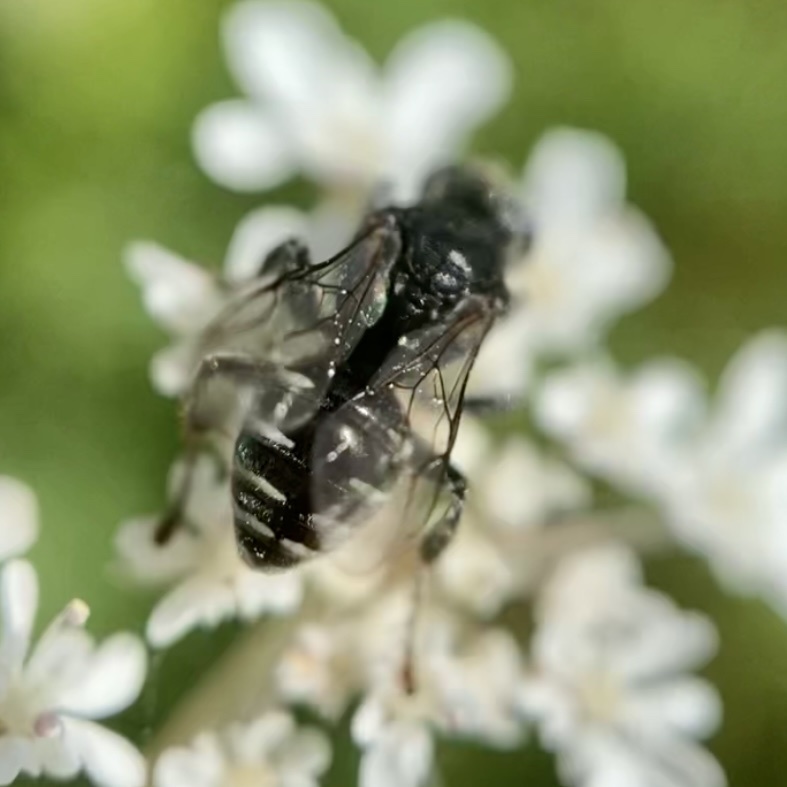
(c) Michelle Orcutt, some rights reserved (CC BY) · licence
Family: Crabronidae · Class: Insecta · Order: Hymenoptera
Oxybelus uniglumis is a California animal in the Crabronidae family.
Oxybelus uniglumis is a small solitary wasp in the family Crabronidae, commonly known as square-headed wasps or sand wasps. This species belongs to a genus of specialized hunting wasps that provision their nests with paralyzed flies. Adults typically measure 6-12 mm in length, with females generally larger than males. The body is predominantly black with yellow markings on the face, thorax, and abdomen segments. The head appears somewhat square when viewed from the front, a characteristic feature of the genus. Females possess a robust mandible structure adapted for digging, while males often display more extensive yellow coloration. Oxybelus uniglumis has a widespread distribution across North America, extending from southern Canada through the United States. According to NatureServe, the species is ranked G4 (Apparently Secure) globally, indicating stable populations throughout most of its range (NatureServe 2025). In California, this wasp occurs in various regions including coastal areas, as documented in salt marsh habitats at Ballona Wetlands in Los Angeles County (Nagano et al. 1981). The species appears to have a broad elevational tolerance and occurs in both inland and coastal environments. This species inhabits diverse terrestrial environments including sandy areas, open woodlands, grasslands, and coastal habitats. Adults are commonly found in areas with loose, well-drained soils suitable for nest construction. In California, O. uniglumis has been documented in salt marsh ecosystems, suggesting tolerance for saline conditions (Nagano et al. 1981). The species shows preference for sunny, exposed locations with sparse vegetation where females can easily excavate nesting burrows. Nesting sites are typically selected in firm but workable sandy or loamy soils on level ground or gentle slopes. Female O. uniglumis are solitary wasps that construct underground burrows for their offspring. Each female excavates a vertical shaft extending 5-15 cm into the soil, with one or more horizontal brood cells at the bottom. The provisioning behavior is highly specialized: females hunt exclusively for flies (Diptera), which they paralyze with their sting and transport to the nest cells. Each cell receives a single paralyzed fly and one egg before being sealed. The immobilized prey remains fresh throughout larval development, providing the sole food source for the developing wasp. Males emerge before females and often establish territories near emergence sites. Mating typically occurs in spring and early summer, with adults active from May through September in most regions. Oxybelus uniglumis does not currently hold any federal or state conservation listing status. The species' global rank of G4 indicates apparently secure populations without immediate conservation concerns. However, like many ground-nesting insects, populations may face localized pressures from habitat modification, pesticide use, and coastal development in some areas. The species' broad habitat tolerance and widespread distribution suggest resilience to moderate environmental changes, though specific population monitoring data are limited.
Classification
Class: Insecta · Order: Hymenoptera · Family: Crabronidae
Frequently asked questions
How is Oxybelus uniglumis classified?
Oxybelus uniglumis belongs to class Insecta, order Hymenoptera, family Crabronidae.
What family does Oxybelus uniglumis belong to?
Oxybelus uniglumis is in the Crabronidae family.
What is Oxybelus uniglumis?
Oxybelus uniglumis is a small solitary wasp in the family Crabronidae, commonly known as square-headed wasps or sand wasps.
Is Oxybelus uniglumis found in California?
Yes. Oxybelus uniglumis is recorded in California in The California Species Project's catalogue.
Related species
Other California species in the same genus, family, or bioregion.
Data from The California Species Project — 14,000+ California species with verified data from CNPS, CDFW, USFWS, and more.