Oxyopes salticus
Striped Lynx Spider
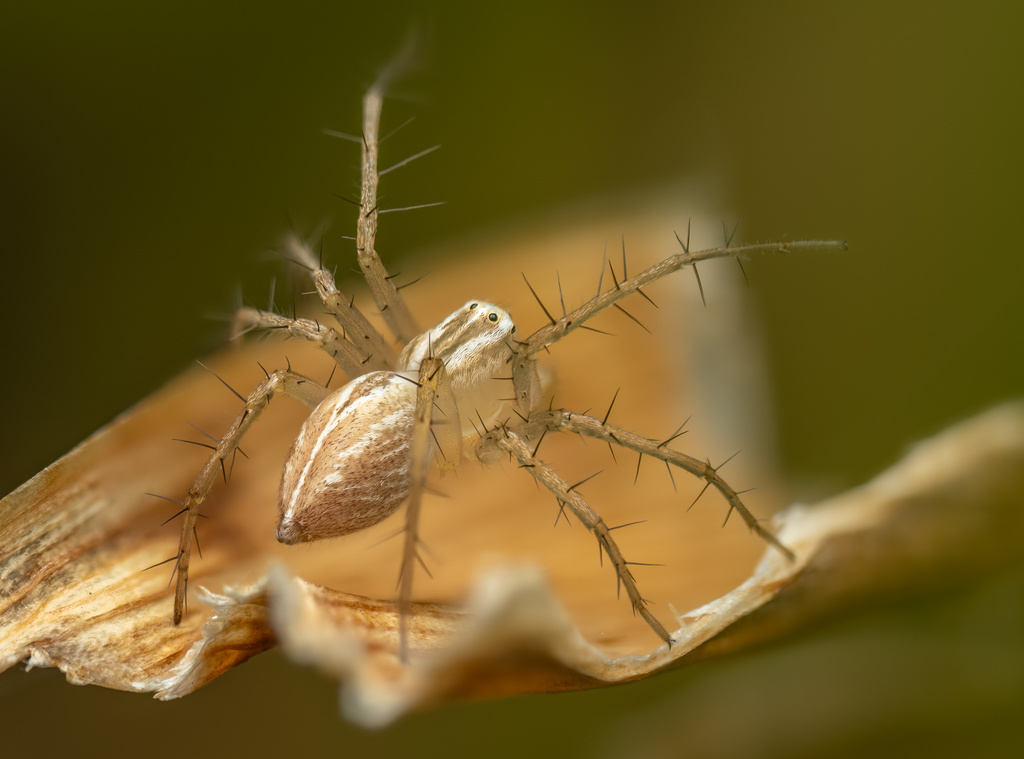
(c) cesar stastny, some rights reserved (CC BY) · licence
Family: Oxyopidae · Class: Arachnida · Order: Araneae
Oxyopes salticus (Striped Lynx Spider) is a California animal in the Oxyopidae family.
The striped lynx spider is a medium-sized hunting spider in the family Oxyopidae. Adults typically measure 4 to 7 mm in body length, with females generally larger than males. The species exhibits distinctive pale yellow to light brown coloration with prominent dark longitudinal stripes running along the carapace and abdomen. The legs are relatively long and slender, adorned with conspicuous black spines that aid in prey capture. Males display more contrasting markings and are often lighter in overall coloration than females. Oxyopes salticus occurs widely across North America, with its range extending from southern Canada through the United States into Mexico. In California, the species has been documented throughout much of the state, from coastal areas to inland valleys and foothills. The spider's distribution includes both Mediterranean climate zones and more arid regions, demonstrating considerable ecological adaptability. This species inhabits a diverse array of habitats, showing particular preference for areas with abundant herbaceous vegetation. Striped lynx spiders are commonly found in grasslands, prairies, agricultural fields, gardens, and along habitat edges. They frequently occur on low shrubs, weedy areas, and among tall grasses where they construct small retreat webs. The species demonstrates tolerance for both natural and disturbed environments, often thriving in areas with moderate human activity. Elevation ranges from sea level to montane zones, though they are most abundant at lower elevations. Striped lynx spiders are active diurnal hunters that do not construct prey-capture webs. Instead, they rely on their excellent vision and agility to stalk and ambush small flying insects, particularly aphids, flies, mosquitoes, and other soft-bodied arthropods. Hunting typically occurs on vegetation surfaces where they move deliberately among leaves and stems. Females construct silken egg sacs in late summer, often attaching them to plant stems or leaves. Each egg sac contains 25 to 600 eggs, with clutch size varying based on female size and environmental conditions. Spiderlings emerge in early fall and undergo several molts before reaching maturity the following spring. Adults are most active from late spring through early fall, with peak abundance occurring during summer months when prey is most available. Oxyopes salticus is not federally or state listed and appears to maintain stable populations across its range. The species benefits from its generalist habitat requirements and broad dietary preferences, allowing it to persist in both natural and modified landscapes. Agricultural areas often provide suitable habitat, though intensive pesticide applications may locally impact populations. Climate change could potentially affect distribution patterns, particularly at elevation and latitude extremes, but current populations show no evidence of significant decline. The species serves important ecological functions as both predator of pest insects and prey for larger arthropods and insectivores.
Classification
Class: Arachnida · Order: Araneae · Family: Oxyopidae
Frequently asked questions
How is Oxyopes salticus classified?
Oxyopes salticus belongs to class Arachnida, order Araneae, family Oxyopidae.
What family does Oxyopes salticus belong to?
Oxyopes salticus is in the Oxyopidae family.
What is Oxyopes salticus?
The striped lynx spider is a medium-sized hunting spider in the family Oxyopidae.
Is Oxyopes salticus found in California?
Yes. Oxyopes salticus is recorded in California in The California Species Project's catalogue.
Related species
Other California species in the same genus, family, or bioregion.
Data from The California Species Project — 14,000+ California species with verified data from CNPS, CDFW, USFWS, and more.