Oxyura jamaicensis
Ruddy Duck
(c) Daniel Pineda Vera, some rights reserved (CC BY) · licence
Family: Anatidae · Class: Aves · Order: Anseriformes
Oxyura jamaicensis (Ruddy Duck) is a California animal in the Anatidae family.
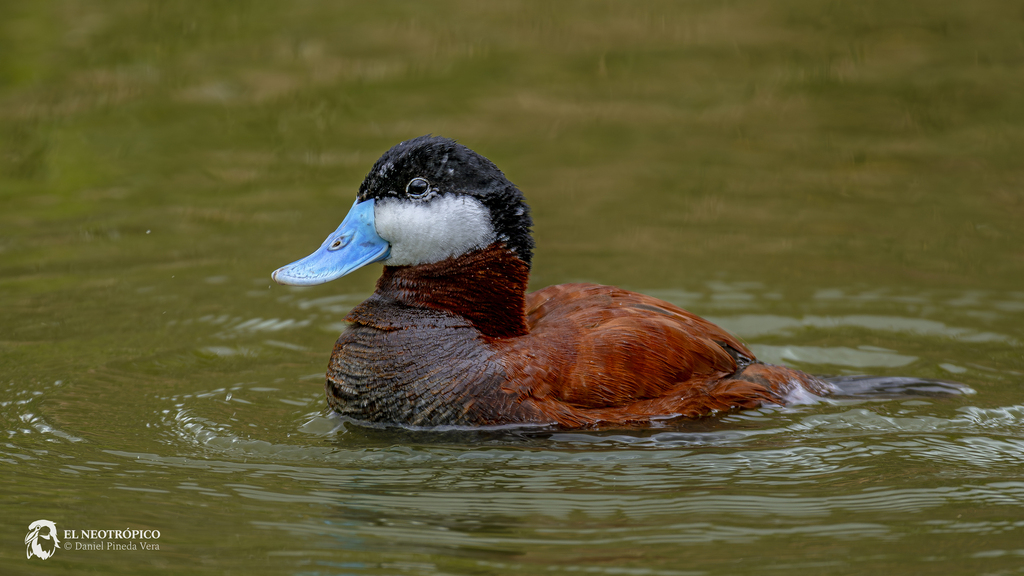
The Ruddy Duck is a compact, diving duck characterized by its distinctive stiff tail and robust body structure. Males in breeding plumage display bright chestnut-red body coloration with a black cap extending from the crown to below the eye, contrasting sharply with white cheeks. The bill becomes bright blue during breeding season. Males measure 35-43 cm (14-17 inches) in length with a wingspan of 53-62 cm (21-24 inches), weighing 300-795 grams. Females and non-breeding males are brownish-gray with darker caps and pale cheeks, displaying more subdued coloration year-round. Both sexes possess relatively large feet positioned far back on the body, facilitating underwater propulsion. Ruddy Ducks breed across much of western and central North America, with California populations concentrated in the Central Valley, Klamath Basin, and scattered locations in southern California. The species occurs throughout the San Francisco Bay Area, Central Valley wetlands, and alpine lakes in the Sierra Nevada. Winter populations expand to include coastal areas, with significant concentrations in San Francisco Bay, Salton Sea, and various reservoirs and lakes statewide. Migration occurs primarily between September and November, with return movements from February through April. This species inhabits freshwater marshes, prairie potholes, stock ponds, and shallow lakes with emergent vegetation during breeding season. Optimal breeding habitat includes water depths of 0.3-1.8 meters with 50-75% emergent cover, particularly bulrush and cattail stands. Winter habitat extends to brackish waters, including estuaries, coastal lagoons, and sewage treatment ponds. Ruddy Ducks demonstrate preference for areas with abundant invertebrate food sources and minimal human disturbance. Ruddy Ducks are primarily diving ducks, feeding underwater on aquatic invertebrates, seeds, and plant matter. Diet consists of chironomid larvae, amphipods, gastropods, and seeds of aquatic plants including pondweeds and sedges. Breeding occurs from April through August, with peak nesting in May and June. Females construct nests in dense emergent vegetation, typically building platforms of cattail or bulrush stems 15-60 cm above water level. Clutch size ranges from 6-10 eggs, with incubation lasting 23-26 days. Males perform elaborate courtship displays including head-pumping, bubble-blowing, and tail-cocking behaviors. The Ruddy Duck is not federally or state listed as threatened or endangered. North American populations appear stable, though specific California population trends vary regionally. Breeding Bird Survey data indicates relatively stable populations continent-wide from 1966-2019. Primary threats include habitat loss through wetland drainage and conversion, water level management that affects nesting success, and potential climate change impacts on breeding habitat availability. The North American Waterfowl Management Plan identifies Ruddy Ducks as a priority species for habitat conservation efforts. California's Central Valley provides critical wintering habitat, supporting significant portions of the Pacific Flyway population.
Classification
Class: Aves · Order: Anseriformes · Family: Anatidae
Frequently asked questions
How is Oxyura jamaicensis classified?
Oxyura jamaicensis belongs to class Aves, order Anseriformes, family Anatidae.
What family does Oxyura jamaicensis belong to?
Oxyura jamaicensis is in the Anatidae family.
What is Oxyura jamaicensis?
The Ruddy Duck is a compact, diving duck characterized by its distinctive stiff tail and robust body structure.
Is Oxyura jamaicensis found in California?
Yes. Oxyura jamaicensis is recorded in California in The California Species Project's catalogue.
Related species
Other California species in the same genus, family, or bioregion.
Data from The California Species Project — 14,000+ California species with verified data from CNPS, CDFW, USFWS, and more.