Pacifastacus leniusculus klamathensis
Klamath Crayfish
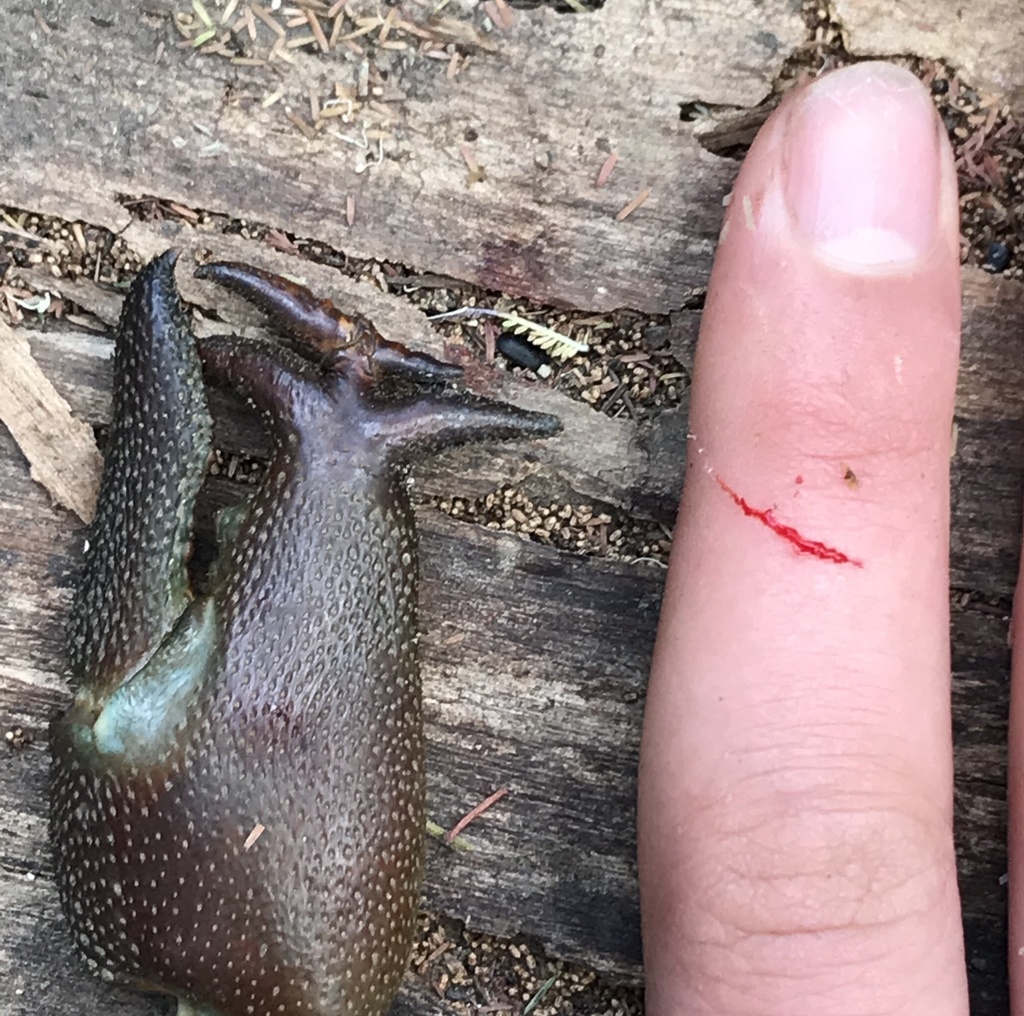
(c) Parsa Fard, some rights reserved (CC BY) · licence
Family: Astacidae · Class: Malacostraca · Order: Decapoda
Conservation status: G5T5 S4
Pacifastacus leniusculus klamathensis (Klamath Crayfish) is a California animal in the Astacidae family.
The Klamath crayfish (Pacifastacus leniusculus klamathensis) is a subspecies of the signal crayfish endemic to the Klamath River basin of northern California and southern Oregon. Adults typically measure up to 160 millimeters (6.3 inches) in total length from rostrum tip to telson end, with males generally larger than females. The species exhibits the characteristic robust body plan of freshwater crayfish, with a segmented exoskeleton, prominent chelae (claws), and compound eyes on moveable stalks. Historically, the Klamath crayfish was distributed throughout the Klamath River drainage system, including tributaries in Del Norte, Siskiyou, and Humboldt counties in California, extending into Jackson and Klamath counties in Oregon. The subspecies is distinguished from other Pacifastacus leniusculus subspecies by specific morphological characteristics adapted to the unique conditions of the Klamath basin ecosystem. Current distribution appears more restricted than historical range, though comprehensive population surveys are limited. The species inhabits cool, well-oxygenated freshwater environments including streams, rivers, and associated pools within the Klamath River system. Klamath crayfish prefer rocky or gravelly substrates that provide shelter under stones, logs, and undercut banks. They typically occur in areas with moderate to swift current flow and are most active during nighttime hours. The species demonstrates seasonal movement patterns, with adults often migrating to deeper pools during winter months. Klamath crayfish are omnivorous detritivores, feeding on aquatic vegetation, decaying organic matter, small invertebrates, and occasionally fish eggs or small fish. Reproduction occurs annually, with mating typically taking place in fall. Females carry fertilized eggs attached to their pleopods (swimmerets) through winter, with juveniles hatching in late spring or early summer. Young crayfish remain attached to the female for several weeks after hatching before becoming independent. The subspecies currently holds a NatureServe global rank of G5T5, indicating it is secure globally as a subspecies, with a state rank of S4 in California, suggesting it is apparently secure but may have some cause for concern. However, like many native freshwater crustaceans in the Pacific Northwest, Klamath crayfish face multiple threats including habitat modification from dam construction and water diversions, competition from introduced species, and water quality degradation from agricultural and logging activities. The Klamath River system has experienced significant ecological changes due to dam construction, which has altered natural flow regimes and water temperatures that may affect crayfish populations. Climate change poses additional risks through altered precipitation patterns and increased water temperatures. Conservation efforts for salmonid species in the Klamath basin, including dam removal projects, may benefit native crayfish populations by restoring natural river conditions and connectivity between habitats.
Classification
Class: Malacostraca · Order: Decapoda · Family: Astacidae
Conservation status
G5T5 S4
Frequently asked questions
How is Pacifastacus leniusculus klamathensis classified?
Pacifastacus leniusculus klamathensis belongs to class Malacostraca, order Decapoda, family Astacidae.
What family does Pacifastacus leniusculus klamathensis belong to?
Pacifastacus leniusculus klamathensis is in the Astacidae family.
Is Pacifastacus leniusculus klamathensis protected or of conservation concern?
Pacifastacus leniusculus klamathensis carries the following status: G5T5 S4.
What is Pacifastacus leniusculus klamathensis?
The Klamath crayfish (Pacifastacus leniusculus klamathensis) is a subspecies of the signal crayfish endemic to the Klamath River basin of northern California and southern Oregon.
Is Pacifastacus leniusculus klamathensis found in California?
Yes. Pacifastacus leniusculus klamathensis is recorded in California in The California Species Project's catalogue.
Related species
Other California species in the same genus, family, or bioregion.
Data from The California Species Project — 14,000+ California species with verified data from CNPS, CDFW, USFWS, and more.