Pacificanthia consors
Brown Leather Wing Beetle
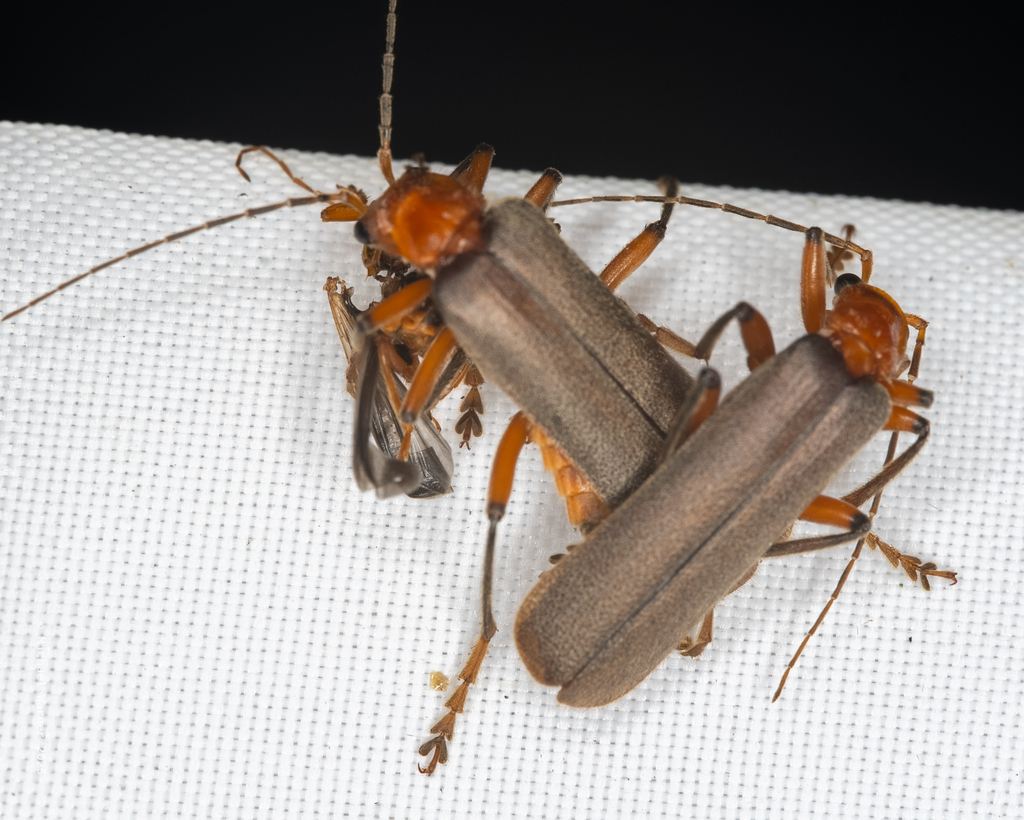
(c) Michael Warner, some rights reserved (CC BY) · licence
Family: Cantharidae · Class: Insecta · Order: Coleoptera
Pacificanthia consors (Brown Leather Wing Beetle) is a California animal in the Cantharidae family.
The Brown Leather Wing Beetle (Pacificanthia consors) is a medium-sized soldier beetle measuring 12 to 20 mm in length (BugGuide). Adults display the characteristic soft-bodied structure typical of the Cantharidae family, with flexible wing covers that give the group its common name. The species exhibits the elongated body form and relatively long antennae common to soldier beetles. This species ranges extensively along the Pacific Coast from British Columbia to Baja California (BugGuide). The broad distribution encompasses diverse habitats across multiple biogeographic regions, making it one of the more widespread members of its genus. In California, the species likely occurs throughout much of the state given this expansive range. Brown Leather Wing Beetles inhabit various terrestrial environments within their Pacific coastal range. Like other Cantharidae species, they are typically found in areas with abundant vegetation that supports both adult feeding opportunities and larval development sites. Adults are commonly attracted to artificial lights during their active season, suggesting they may also be drawn to natural light sources or engage in crepuscular activity patterns. Adults are active during late spring to early summer, representing the primary flight and reproductive period for the species (BugGuide). During this time, they emit a distinctive musty odor, which may serve in chemical communication or predator deterrence (BugGuide). This seasonal activity pattern aligns with the life cycles of many temperate soldier beetles, which typically have annual generations. Adults likely feed on pollen, nectar, and small insects, following the generalized diet pattern observed in related Cantharidae species. Larvae probably develop in soil or leaf litter, where they function as predators of other invertebrates, contributing to natural pest control in their ecosystems. The Brown Leather Wing Beetle does not appear on federal or state endangered species lists, and no specific conservation concerns have been documented for this species. Its broad geographic range from British Columbia to Baja California suggests relatively stable populations across diverse habitats. The species' attraction to artificial lights may indicate some adaptability to human-modified environments, though the ecological implications of this behavior remain unstudied. Like many insects, this species likely benefits from habitat preservation and reduction of pesticide use within its range. The taxonomic history of this species reflects changes in soldier beetle classification, having been previously placed in the genus Cantharis before transfer to Pacificanthia (BugGuide). This reclassification represents ongoing refinements in understanding relationships within the Cantharidae family. The specific epithet 'consors' was established by LeConte in 1851, indicating this species was among the earlier described North American soldier beetles. Current knowledge of this species' detailed ecology, population trends, and specific habitat requirements remains limited, representing opportunities for further scientific investigation.
Classification
Class: Insecta · Order: Coleoptera · Family: Cantharidae
Frequently asked questions
How is Pacificanthia consors classified?
Pacificanthia consors belongs to class Insecta, order Coleoptera, family Cantharidae.
What family does Pacificanthia consors belong to?
Pacificanthia consors is in the Cantharidae family.
What is Pacificanthia consors?
The Brown Leather Wing Beetle (Pacificanthia consors) is a medium-sized soldier beetle measuring 12 to 20 mm in length (BugGuide).
Is Pacificanthia consors found in California?
Yes. Pacificanthia consors is recorded in California in The California Species Project's catalogue.
Related species
Other California species in the same genus, family, or bioregion.
Data from The California Species Project — 14,000+ California species with verified data from CNPS, CDFW, USFWS, and more.