Paectes abrostolella
Paectes Moth (no specific name)
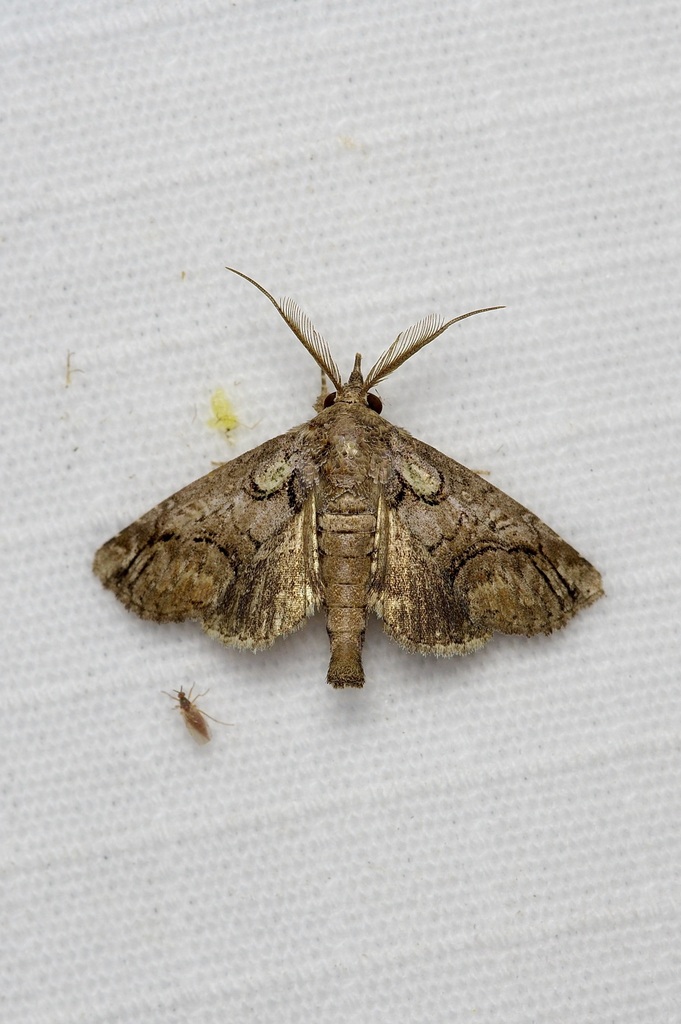
(c) Michelle W. (鍾偉瑋), some rights reserved (CC BY) · licence
Family: Euteliidae · Class: Insecta · Order: Lepidoptera
Paectes abrostolella (Paectes Moth (no specific name)) is a California animal in the Euteliidae family.
Paectes abrostolella is a small moth in the family Euteliidae with a wingspan of 22-27 mm and forewing length of 11-13 mm (BugGuide 2025). The species exhibits blue-gray coloration and is often lighter in appearance compared to related species. Adults can be distinguished from the similar Paectes pygmaea by their larger size and blue-gray hue, particularly where ranges overlap in the Midwest where P. abrostolella is restricted to prairie remnants (Metzler & Franclemont 1982). This species has a widespread distribution across the western United States, ranging from California to Texas and north to Montana. Disjunct populations also occur in Florida, Kentucky, Ohio, and Michigan (BugGuide 2025). The species' presence across such diverse geographic regions suggests considerable ecological adaptability, though specific population densities and trends have not been well documented in the scientific literature. Habitat requirements for P. abrostolella appear closely tied to the distribution of its larval host plants in the genus Rhus (sumac) (BugGuide 2025). In the Midwest portion of its range, the species is specifically associated with prairie remnants, indicating a preference for open grassland ecosystems. The western populations likely utilize various habitat types where sumac species occur, including chaparral, woodland edges, and disturbed areas where Rhus species commonly establish. Larval development occurs on plants in the genus Rhus, commonly known as sumacs (BugGuide 2025). These host plants are widely distributed across North America and include species such as smooth sumac (Rhus glabra), staghorn sumac (R. typhina), and various other deciduous shrubs in the family Anacardiaceae. The larvae presumably feed on foliage, though specific details about larval appearance, feeding behavior, and development timing have not been thoroughly documented in available literature. Adult flight periods and seasonal activity patterns vary geographically but records suggest activity during summer months. Texas records indicate adult activity in June and August (Bordelon et al. 2013). The species likely has one or more generations per year depending on local climate conditions, though voltinism has not been specifically studied. Paectes abrostolella currently lacks formal conservation status at federal or state levels. The species' widespread distribution across multiple states suggests stable populations, though no comprehensive population assessments have been conducted. The species' association with prairie remnants in portions of its range may indicate vulnerability to habitat loss in those regions, as native grasslands have experienced significant reduction throughout the Great Plains and Midwest. Climate change and continued habitat fragmentation could potentially impact populations, particularly those in isolated prairie fragments. However, the species' apparent ability to utilize various Rhus species as hosts may provide some resilience to environmental changes.
Classification
Class: Insecta · Order: Lepidoptera · Family: Euteliidae
Frequently asked questions
How is Paectes abrostolella classified?
Paectes abrostolella belongs to class Insecta, order Lepidoptera, family Euteliidae.
What family does Paectes abrostolella belong to?
Paectes abrostolella is in the Euteliidae family.
What is Paectes abrostolella?
Paectes abrostolella is a small moth in the family Euteliidae with a wingspan of 22-27 mm and forewing length of 11-13 mm (BugGuide 2025).
Is Paectes abrostolella found in California?
Yes. Paectes abrostolella is recorded in California in The California Species Project's catalogue.
More California species
This species has no close relatives in our California data — here are other species to explore.
Data from The California Species Project — 14,000+ California species with verified data from CNPS, CDFW, USFWS, and more.