Paeromopus angusticeps
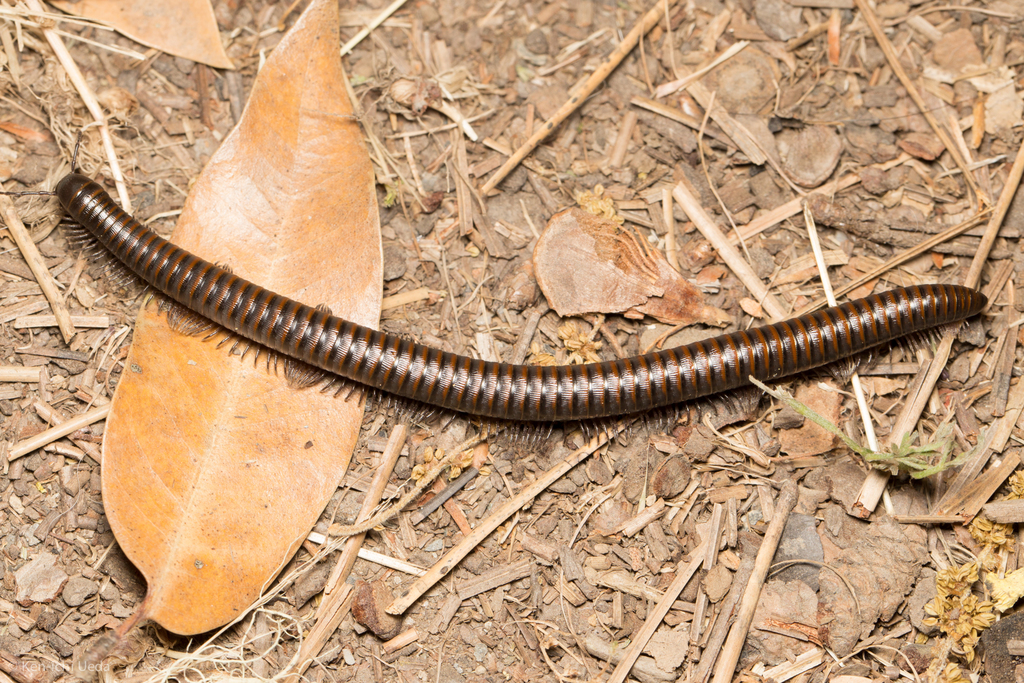
(c) Ken-ichi Ueda, some rights reserved (CC BY) · licence
Family: Paeromopodidae · Class: Diplopoda · Order: Julida
Paeromopus angusticeps is a California animal in the Paeromopodidae family.
Paeromopus angusticeps is a millipede species belonging to the order Julida and family Paeromopodidae. This arthropod is part of the subphylum Myriapoda, characterized by segmented bodies with numerous pairs of legs. As with other members of the genus Paeromopus, this species exhibits the typical millipede body plan with cylindrical segments, though specific morphological details and measurements have not been well documented in available scientific literature. The species occurs in North America, with the genus Paeromopus represented by four species according to U.S. Fish and Wildlife Service taxonomic records. Within P. angusticeps, at least one subspecies has been identified: P. a. buttensis, suggesting some degree of geographic variation within the species complex. The precise distribution range and specific localities for P. angusticeps have not been clearly documented in accessible sources, though the presence of named subspecies indicates restricted or fragmented populations. Habitat requirements for P. angusticeps remain poorly characterized. Most millipedes in the order Julida inhabit soil, leaf litter, and decaying organic matter in forest and woodland environments. They typically prefer moist conditions and are sensitive to desiccation. Without specific field studies, the elevation range, substrate preferences, and microhabitat requirements for this species cannot be definitively stated. Like other millipedes, P. angusticeps likely feeds on decomposing plant material, fungi, and organic detritus. Millipedes play important ecological roles as decomposers, breaking down leaf litter and contributing to nutrient cycling in terrestrial ecosystems. Reproductive biology, seasonal activity patterns, and life cycle duration for this species have not been documented. Most julidan millipedes reproduce through direct development, with females laying eggs in soil or organic matter. The conservation status of P. angusticeps is not currently assessed by major conservation organizations. The species does not appear on federal or state endangered species lists, and no specific population monitoring or conservation efforts have been documented. The lack of comprehensive distributional and ecological data makes it difficult to evaluate potential threats or conservation needs. As with many invertebrate species, habitat loss and fragmentation could pose risks if the species has restricted ranges or specific habitat requirements. The limited available information about P. angusticeps reflects the broader challenge of documenting North America's diverse but understudied invertebrate fauna. Further taxonomic work, distributional surveys, and ecological studies would be valuable for understanding this species' biology and conservation needs. The existence of named subspecies suggests that populations may be geographically isolated, potentially making them vulnerable to local environmental changes.
Classification
Class: Diplopoda · Order: Julida · Family: Paeromopodidae
Frequently asked questions
How is Paeromopus angusticeps classified?
Paeromopus angusticeps belongs to class Diplopoda, order Julida, family Paeromopodidae.
What family does Paeromopus angusticeps belong to?
Paeromopus angusticeps is in the Paeromopodidae family.
What is Paeromopus angusticeps?
Paeromopus angusticeps is a millipede species belonging to the order Julida and family Paeromopodidae.
Is Paeromopus angusticeps found in California?
Yes. Paeromopus angusticeps is recorded in California in The California Species Project's catalogue.
Related species
Other California species in the same genus, family, or bioregion.
Data from The California Species Project — 14,000+ California species with verified data from CNPS, CDFW, USFWS, and more.