Pagurus hirsutiusculus
Pacific Hairy Hermit Crab
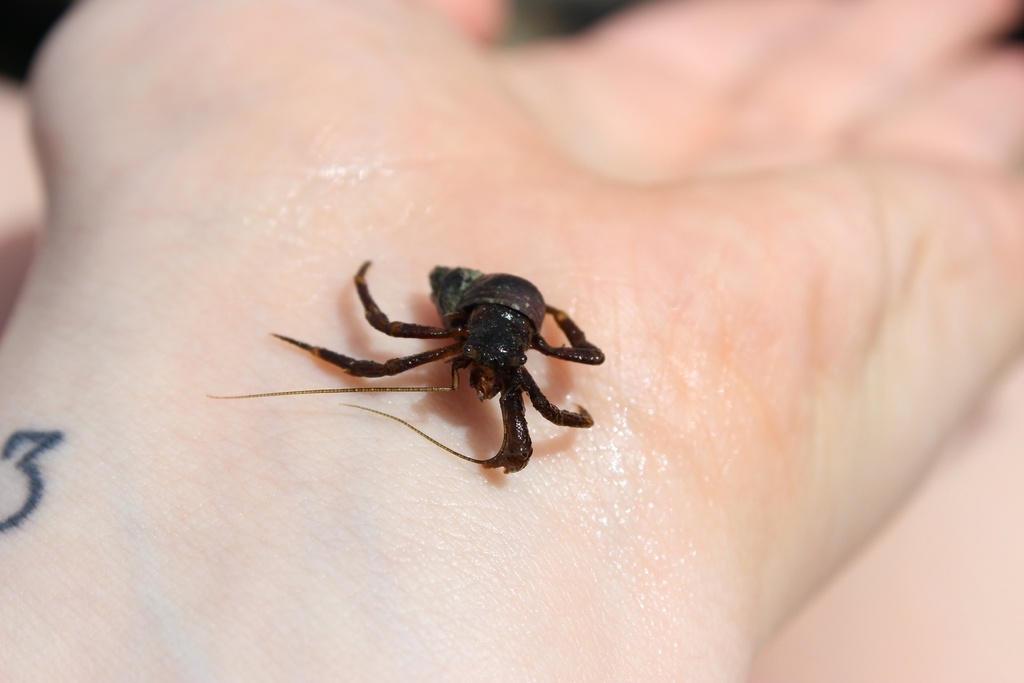
(c) Sarah MacGregor, some rights reserved (CC BY) · licence
Family: Paguridae · Class: Malacostraca · Order: Decapoda
Pagurus hirsutiusculus (Pacific Hairy Hermit Crab) is a California animal in the Paguridae family.
The Pacific hairy hermit crab (Pagurus hirsutiusculus) is a medium-sized hermit crab species native to the northeastern Pacific Ocean. Adults typically measure 15 to 25 millimeters (0.6 to 1.0 inches) in carapace length, though larger specimens can reach 35 millimeters (1.4 inches). The species is distinguished by its characteristic dense covering of setae (hairs) on the legs, claws, and carapace, giving it a distinctly fuzzy appearance. The left claw is typically larger than the right, and the walking legs bear prominent tufts of bristles. Coloration ranges from reddish-brown to orange-brown, often with darker banding on the legs and claws. Pagurus hirsutiusculus ranges along the Pacific coast from southeastern Alaska to Baja California, Mexico. The species is common throughout California's coastline, occurring in intertidal and shallow subtidal zones. It inhabits rocky shores, tide pools, sandy beaches, and mudflats from the high intertidal zone to depths of approximately 140 meters (460 feet). In California, populations are documented from Humboldt County south to San Diego County, with particularly abundant populations in central California coastal areas including Monterey Bay and the San Francisco Bay region. This hermit crab occupies a variety of marine habitats, showing preference for areas with abundant gastropod shells for housing. It is commonly found in rocky intertidal zones with crevices and tide pools, as well as sandy and muddy substrates in protected bays and estuaries. The species demonstrates considerable habitat flexibility, occurring in both exposed outer coast environments and more sheltered inland waters. Optimal habitat includes areas with moderate wave action and sufficient shell availability from snails such as Tegula and Littorina species. Pacific hairy hermit crabs are omnivorous scavengers, feeding on detritus, algae, small invertebrates, and carrion. They play an important ecological role as decomposers in intertidal communities. The species exhibits typical hermit crab behavior of inhabiting empty gastropod shells, which they change as they grow. Shell selection is influenced by size, weight, and condition, with crabs often engaging in shell-fighting behavior when suitable shells are limited. Reproduction occurs during spring and summer months, with females carrying bright orange egg masses beneath their abdomens. Larvae undergo several planktonic stages before settling and metamorphosing into juvenile crabs. The Pacific hairy hermit crab has no federal or state conservation listing status and is not considered threatened. Populations appear stable throughout most of the species' range, though local impacts from coastal development, pollution, and climate change may affect some populations. Ocean acidification poses a potential long-term threat by reducing the availability of calcium carbonate shells that the species depends upon for protection. The species serves as an important indicator of intertidal ecosystem health and continues to be abundant in many California marine protected areas and rocky intertidal habitats.
Classification
Class: Malacostraca · Order: Decapoda · Family: Paguridae
Frequently asked questions
How is Pagurus hirsutiusculus classified?
Pagurus hirsutiusculus belongs to class Malacostraca, order Decapoda, family Paguridae.
What family does Pagurus hirsutiusculus belong to?
Pagurus hirsutiusculus is in the Paguridae family.
What is Pagurus hirsutiusculus?
The Pacific hairy hermit crab (Pagurus hirsutiusculus) is a medium-sized hermit crab species native to the northeastern Pacific Ocean.
Is Pagurus hirsutiusculus found in California?
Yes. Pagurus hirsutiusculus is recorded in California in The California Species Project's catalogue.
Related species
Other California species in the same genus, family, or bioregion.
Data from The California Species Project — 14,000+ California species with verified data from CNPS, CDFW, USFWS, and more.