Paltothemis lineatipes
Red Rock Skimmer
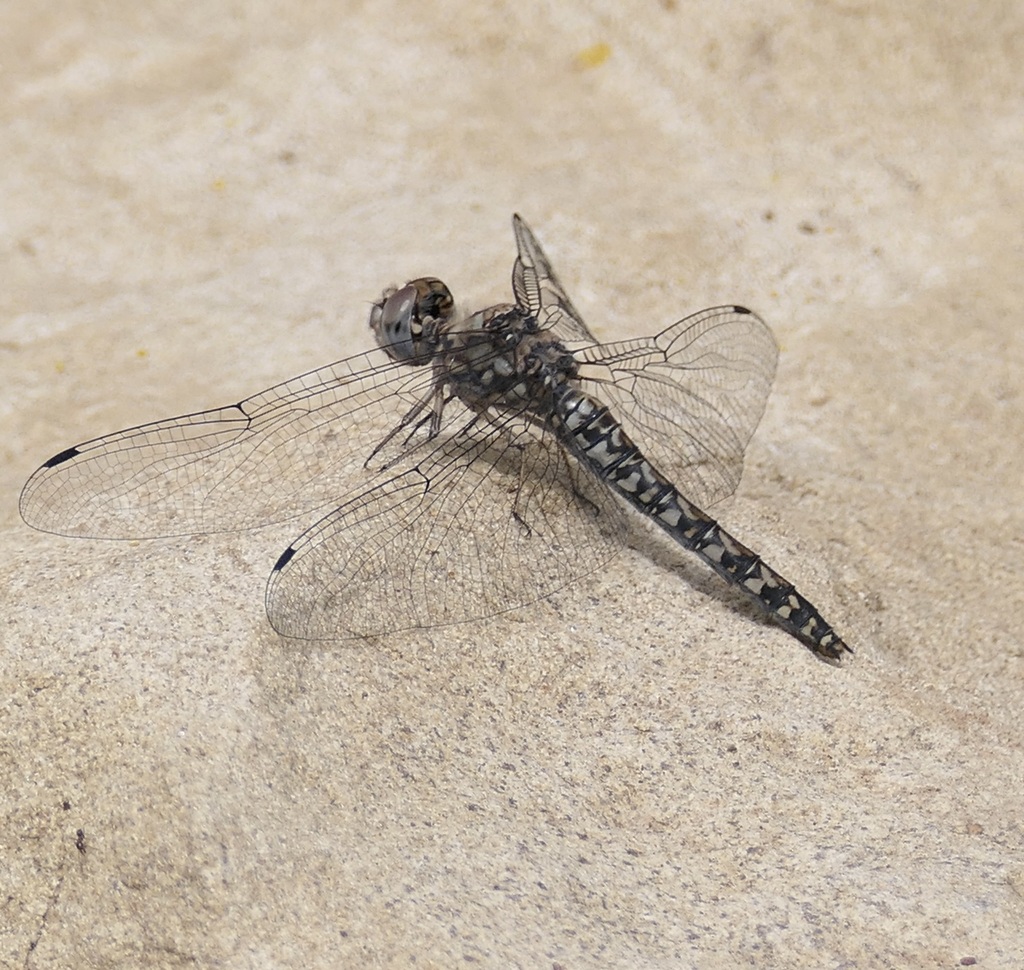
(c) John Hibbard, some rights reserved (CC BY) · licence
Family: Libellulidae · Class: Insecta · Order: Odonata
Paltothemis lineatipes (Red Rock Skimmer) is a California animal in the Libellulidae family.
The Red Rock Skimmer is a medium-sized dragonfly in the family Libellulidae. Adults measure approximately 50-60 millimeters (2.0-2.4 inches) in body length with a wingspan reaching 75-85 millimeters (3.0-3.3 inches). Males exhibit distinctive red coloration on the thorax and abdomen, while females display more subdued brown and yellow tones with darker markings. The wings are typically clear with reddish-brown veination, and both sexes possess prominent compound eyes characteristic of dragonflies. The species can be distinguished from similar libellulids by its robust build and the males' distinctive red coloration pattern. Paltothemis lineatipes occurs primarily in the southwestern United States, with California representing the northern extent of its range. In California, the species has been documented in Los Angeles County, particularly in the Puente Hills region (BugGuide). The species appears to be uncommon and localized within the state, with few documented records. Its broader range extends south through Baja California and into mainland Mexico, where it is more commonly encountered. Red Rock Skimmers inhabit areas near freshwater sources including streams, ponds, and seasonal pools, typically in rocky or mountainous terrain. Adult individuals have been observed in coastal sage scrub and chaparral habitats, sometimes considerable distances from water bodies. According to field observations, the species may be found in areas with ruderal vegetation and can appear as a vagrant in habitats without obvious water sources nearby (BugGuide). The association with rocky substrates, as suggested by its common name, indicates a preference for areas with exposed stone or boulder formations near aquatic habitats. Like other dragonflies, Red Rock Skimmers are aerial predators that capture insects in flight using their powerful mandibles and spiny legs. Adults feed on mosquitoes, midges, small flies, and other flying insects. Males typically establish territories near water sources where they patrol for mates and defend against rivals. Mating occurs over water, with females depositing eggs directly into aquatic substrates or vegetation. The aquatic nymphs are predaceous, feeding on aquatic invertebrates and small fish. Development from egg to adult likely takes one to two years, typical for dragonflies in temperate climates. Flight period for adults in California appears to occur during fall months, with October observations documented. The Red Rock Skimmer does not currently hold federal or state listing status under endangered species legislation. However, its apparent rarity and limited distribution within California suggest it may be a species of conservation concern. The species is included in the California Department of Fish and Wildlife's Special Animals List, which tracks species at risk regardless of formal protection status (CDFW 2016). Primary threats likely include habitat loss due to urban development, water diversions affecting breeding sites, and climate change impacts on aquatic habitats. The species' tendency to appear as a vagrant or migrant in areas distant from breeding habitat suggests dispersal capability, though established breeding populations in California remain poorly documented. Additional survey work is needed to better understand the species' distribution, population status, and habitat requirements within the state.
Classification
Class: Insecta · Order: Odonata · Family: Libellulidae
Frequently asked questions
How is Paltothemis lineatipes classified?
Paltothemis lineatipes belongs to class Insecta, order Odonata, family Libellulidae.
What family does Paltothemis lineatipes belong to?
Paltothemis lineatipes is in the Libellulidae family.
What is Paltothemis lineatipes?
The Red Rock Skimmer is a medium-sized dragonfly in the family Libellulidae.
Is Paltothemis lineatipes found in California?
Yes. Paltothemis lineatipes is recorded in California in The California Species Project's catalogue.
Related species
Other California species in the same genus, family, or bioregion.
Data from The California Species Project — 14,000+ California species with verified data from CNPS, CDFW, USFWS, and more.