Pandemis pyrusana
Pandemis Leafroller Moth
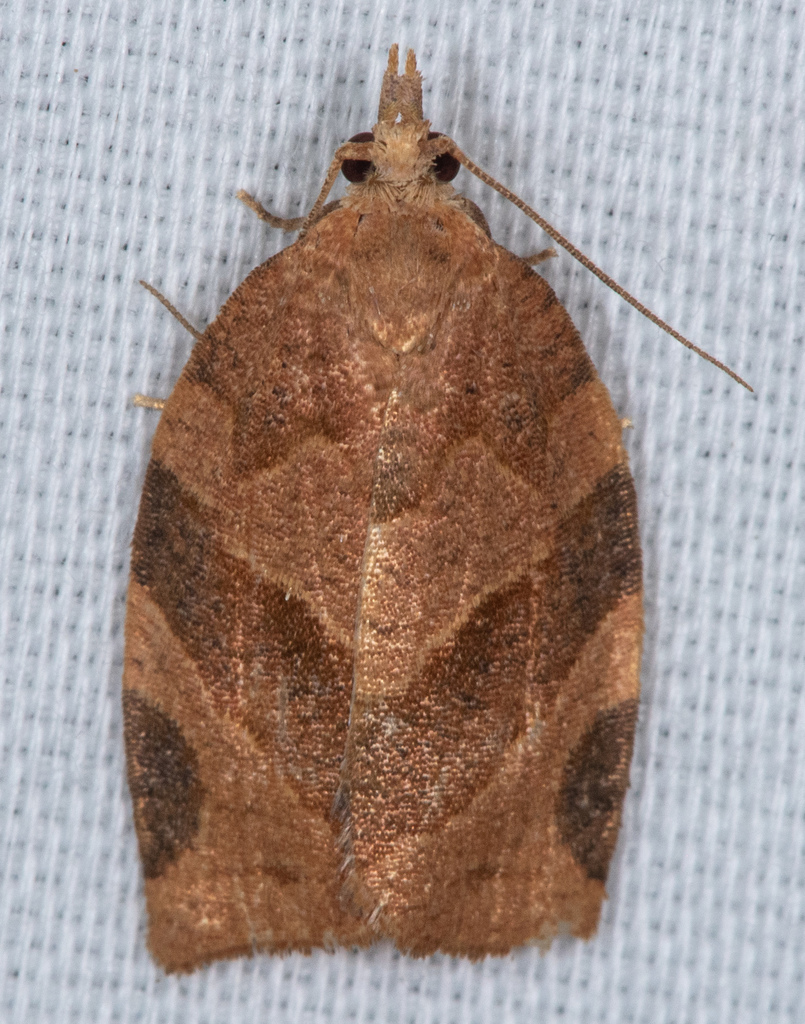
(c) Don Loarie, some rights reserved (CC BY) · licence
Family: Tortricidae · Class: Insecta · Order: Lepidoptera
Pandemis pyrusana (Pandemis Leafroller Moth) is a California animal in the Tortricidae family.
The Pandemis leafroller moth is a member of the family Tortricidae, characterized by forewings that typically measure 8-12 mm in length when folded. Adults display variable coloration ranging from pale brown to darker reddish-brown, often with subtle banding patterns across the forewings. The species can be distinguished from related Pandemis species by wing pattern details and genitalic characteristics, though field identification requires expertise due to similarity with congeners like P. limitata and P. lamprosana. Pandemis pyrusana occurs across much of North America, with a range extending from southern Canada through the United States. The species is found from British Columbia east to the Maritime provinces, and south through various states including California, where it occurs in suitable habitat. According to BugGuide, the species has been documented in locations ranging from northern regions to as far south as Arkansas and New York, where it appears on state Species of Greatest Conservation Need lists (BugGuide 2016). This moth inhabits areas supporting deciduous trees and shrubs, as larvae are leafrollers that feed on various broadleaf host plants. The species shows a preference for mixed deciduous forests, woodland edges, and areas with abundant Rosaceae family plants. Adults are typically active during spring and early summer months, with flight periods varying by latitude and local climate conditions. Larvae are the primary feeding stage, creating characteristic leaf rolls by silk-binding leaf edges together to form protective chambers. The caterpillars feed within these rolled leaves, consuming leaf tissue while remaining largely concealed from predators and parasitoids. Host plants include various deciduous trees and shrubs, particularly members of the rose family (Rosaceae), though specific host preferences for P. pyrusana require further documentation. Adult moths are primarily nocturnal, attracted to artificial lights during their flight season. Mating and egg-laying behaviors follow typical tortricid patterns, with females depositing eggs on or near suitable host plants. Pandemis pyrusana does not hold federal or state endangered species status in California, though its inclusion on Species of Greatest Conservation Need lists in Arkansas and New York suggests regional conservation concerns (BugGuide 2016). These listings typically indicate species that may be rare, declining, or poorly understood from a conservation perspective. The species faces typical lepidopteran threats including habitat modification, pesticide applications in managed landscapes, and potential climate-related shifts in host plant distributions. Forest management practices that maintain diverse deciduous plant communities likely benefit this species by preserving suitable larval habitat. Population trends and specific conservation needs for P. pyrusana remain poorly documented, highlighting the need for additional research on this and many other microlepidoptera species.
Classification
Class: Insecta · Order: Lepidoptera · Family: Tortricidae
Frequently asked questions
How is Pandemis pyrusana classified?
Pandemis pyrusana belongs to class Insecta, order Lepidoptera, family Tortricidae.
What family does Pandemis pyrusana belong to?
Pandemis pyrusana is in the Tortricidae family.
What is Pandemis pyrusana?
The Pandemis leafroller moth is a member of the family Tortricidae, characterized by forewings that typically measure 8-12 mm in length when folded.
Is Pandemis pyrusana found in California?
Yes. Pandemis pyrusana is recorded in California in The California Species Project's catalogue.
Related species
Other California species in the same genus, family, or bioregion.
Data from The California Species Project — 14,000+ California species with verified data from CNPS, CDFW, USFWS, and more.