Pantala flavescens
Wandering Glider
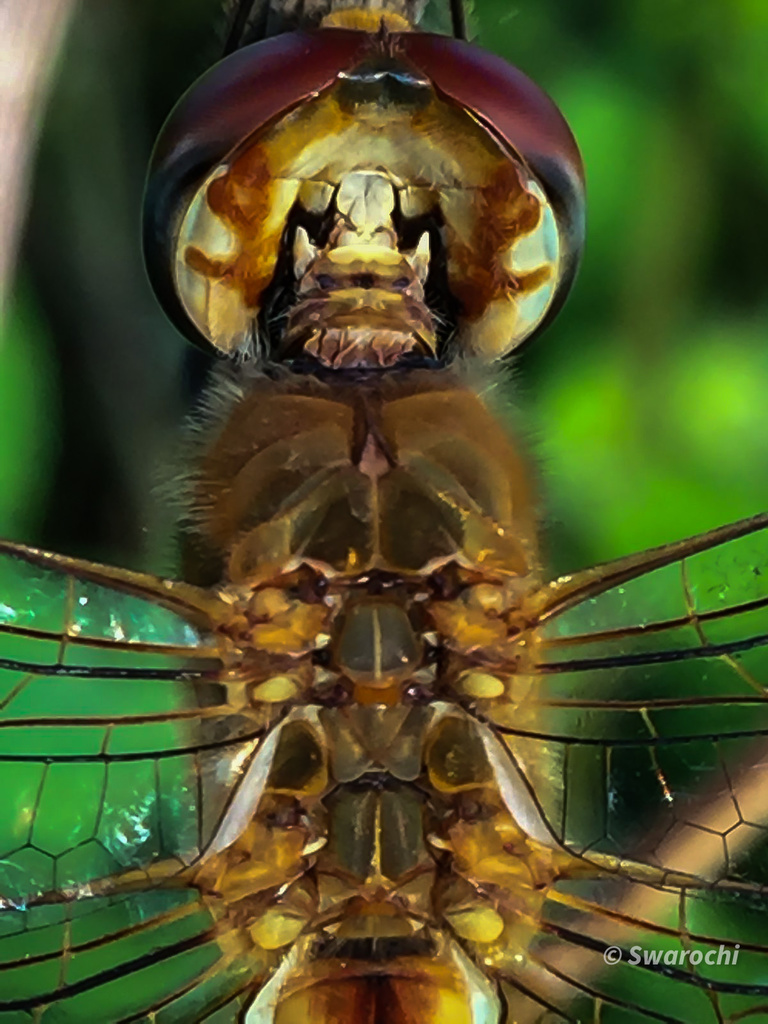
(c) Swarochi Tathagath, some rights reserved (CC BY) · licence
Family: Libellulidae · Class: Insecta · Order: Odonata
Pantala flavescens (Wandering Glider) is a California animal in the Libellulidae family.
The Wandering Glider is a medium-sized dragonfly with a wingspan reaching 95-105 mm (3.7-4.1 inches) and body length of 45-50 mm (1.8-2.0 inches). Adults display amber to yellowish-brown wings with distinctive golden or orange-yellow coloration on the body. The species exhibits sexual dimorphism, with males typically showing brighter yellow coloration than females. The hindwings are notably broader at the base compared to other dragonfly species, an adaptation that enhances their exceptional flight capabilities. Pantala flavescens has one of the most extensive distributions of any dragonfly species globally, occurring on every continent except Europe and Antarctica. In North America, the species ranges from southern Canada through the United States to Central America and the Caribbean. The Wandering Glider is found throughout California, with documented occurrences from sea level to moderate elevations. The species has been recorded at numerous locations including wildlife refuges along both the Atlantic and Pacific coasts. This highly adaptable species inhabits a wide variety of aquatic habitats, showing particular preference for temporary and seasonal wetlands. Wandering Gliders utilize fish ponds, stock tanks, rain pools, irrigation ditches, and temporary pools created by flooding. Unlike many dragonfly species that require specific water chemistry or vegetation, P. flavescens can successfully reproduce in both permanent and ephemeral water bodies. Adults are frequently observed hunting over open fields, agricultural areas, and suburban environments at considerable distances from water sources. The Wandering Glider is renowned for undertaking the longest migrations recorded for any insect species, with trans-oceanic flights exceeding 11,000 miles across the Indian Ocean (Anderson 2009). In North America, the species participates in regular seasonal migrations along the East Coast, with peak activity occurring in August and September according to Migratory Dragonfly Partnership monitoring data (Migratory Dragonfly Partnership 2014). The species rides prevailing winds and weather fronts during migration, often traveling in mixed flocks with other migratory dragonflies including Common Green Darners and Black Saddlebags. Reproduction is rapid, with females depositing eggs in shallow water or muddy substrates. The larval stage can complete development in as little as 5-6 weeks under optimal warm conditions, allowing multiple generations per year in suitable climates. Currently, Pantala flavescens holds no federal or state conservation listings and maintains a NatureServe global rank of G5 (Secure), reflecting its widespread distribution and stable populations (NatureServe 2015). The species benefits from its exceptional mobility and habitat flexibility, allowing it to colonize new areas rapidly and exploit temporary breeding opportunities. Climate change may actually benefit this warm-adapted species by expanding suitable habitat northward. However, the loss of temporary wetlands to development and agricultural intensification poses localized threats. The Migratory Dragonfly Partnership continues monitoring migration patterns through citizen science networks, contributing valuable data on population trends and seasonal timing across North America.
Classification
Class: Insecta · Order: Odonata · Family: Libellulidae
Frequently asked questions
How is Pantala flavescens classified?
Pantala flavescens belongs to class Insecta, order Odonata, family Libellulidae.
What family does Pantala flavescens belong to?
Pantala flavescens is in the Libellulidae family.
What is Pantala flavescens?
The Wandering Glider is a medium-sized dragonfly with a wingspan reaching 95-105 mm (3.7-4.1 inches) and body length of 45-50 mm (1.8-2.0 inches).
Is Pantala flavescens found in California?
Yes. Pantala flavescens is recorded in California in The California Species Project's catalogue.
Related species
Other California species in the same genus, family, or bioregion.
Data from The California Species Project — 14,000+ California species with verified data from CNPS, CDFW, USFWS, and more.