Pantala hymenaea
Spot-winged Glider
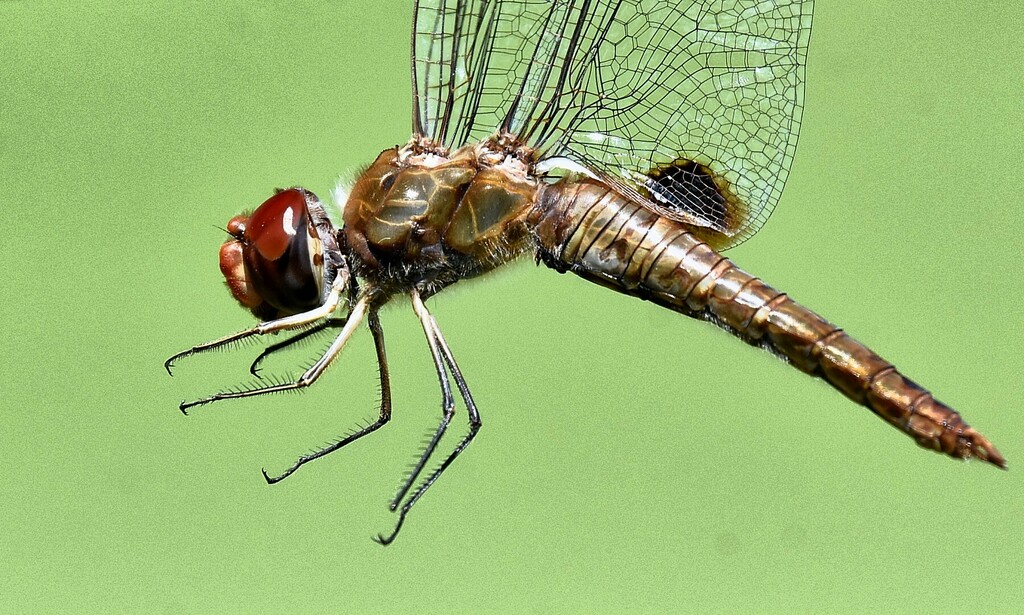
(c) Jimmy Dee, some rights reserved (CC BY-SA) · licence
Family: Libellulidae · Class: Insecta · Order: Odonata
Pantala hymenaea (Spot-winged Glider) is a California animal in the Libellulidae family.
The Spot-winged Glider is a medium-sized dragonfly with a body length of 5.1 cm (2 inches) and a wingspan of 7.6 cm (3 inches). Adults display brownish coloration throughout the body, with mature males developing bright red eyes and faces. The species is characterized by broad hindwings that distinguish it as a strong flier, and the brownish wing membranes that give this species its common name. Females and immature individuals tend to be lighter in coloration than fully mature males. Pantala hymenaea has a widespread distribution across North America, ranging from the southern United States through Central America and into South America. In California, the species occurs throughout much of the state, though specific distributional data within California counties remains incompletely documented. The Spot-winged Glider is also found across the southeastern United States, with populations extending from California to Texas and Florida. This species inhabits a variety of wetland environments, including ponds, lakes, marshes, and slow-moving streams. Spot-winged Gliders prefer open water habitats with minimal vegetation cover, where they can effectively hunt for prey and engage in territorial behaviors. Unlike many dragonfly species that require specific aquatic vegetation for egg-laying, Pantala hymenaea appears to be relatively adaptable in its habitat requirements, which may contribute to its wide geographic range. Spot-winged Gliders are opportunistic predators, feeding primarily on small flying insects including mosquitoes, midges, and other soft-bodied prey captured during flight. The species is known as one of North America's migratory dragonflies, with individuals moving northward from tropical regions during summer months and returning south in fall migrations (Xerces Society 2013). These migrations are less extensive than those of the closely related Wandering Glider, but still represent significant seasonal movements. Adults are strong fliers capable of extended periods of flight, and their broad hindwings provide the lift necessary for long-distance travel. Reproductive behavior involves males establishing territories over suitable water bodies where mating and egg-laying occur. Currently, Pantala hymenaea holds no federal or state conservation listing status in California or elsewhere in its range. The species appears to maintain stable populations throughout most of its distribution, likely benefiting from its adaptability to various wetland habitats and its migratory behavior, which allows populations to exploit seasonal resources across broad geographic areas. However, like many wetland-dependent species, Spot-winged Gliders face potential threats from habitat loss due to wetland drainage, water pollution, and climate change effects on precipitation patterns. The Migratory Dragonfly Partnership, a collaborative effort among researchers and agencies, monitors this species along with other migratory dragonflies to better understand population trends and migration patterns across North America (Xerces Society 2013). Conservation efforts focus primarily on wetland habitat protection and restoration, which benefits this species along with numerous other wetland-dependent organisms.
Classification
Class: Insecta · Order: Odonata · Family: Libellulidae
Frequently asked questions
How is Pantala hymenaea classified?
Pantala hymenaea belongs to class Insecta, order Odonata, family Libellulidae.
What family does Pantala hymenaea belong to?
Pantala hymenaea is in the Libellulidae family.
What is Pantala hymenaea?
The Spot-winged Glider is a medium-sized dragonfly with a body length of 5.1 cm (2 inches) and a wingspan of 7.6 cm (3 inches).
Is Pantala hymenaea found in California?
Yes. Pantala hymenaea is recorded in California in The California Species Project's catalogue.
Related species
Other California species in the same genus, family, or bioregion.
Data from The California Species Project — 14,000+ California species with verified data from CNPS, CDFW, USFWS, and more.