Panulirus interruptus
California Spiny Lobster
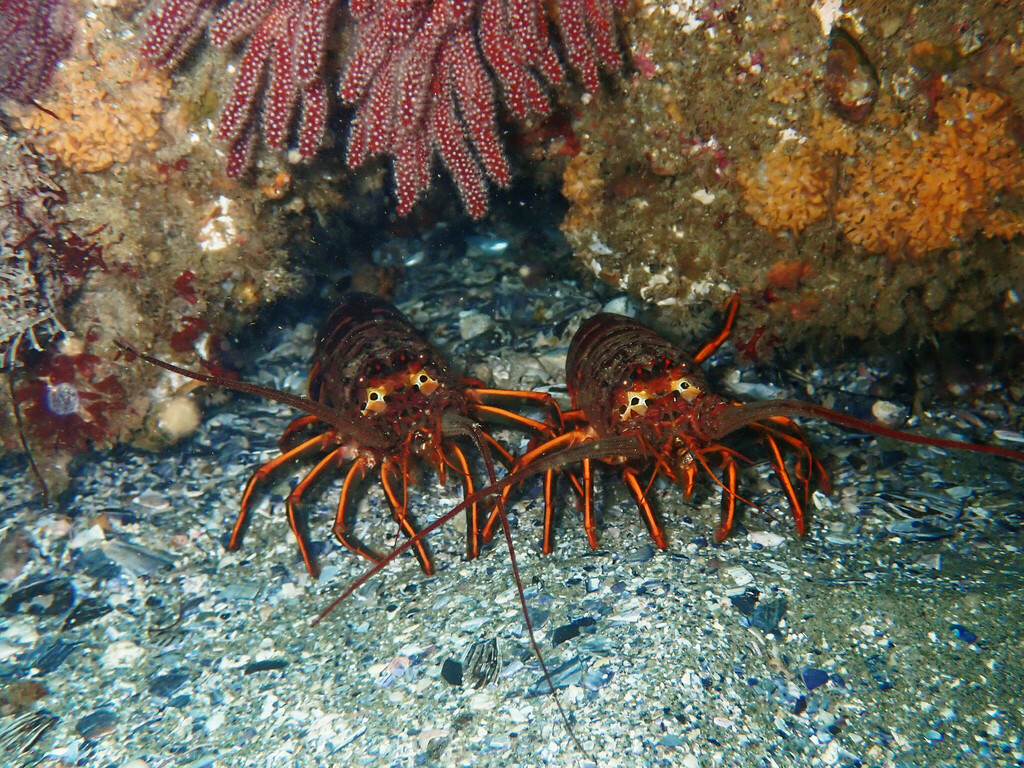
(c) Donald Davesne, some rights reserved (CC BY) · licence
Family: Palinuridae · Class: Malacostraca · Order: Decapoda
Panulirus interruptus (California Spiny Lobster) is a California animal in the Palinuridae family.
The California spiny lobster is a large marine crustacean that can reach lengths of up to 60 centimeters (24 inches) and weigh as much as 11.8 kilograms (26 pounds). The species is characterized by its reddish-brown to orange coloration with distinctive yellow spots and lacks the large claws found in true lobsters. Instead, it possesses long, spiny antennae and five pairs of walking legs. The carapace features prominent forward-pointing spines, giving the species its common name. California spiny lobsters range from Monterey Bay, California, southward along the Pacific coast to at least Magdalena Bay, Baja California, Mexico. The species is most abundant in the waters off southern California and northern Baja California, with the physical center of their range occurring in this region. They inhabit the nearshore waters of the California Current ecosystem. This species occupies rocky reef habitats from the intertidal zone to depths of approximately 65 meters (213 feet). California spiny lobsters prefer areas with complex rocky substrate that provides crevices and caves for shelter during daylight hours. They are commonly found in kelp forests, where the rocky bottom and kelp canopy create ideal habitat conditions. The species also utilizes sandy areas adjacent to rocky reefs for foraging. California spiny lobsters are nocturnal predators that emerge from rocky crevices at night to hunt. Their diet consists primarily of sea urchins, mussels, clams, crabs, marine worms, and occasionally fish. As keystone predators in southern California's nearshore ecosystem, they play a crucial role in controlling sea urchin populations, which helps maintain kelp forest health. The species exhibits seasonal migration patterns, moving to deeper waters during winter months and returning to shallow areas for reproduction in spring and summer. Females carry eggs for 10 to 11 months before releasing planktonic larvae that spend several months in the water column before settling and metamorphosing into juvenile lobsters. Sexual maturity is reached at approximately 5 to 7 years of age. The California spiny lobster is not federally or state listed as threatened or endangered as of December 2025. However, the species supports both significant commercial and recreational fisheries that have been managed by California for over 100 years. The California Department of Fish and Wildlife developed a comprehensive Fishery Management Plan in 2016 to ensure sustainable harvest levels and maintain healthy populations. Management measures include minimum size limits, seasonal closures during reproductive periods, and gear restrictions. The species benefits from protection within California's network of Marine Protected Areas, where no-take regulations allow populations to serve as sources for recruitment to adjacent fished areas. Climate change and ocean warming represent emerging concerns for the species' long-term persistence, as temperature increases may affect larval development and survival rates.
Classification
Class: Malacostraca · Order: Decapoda · Family: Palinuridae
Frequently asked questions
How is Panulirus interruptus classified?
Panulirus interruptus belongs to class Malacostraca, order Decapoda, family Palinuridae.
What family does Panulirus interruptus belong to?
Panulirus interruptus is in the Palinuridae family.
What is Panulirus interruptus?
The California spiny lobster is a large marine crustacean that can reach lengths of up to 60 centimeters (24 inches) and weigh as much as 11.8 kilograms (26 pounds).
Is Panulirus interruptus found in California?
Yes. Panulirus interruptus is recorded in California in The California Species Project's catalogue.
More California species
This species has no close relatives in our California data — here are other species to explore.
Data from The California Species Project — 14,000+ California species with verified data from CNPS, CDFW, USFWS, and more.