Papilio cresphontes
Giant Swallowtail
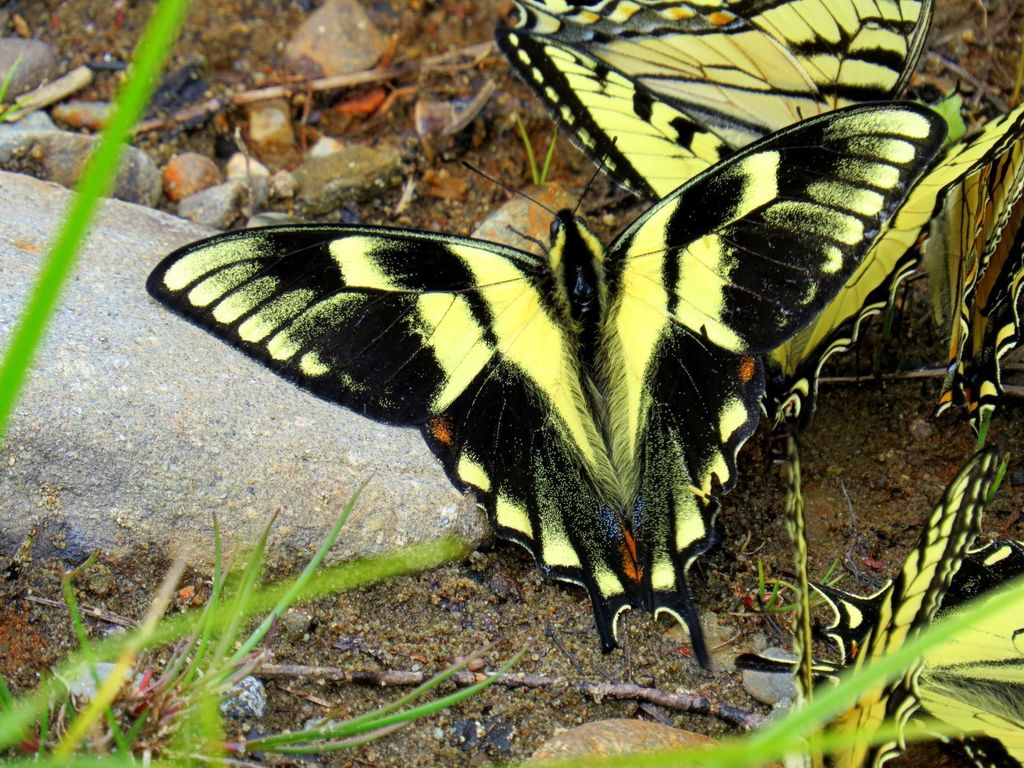
no rights reserved · CC0
Family: Papilionidae · Class: Insecta · Order: Lepidoptera
Papilio cresphontes (Giant Swallowtail) is a California animal in the Papilionidae family.
The Giant Swallowtail is the largest butterfly in North America, with a wingspan reaching 125 to 165 mm (4.9 to 6.5 inches). The dorsal wing surfaces are dark brown to black with distinctive yellow bands and spots creating a bold pattern. The forewings display a diagonal yellow band extending from the costa to the inner margin, while the hindwings feature yellow marginal spots and a prominent yellow patch near the anal angle. The ventral surfaces are predominantly yellow with blue and orange markings on the hindwings. Males are distinguished by specialized scent scales and are typically smaller than females. The Giant Swallowtail ranges throughout eastern North America west to the Rocky Mountains and extends south through the desert Southwest to South America. The species occurs as far north as southern Canada and reaches Quebec as a rare stray. Western populations extend into North Dakota, Colorado, and Arizona, while the species is documented as an occasional vagrant to Bermuda. In California, Giant Swallowtails are primarily found in desert regions and areas where citrus cultivation occurs. This species inhabits diverse environments including citrus groves, deciduous forests, parks, gardens, and desert areas. Giant Swallowtails are most commonly found in areas supporting their host plants, particularly where citrus trees are cultivated. The species occurs from sea level to elevations of approximately 2,000 meters in mountainous regions. Adults frequent flowers for nectar, particularly favoring lantana, goldenrod, and milkweed species. Giant Swallowtail larvae, known as orangedogs or orangepuppies, feed exclusively on plants in the citrus family (Rutaceae). Primary host plants include cultivated citrus species, prickly ash (Zanthoxylum americanum), hop tree (Ptelea trifoliata), and Common Rue (Ruta graveolens). The caterpillars are notable for their bird dropping mimicry during early instars, appearing brown and white. Later instars become larger and display a mottled brown coloration with cream-colored patches. When disturbed, larvae extend a bright orange or yellow forked scent organ called an osmeterium. The species produces two to three generations annually in most of its range, with continuous breeding possible in subtropical regions. Adults are strong fliers and may travel considerable distances, contributing to their occasional appearance outside their typical range. Females deposit single eggs on young leaves and shoots of host plants. The complete life cycle from egg to adult takes approximately 35 to 45 days under optimal conditions. The Giant Swallowtail is not federally or state listed and maintains stable populations across most of its range. The species benefits from citrus cultivation, which provides abundant larval host plants, though it may occasionally be considered a minor agricultural pest. Climate change may facilitate range expansion northward, as warming temperatures allow for extended breeding seasons. Urban development and pesticide use in agricultural areas represent potential local threats, but the species' adaptability to human-modified landscapes generally supports population stability.
Classification
Class: Insecta · Order: Lepidoptera · Family: Papilionidae
Frequently asked questions
How is Papilio cresphontes classified?
Papilio cresphontes belongs to class Insecta, order Lepidoptera, family Papilionidae.
What family does Papilio cresphontes belong to?
Papilio cresphontes is in the Papilionidae family.
What is Papilio cresphontes?
The Giant Swallowtail is the largest butterfly in North America, with a wingspan reaching 125 to 165 mm (4.9 to 6.5 inches).
Is Papilio cresphontes found in California?
Yes. Papilio cresphontes is recorded in California in The California Species Project's catalogue.
Related species
Other California species in the same genus, family, or bioregion.
Data from The California Species Project — 14,000+ California species with verified data from CNPS, CDFW, USFWS, and more.