Papilio eurymedon
Pale Swallowtail
no rights reserved · CC0
Family: Papilionidae · Class: Insecta · Order: Lepidoptera
Papilio eurymedon (Pale Swallowtail) is a California animal in the Papilionidae family.
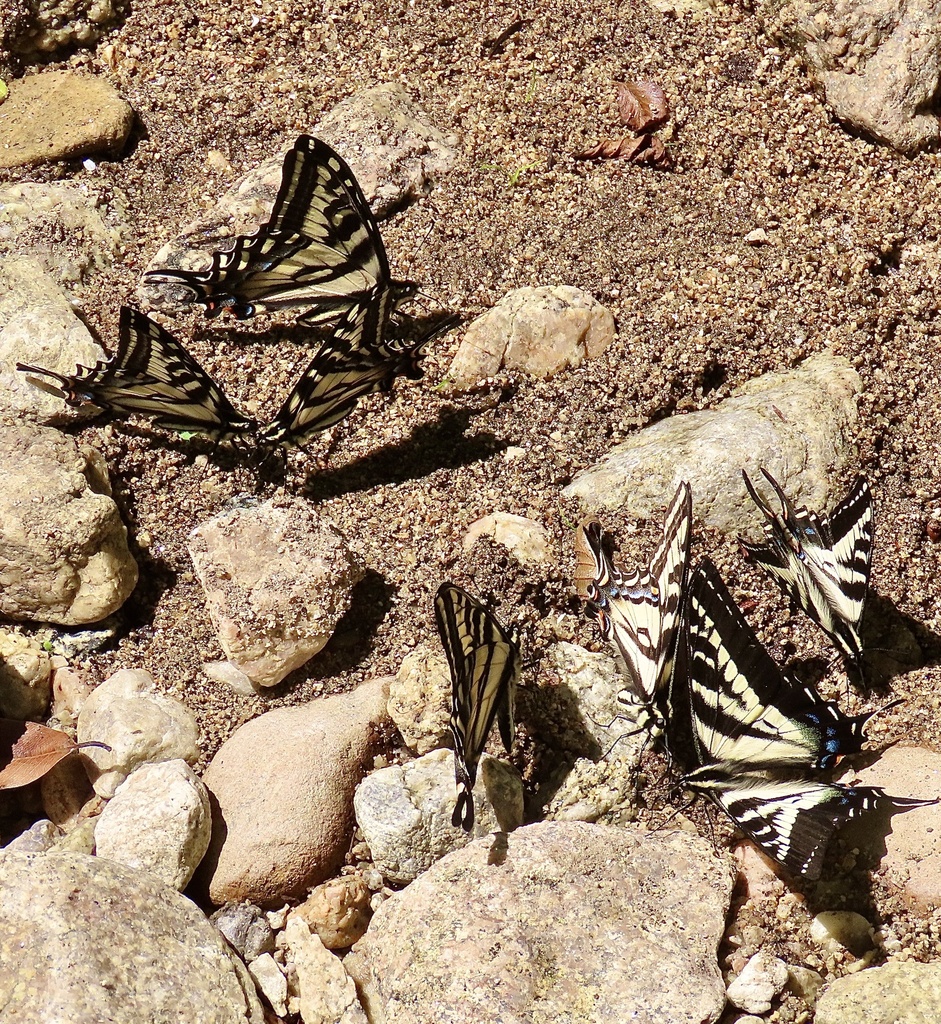
The Pale Swallowtail (Papilio eurymedon) is a large butterfly with a wingspan ranging from 6.4 to 10.2 cm (2.5 to 4.0 inches). The wings are predominantly pale yellow to cream-colored with distinctive black markings. The forewings display bold black borders along the outer margins and prominent black stripes extending from the wing base. The hindwings feature characteristic blue scaling along the inner margin of the black border and prominent orange eyespots near the anal angle. Each hindwing bears a distinctive black tail projection, typical of swallowtail butterflies. Males and females are similar in appearance, though females tend to be slightly larger with broader wings. The Pale Swallowtail ranges from British Columbia east to Montana, extending south to New Mexico, California, and Baja California. In California, the species occurs throughout much of the state, from the coastal ranges to the Sierra Nevada and southern mountains. The distribution follows suitable host plant availability and appropriate elevational zones. This species inhabits diverse environments including riparian woodlands, mountain canyons, chaparral, and mixed coniferous forests. Pale Swallowtails are found from sea level to elevations exceeding 2,400 meters (8,000 feet), with populations typically concentrated in areas supporting their host plants. Adults frequent flowering plants in open clearings, meadows, and forest edges where nectar sources are abundant. Pale Swallowtails utilize trees and shrubs in the Rosaceae, Rhamnaceae, and Betulaceae families as larval host plants, including cherry (Prunus emarginata), coffeeberry (Rhamnus californica), and ash (Fraxinus spp.). Adults are active from March through October, depending on elevation and local climate conditions. The species typically produces two broods annually in lower elevations, with a single brood at higher elevations. Females deposit pale yellow eggs singly on host plant foliage. Larvae are green with distinctive false eyespots and feed on leaves of the host plant. The species overwinters as a chrysalis attached to host plant stems or nearby vegetation. Adults exhibit strong flight capabilities and are often observed hilltopping, where males patrol ridges and peaks seeking mates. Nectar sources include various wildflowers, particularly those in the families Asteraceae and Scrophulariaceae. The Pale Swallowtail currently holds no federal or state conservation listing status and appears to maintain stable populations throughout its range. The species benefits from its broad host plant requirements and adaptability to various elevational zones. However, localized populations may face pressure from habitat modification, particularly in riparian areas where development impacts host plant availability. Urban expansion and water management projects that alter riparian corridors can fragment suitable habitat. Climate change may affect the species' elevational distribution and phenology, potentially disrupting synchronized emergence with host plant growth cycles. The species' wide distribution and multiple host plant associations generally provide resilience against environmental changes, though continued monitoring of population trends remains important for long-term conservation planning.
Classification
Class: Insecta · Order: Lepidoptera · Family: Papilionidae
Frequently asked questions
How is Papilio eurymedon classified?
Papilio eurymedon belongs to class Insecta, order Lepidoptera, family Papilionidae.
What family does Papilio eurymedon belong to?
Papilio eurymedon is in the Papilionidae family.
What is Papilio eurymedon?
The Pale Swallowtail (Papilio eurymedon) is a large butterfly with a wingspan ranging from 6.4 to 10.2 cm (2.5 to 4.0 inches).
Is Papilio eurymedon found in California?
Yes. Papilio eurymedon is recorded in California in The California Species Project's catalogue.
Related species
Other California species in the same genus, family, or bioregion.
Data from The California Species Project — 14,000+ California species with verified data from CNPS, CDFW, USFWS, and more.