Papilio indra
Indra Swallowtail
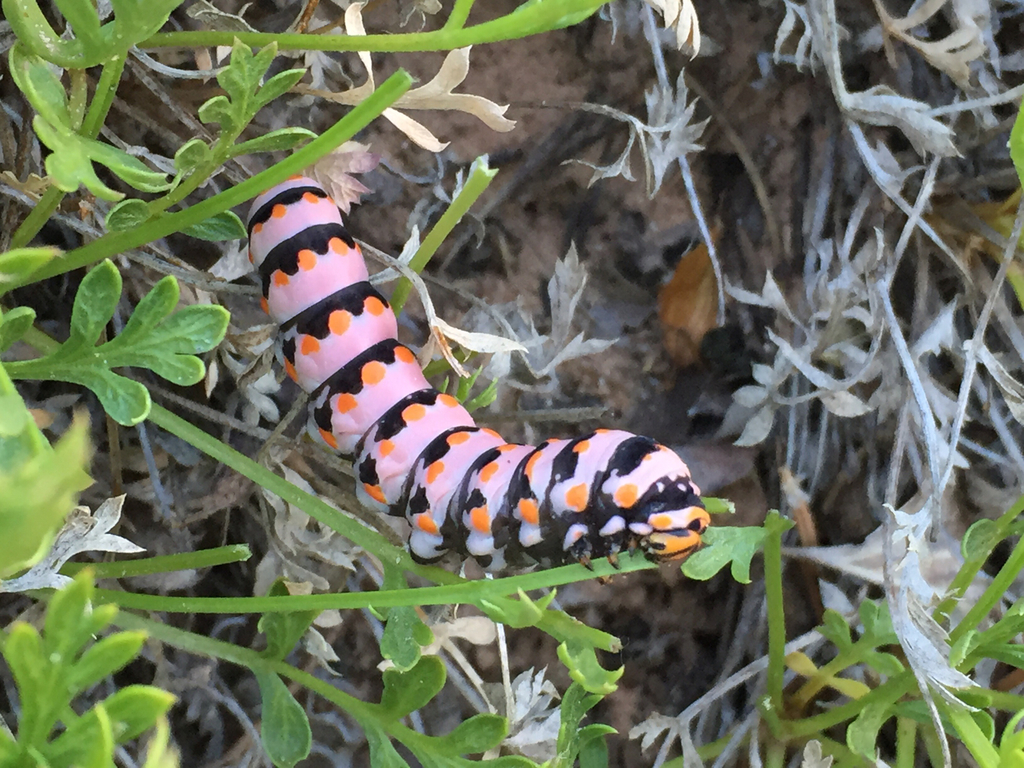
no rights reserved · CC0
Family: Papilionidae · Class: Insecta · Order: Lepidoptera
Papilio indra (Indra Swallowtail) is a California animal in the Papilionidae family.
The Indra Swallowtail (Papilio indra) is a medium-sized butterfly with distinctive black wings marked by yellow or cream-colored spots and bands. Adults typically measure 70-90 mm (2.8-3.5 inches) in wingspan. The forewings display a series of yellow spots arranged in rows, while the hindwings feature blue scaling near the margins and distinctive red-orange eyespots. Males tend to be smaller and more darkly marked than females. The species lacks the prominent tail extensions characteristic of many swallowtails, though small projections are present on the hindwings. The Indra Swallowtail ranges across western North America from southern California, Nevada, Arizona, and New Mexico north to South Dakota and west to Washington. Within California, the species occurs primarily in mountainous regions including the Sierra Nevada, Cascade Range, and scattered populations in southern California mountains. The distribution is often patchy, corresponding to the availability of suitable host plants and habitat conditions. This species inhabits rocky terrain, canyon walls, and mountainous areas typically at elevations between 1,000-3,000 meters (3,300-9,800 feet). The butterfly shows a strong association with exposed rock faces and talus slopes where its host plants grow. Preferred habitats include dry, open areas with sparse vegetation, often on south-facing slopes that receive substantial sunlight. The species tolerates harsh conditions including high winds and temperature extremes common in montane environments. Indra Swallowtails are specialized feeders on aromatic herbs of the parsley family (Apiaceae) growing among rocks. Common host plants include various species of wild parsley, desert parsley (Lomatium), and other umbellifers that thrive in rocky substrates. Adults typically fly from April through August, with peak activity during late spring and early summer. The species exhibits a single generation per year in most locations. Males engage in hilltopping behavior, gathering on prominent peaks and ridges to locate mates. Females deposit eggs singly on host plant leaves, and caterpillars develop through five instars before pupating in rock crevices or under stones. The Indra Swallowtail is not federally or state listed as threatened or endangered. However, populations face pressure from habitat modification, urban development in mountainous areas, and potential climate change impacts. The species' specialized habitat requirements and dependence on specific host plants make local populations vulnerable to disturbance. Some subspecies, particularly those in isolated mountain ranges, may face greater conservation challenges due to limited dispersal ability and habitat fragmentation. Conservation efforts focus on maintaining habitat connectivity and protecting known breeding sites from development. The species' ability to utilize harsh, rocky environments that are less desirable for human development provides some natural protection for many populations.
Classification
Class: Insecta · Order: Lepidoptera · Family: Papilionidae
Frequently asked questions
How is Papilio indra classified?
Papilio indra belongs to class Insecta, order Lepidoptera, family Papilionidae.
What family does Papilio indra belong to?
Papilio indra is in the Papilionidae family.
What is Papilio indra?
The Indra Swallowtail (Papilio indra) is a medium-sized butterfly with distinctive black wings marked by yellow or cream-colored spots and bands.
Is Papilio indra found in California?
Yes. Papilio indra is recorded in California in The California Species Project's catalogue.
Related species
Other California species in the same genus, family, or bioregion.
Data from The California Species Project — 14,000+ California species with verified data from CNPS, CDFW, USFWS, and more.