Parabagrotis insularis
Insular Parabagrotis
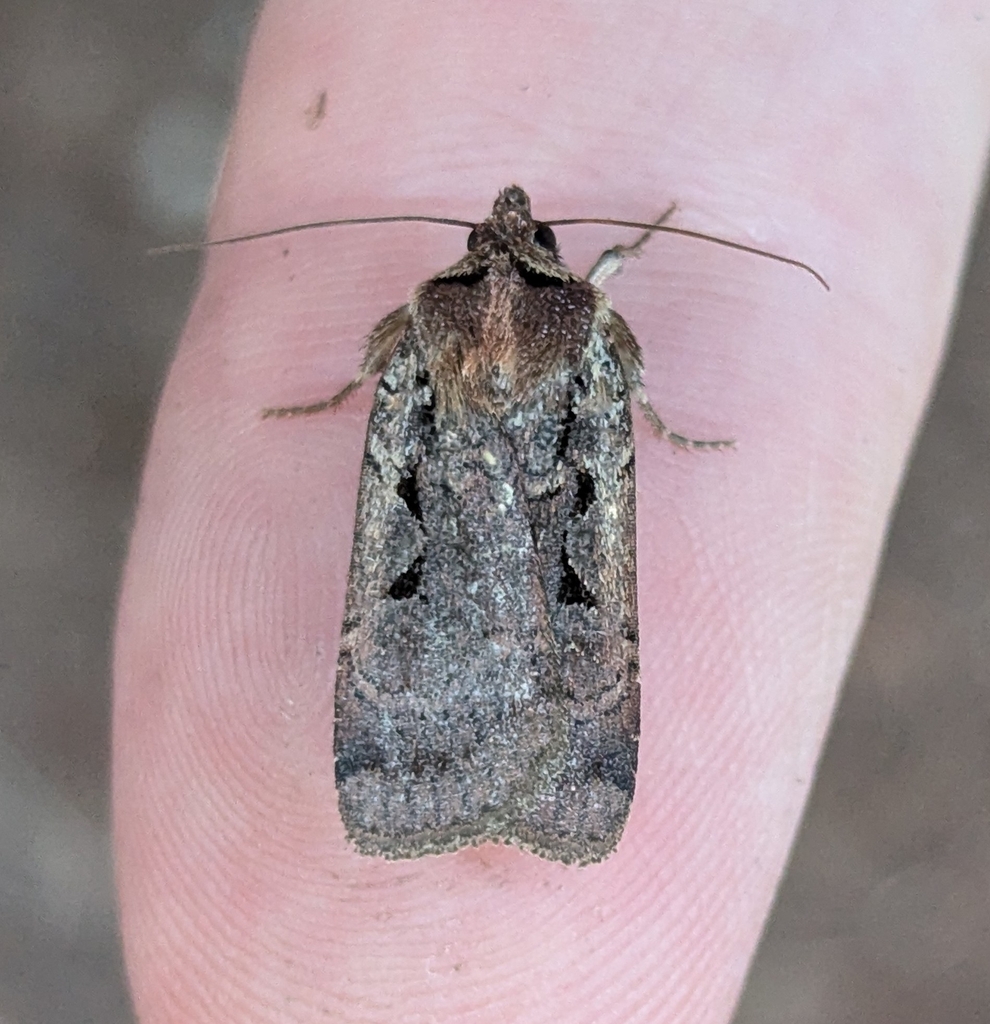
no rights reserved · CC0
Family: Noctuidae · Class: Insecta · Order: Lepidoptera
Parabagrotis insularis (Insular Parabagrotis) is a California animal in the Noctuidae family.
Parabagrotis insularis is a noctuid moth in the subfamily Noctuinae, classified within the tribe Noctuini. Adults are small to medium-sized moths with forewings measuring approximately 13.6 to 14 mm in length, resulting in a wingspan of approximately 32 mm (BugGuide 2019). The species lacks the distinctive black thoracic collar found in the closely related Parabagrotis formalis, serving as a key distinguishing feature between these taxa (Moth Photographers Group). Both species exhibit considerable morphological variation, with multiple forms documented across their ranges. Parabagrotis insularis occurs across western North America, with documented populations in California extending from San Benito County in the central coast ranges to Siskiyou County in the far north (BugGuide 2019, 2024). The species has been recorded from elevations ranging from coastal areas to montane environments, including locations at 3,625 feet elevation in the Eddy Mountains of Siskiyou County. The moth appears on federal refuge species lists, indicating its presence in protected habitat areas managed by the U.S. Fish and Wildlife Service (USFWS Refuge Plant Species List). Habitat associations include live oak and chaparral communities, as documented from specimens collected in San Benito County (BugGuide 2019). The species also occurs in mixed coniferous forests and associated montane habitats, based on collections from the Siskiyou Mountains. Adults are attracted to artificial light sources, including black light and mercury vapor traps, which facilitate detection and study of this otherwise cryptic species. Larval host plants include members of the grass family Poaceae, though specific genera have not been definitively documented. According to Crabo et al. (2014), the species functions as a generalist feeder on both grasses and herbaceous vegetation (Moth Photographers Group). Adult flight period extends from at least June through September, based on collection records spanning this timeframe. The species exhibits typical noctuid behavior, with adults active during nighttime hours and larvae likely developing in soil or leaf litter associated with host plants. Parabagrotis insularis currently lacks federal or state conservation listing status. The species appears to maintain stable populations across its documented range, with recent collection records indicating continued presence in both coastal and montane California habitats. However, detailed population assessments and trend analyses have not been conducted. Like many native moths, the species may face localized impacts from habitat conversion, invasive plant species that displace native host plants, and light pollution that can disrupt natural behavior patterns. The occurrence of this species in federal refuge systems provides some protection for populations within those managed areas. Scientific documentation remains limited, with taxonomic confirmation often requiring examination of male genitalia structures due to morphological similarity with related species.
Classification
Class: Insecta · Order: Lepidoptera · Family: Noctuidae
Frequently asked questions
How is Parabagrotis insularis classified?
Parabagrotis insularis belongs to class Insecta, order Lepidoptera, family Noctuidae.
What family does Parabagrotis insularis belong to?
Parabagrotis insularis is in the Noctuidae family.
What is Parabagrotis insularis?
Parabagrotis insularis is a noctuid moth in the subfamily Noctuinae, classified within the tribe Noctuini.
Is Parabagrotis insularis found in California?
Yes. Parabagrotis insularis is recorded in California in The California Species Project's catalogue.
Related species
Other California species in the same genus, family, or bioregion.
Data from The California Species Project — 14,000+ California species with verified data from CNPS, CDFW, USFWS, and more.