Paragus haemorrhous
Common Grass Skimmer
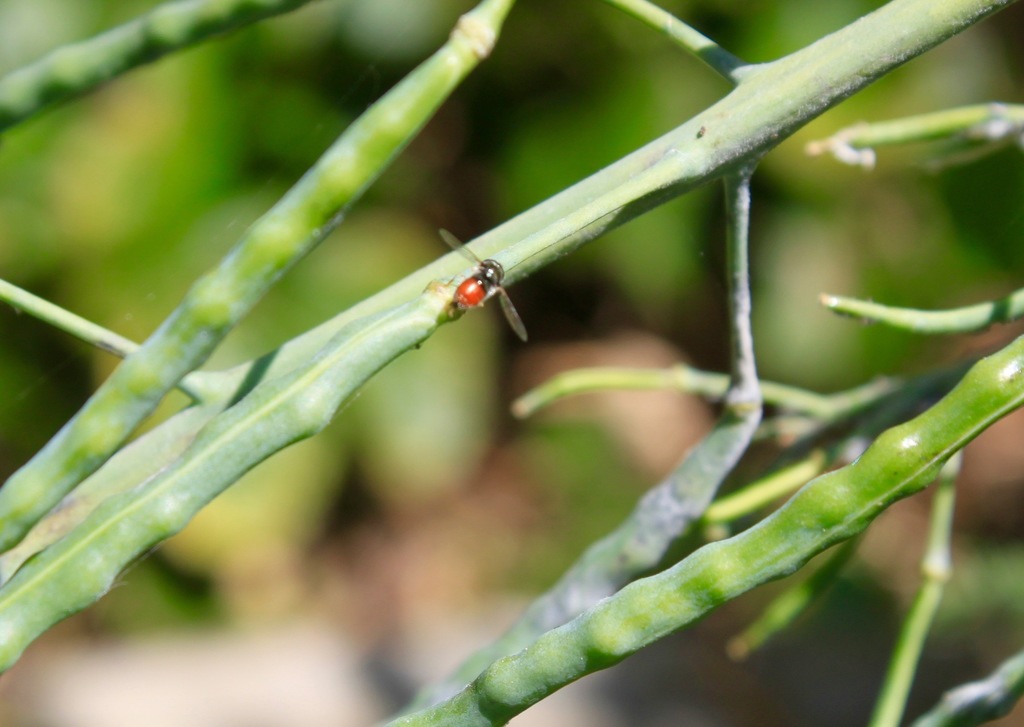
(c) Hydrocycler (Elizabeth Dougherty), some rights reserved (CC BY) · licence
Family: Syrphidae · Class: Insecta · Order: Diptera
Paragus haemorrhous (Common Grass Skimmer) is a California animal in the Syrphidae family.
Paragus haemorrhous, commonly known as the common grass skimmer, is a small hover fly in the family Syrphidae. Adults typically measure 4-8 mm in body length, making them among the smaller members of the genus Paragus. The species exhibits the characteristic syrphid body plan with a relatively narrow waist and metallic sheen. Males often display darker coloration on the abdomen with distinctive yellow or pale markings, while females tend to be more uniformly colored. Like other hover flies, P. haemorrhous possesses large compound eyes and short antennae, with wings that extend beyond the abdomen when at rest. The common grass skimmer occurs throughout much of North America, with documented populations across the continental United States and southern Canada. In California, the species has been recorded from various counties, though specific distribution data remains limited in published literature. The species appears to have a relatively broad distribution within suitable habitat types across the state's diverse ecological regions. Paragus haemorrhous inhabits open grasslands, meadows, and prairie environments, as suggested by its common name. The species is commonly found in areas with abundant flowering plants that provide nectar sources for adults. These flies prefer sunny, open habitats where grasses and forbs create a mosaic of microhabitats. They are often observed in agricultural areas, particularly those with diverse plant communities that support both adult feeding and larval development. Adult common grass skimmers are active during warm, sunny conditions and are frequently seen hovering near flowers or resting on vegetation. Like other syrphids, they are important pollinators, visiting a wide variety of flowering plants to feed on nectar and pollen. Males often exhibit territorial behavior, establishing and defending small areas where they perch and seek mates. The larvae are predatory, feeding on soft-bodied insects such as aphids, making this species beneficial for natural pest control. Females deposit eggs near aphid colonies, where the developing larvae can readily access prey. The species likely completes multiple generations per year in favorable climates, with activity patterns closely tied to temperature and flower availability. Paragus haemorrhous currently holds no special conservation status at federal or state levels. The species appears to maintain stable populations across its range, benefiting from its association with common grassland habitats and its ability to utilize both natural and modified landscapes. However, like many insects associated with grassland ecosystems, the common grass skimmer may face long-term challenges from habitat conversion, intensive agricultural practices, and pesticide use. The species' role as both pollinator and biological control agent underscores its ecological importance in maintaining healthy grassland communities. Conservation of diverse grassland habitats with abundant flowering plants supports not only P. haemorrhous but also the broader community of beneficial insects that contribute to ecosystem services.
Classification
Class: Insecta · Order: Diptera · Family: Syrphidae
Frequently asked questions
How is Paragus haemorrhous classified?
Paragus haemorrhous belongs to class Insecta, order Diptera, family Syrphidae.
What family does Paragus haemorrhous belong to?
Paragus haemorrhous is in the Syrphidae family.
What is Paragus haemorrhous?
Paragus haemorrhous, commonly known as the common grass skimmer, is a small hover fly in the family Syrphidae.
Is Paragus haemorrhous found in California?
Yes. Paragus haemorrhous is recorded in California in The California Species Project's catalogue.
Related species
Other California species in the same genus, family, or bioregion.
Data from The California Species Project — 14,000+ California species with verified data from CNPS, CDFW, USFWS, and more.