Paralabrax clathratus
Kelp Bass
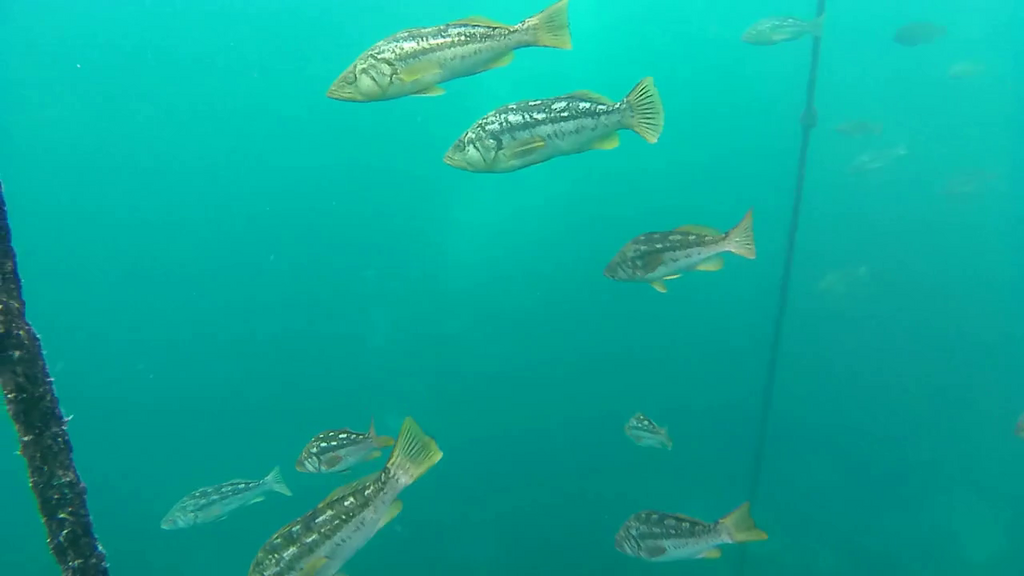
no rights reserved · CC0
Family: Serranidae · Class: Actinopterygii · Order: Perciformes
Paralabrax clathratus (Kelp Bass) is a California animal in the Serranidae family.
The kelp bass is a medium-sized marine fish belonging to the sea bass family (Serranidae). Adults typically reach lengths of 38 to 48 centimeters (15 to 19 inches) and weights of 1.4 to 2.3 kilograms (3 to 5 pounds), though some individuals may exceed 61 centimeters (24 inches). The body is elongated and laterally compressed with a large mouth containing small, pointed teeth. Coloration varies from olive-brown to dark brown dorsally, fading to lighter brown or yellowish on the sides, often with irregular darker blotches or bars. The fins are typically darker than the body, and juveniles may display more distinct banding patterns. Kelp bass range from the Columbia River in Washington south to southern Baja California, Mexico, but are rare north of Point Conception in California. The species is most abundant in Southern California waters, including around the Channel Islands and along the mainland coast. According to California Department of Fish and Wildlife life history data, kelp bass are uncommon in central California but common throughout southern California's mainland and island waters. The species inhabits rocky reefs, kelp forests, and eelgrass beds from the surface to depths of approximately 75 meters (246 feet). Kelp bass show strong association with complex three-dimensional habitats, particularly giant kelp (Macrocystis pyrifera) forests and rocky reef systems. Adults typically remain near the edges of kelp beds and over rocky substrates, while juveniles often seek shelter within dense kelp canopies and eelgrass beds in shallow coastal areas. Kelp bass are opportunistic predators feeding primarily on small fish, squid, octopus, and crustaceans. Adults hunt both during daylight and at dawn and dusk, often ambushing prey from cover within kelp fronds or rocky crevices. Spawning occurs from late May through September, with fish aggregating in kelp beds and over rocky reefs during the reproductive season. Females broadcast pelagic eggs that drift in the water column for 28 to 30 days before larvae settle to nearshore habitats. Sexual maturity is typically reached at 2 to 3 years of age. Kelp bass are not federally or state listed as threatened or endangered as of December 2025. The species supports both commercial and recreational fisheries in California, with recreational fishing being particularly popular around piers, jetties, and kelp beds. California's Marine Protected Area network includes numerous sites where kelp bass populations are protected from fishing pressure, including areas around Santa Catalina Island and Point Loma. Current population status appears stable throughout most of the species' California range, though long-term monitoring continues through various state fishery surveys. The species' dependence on kelp forest ecosystems makes it potentially vulnerable to climate change impacts affecting kelp forest distribution and health along the California coast.
Classification
Class: Actinopterygii · Order: Perciformes · Family: Serranidae
Frequently asked questions
How is Paralabrax clathratus classified?
Paralabrax clathratus belongs to class Actinopterygii, order Perciformes, family Serranidae.
What family does Paralabrax clathratus belong to?
Paralabrax clathratus is in the Serranidae family.
What is Paralabrax clathratus?
The kelp bass is a medium-sized marine fish belonging to the sea bass family (Serranidae).
Is Paralabrax clathratus found in California?
Yes. Paralabrax clathratus is recorded in California in The California Species Project's catalogue.
Related species
Other California species in the same genus, family, or bioregion.
Data from The California Species Project — 14,000+ California species with verified data from CNPS, CDFW, USFWS, and more.