Paralabrax nebulifer
Barred Sand Bass
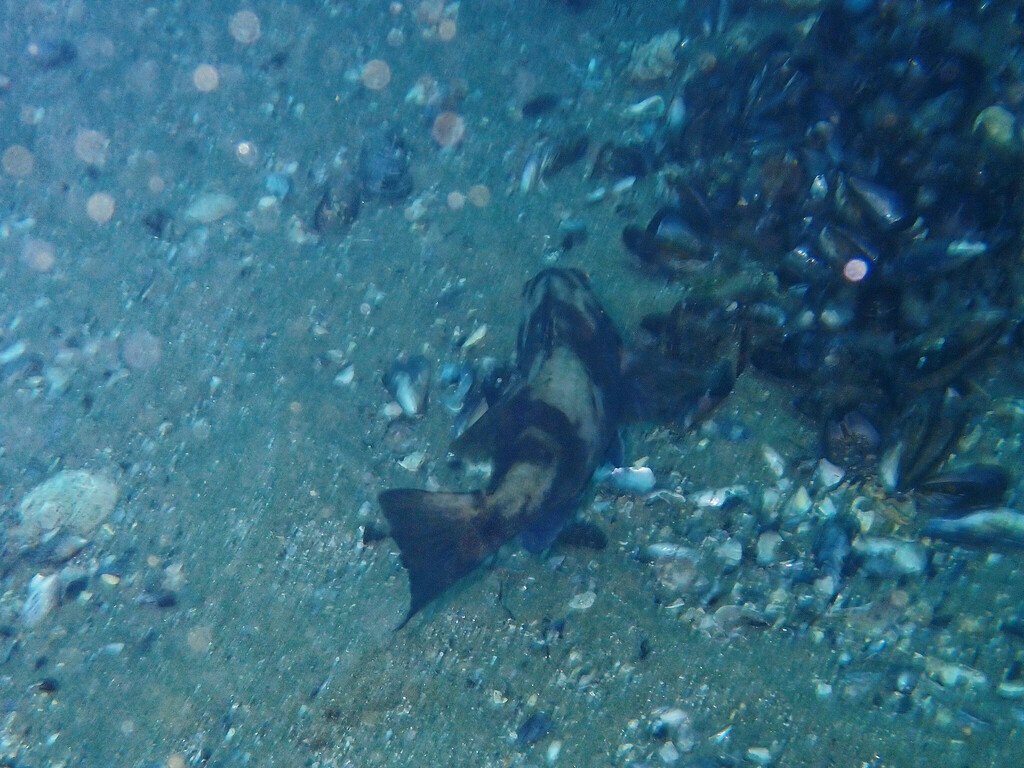
(c) Donald Davesne, some rights reserved (CC BY) · licence
Family: Serranidae · Class: Actinopterygii · Order: Perciformes
Paralabrax nebulifer (Barred Sand Bass) is a California animal in the Serranidae family.
The barred sand bass is a marine fish species belonging to the family Serranidae, characterized by its distinctive barred pattern and robust body structure. Adults typically reach lengths of 40-65 cm (16-26 inches), with a maximum recorded length of approximately 66 cm (26 inches). The species displays a grayish to brownish coloration with dark vertical bars along the sides, which give the fish its common name. The body is laterally compressed with a relatively large mouth and prominent lower jaw. Barred sand bass range from Santa Cruz, California, to Todos Santos in southern Baja California, Mexico, though they are rare north of Point Conception and more abundant from the Santa Barbara Channel southward (California Department of Fish and Wildlife). The species shows a clear preference for warmer southern California waters, with populations concentrated in coastal areas from Los Angeles County through San Diego County and extending into Mexican waters. This species inhabits sandy and muddy bottoms in nearshore marine environments, typically at depths ranging from shallow intertidal zones to approximately 183 meters (600 feet). Barred sand bass frequent bays, harbors, and coastal areas with soft substrates, often associating with eelgrass beds and other structured habitats. Juveniles commonly utilize shallow bay environments, including areas like Alamitos Bay in southern California, where they co-occur with other species such as California halibut and various rockfish species. Barred sand bass are opportunistic predators that feed primarily on small fish, crustaceans, and cephalopods. Their diet includes anchovies, sardines, croakers, and various invertebrates found in sandy bottom communities. The species exhibits seasonal movements related to spawning and feeding activities. Spawning occurs during warmer months, typically from late spring through early fall, with peak activity during summer. Females produce pelagic eggs that drift in the water column before hatching into planktonic larvae. The barred sand bass supports both commercial and recreational fisheries in California, though recreational fishing comprises the majority of harvest. The species is commonly caught by recreational anglers targeting other species such as white seabass and kelp bass. According to California Department of Fish and Wildlife monitoring programs, barred sand bass populations appear stable, though comprehensive stock assessments are limited. The species faces typical coastal marine fish threats including habitat degradation, pollution, and fishing pressure, but currently shows no signs of significant population decline. Water quality in bays and nearshore areas remains important for maintaining healthy populations, particularly for juvenile recruitment in estuarine nursery habitats.
Classification
Class: Actinopterygii · Order: Perciformes · Family: Serranidae
Frequently asked questions
How is Paralabrax nebulifer classified?
Paralabrax nebulifer belongs to class Actinopterygii, order Perciformes, family Serranidae.
What family does Paralabrax nebulifer belong to?
Paralabrax nebulifer is in the Serranidae family.
What is Paralabrax nebulifer?
The barred sand bass is a marine fish species belonging to the family Serranidae, characterized by its distinctive barred pattern and robust body structure.
Is Paralabrax nebulifer found in California?
Yes. Paralabrax nebulifer is recorded in California in The California Species Project's catalogue.
Related species
Other California species in the same genus, family, or bioregion.
Data from The California Species Project — 14,000+ California species with verified data from CNPS, CDFW, USFWS, and more.