Parancistrocerus declivatus
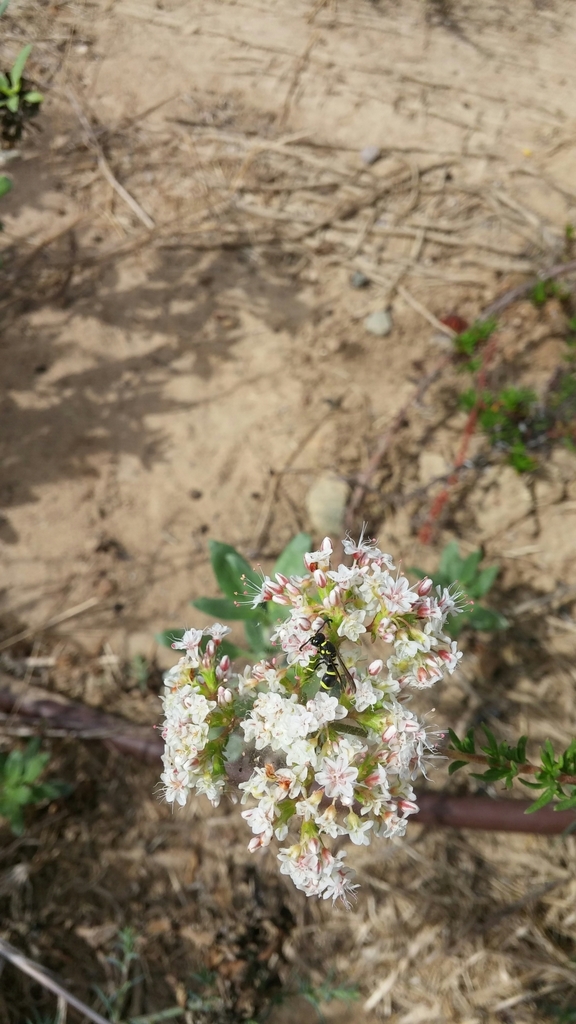
(c) sdash, some rights reserved (CC BY) · licence
Family: Vespidae · Class: Insecta · Order: Hymenoptera
Parancistrocerus declivatus is a California animal in the Vespidae family.
Parancistrocerus declivatus is a solitary wasp in the family Vespidae, subfamily Eumeninae (potter and mason wasps). This species belongs to a genus of small to medium-sized wasps characterized by their distinctive nest-building behavior and parasitoid lifestyle. Adult females typically measure 8-12 mm in length, with males slightly smaller at 6-10 mm. The body displays the typical vespid coloration pattern of black with yellow markings, though specific color patterns for this species have not been well documented in the available literature. The distribution of P. declivatus appears to be restricted to western North America, with confirmed records from California. However, detailed range information for this species remains limited in published sources. Like other members of the genus Parancistrocerus, this species likely has a patchy distribution corresponding to suitable habitat and host availability. The genus contains several species with narrow geographic ranges, suggesting specialized ecological requirements. Habitat preferences for P. declivatus have not been thoroughly documented, though other Parancistrocerus species typically inhabit areas with abundant dead wood, plant stems, or existing cavities suitable for nest construction. These wasps often utilize oak woodlands, chaparral, and mixed forest environments where they can find appropriate nesting sites and prey. Elevation ranges and specific microhabitat requirements for this species require further study. As a member of the Eumeninae, P. declivatus exhibits the characteristic behavior of provisioning individual brood cells with paralyzed caterpillars. Females construct nests in hollow plant stems, abandoned beetle galleries, or similar cavities, creating mud partitions between cells. Each cell receives a single egg and multiple paralyzed lepidopteran larvae that serve as food for the developing wasp larva. The female hunting behavior involves searching for appropriate caterpillars, which are stung and paralyzed before being transported to the nest. Seasonal activity patterns and flight periods for this species have not been well documented, though most Parancistrocerus species are active during warmer months when their prey is abundant. This species does not appear on federal or state endangered species lists, and its conservation status has not been formally assessed. Like many specialized insects, P. declivatus may face challenges from habitat loss, particularly the removal of dead wood and native vegetation that provides nesting sites. The limited scientific documentation of this species highlights the need for additional taxonomic and ecological research on North American Eumeninae. Many wasp species in this subfamily remain poorly studied despite their important ecological roles as predators of pest insects. Detailed ecological studies of this species are lacking. The above information synthesizes available taxonomic knowledge and inferences from closely related species. If you have additional verified information about this species' biology, distribution, or ecology, please contact us to help improve this species account.
Classification
Class: Insecta · Order: Hymenoptera · Family: Vespidae
Frequently asked questions
How is Parancistrocerus declivatus classified?
Parancistrocerus declivatus belongs to class Insecta, order Hymenoptera, family Vespidae.
What family does Parancistrocerus declivatus belong to?
Parancistrocerus declivatus is in the Vespidae family.
What is Parancistrocerus declivatus?
Parancistrocerus declivatus is a solitary wasp in the family Vespidae, subfamily Eumeninae (potter and mason wasps).
Is Parancistrocerus declivatus found in California?
Yes. Parancistrocerus declivatus is recorded in California in The California Species Project's catalogue.
Related species
Other California species in the same genus, family, or bioregion.
Data from The California Species Project — 14,000+ California species with verified data from CNPS, CDFW, USFWS, and more.