Paranomada californica
California Cuckoo Bee
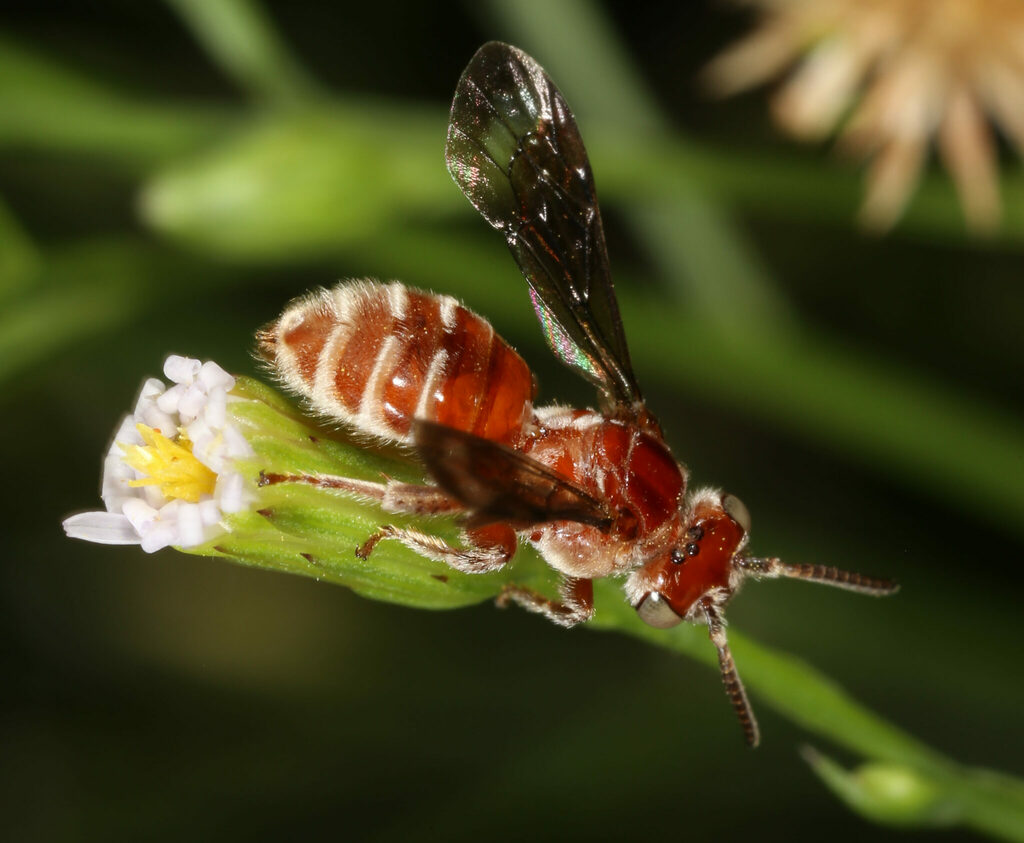
(c) jcowles, some rights reserved (CC BY) · licence
Family: Nomadidae · Class: Insecta · Order: Hymenoptera
Conservation status: G1 S1
Paranomada californica (California Cuckoo Bee) is a California animal in the Nomadidae family.
The California cuckoo bee is a cleptoparasitic species in the family Nomadidae. As a cuckoo bee, this species does not construct its own nests but instead infiltrates the nests of host bees to lay eggs, with the developing larvae consuming the host's provisions and potentially the host larvae themselves. Physical characteristics of Paranomada californica have not been well documented in the scientific literature. Like other members of the genus Paranomada, this species likely exhibits the typical wasp-like appearance of nomadid bees, with a relatively hairless body and distinctive coloration patterns that may aid in mimicking or avoiding detection by host species. The geographic range of this species appears to be restricted to California, as indicated by both its common and scientific names. However, specific distribution data within the state remains poorly documented. The species' rarity is reflected in its global and state conservation ranking of G1 S1, indicating it is critically imperiled both globally and within California. Habitat requirements for Paranomada californica are unknown, according to NatureServe Explorer. This knowledge gap significantly hampers conservation efforts, as understanding habitat needs is fundamental to species protection and management. The species' habitat preferences are likely tied to those of its host bee species, but the specific host relationship has not been confirmed. The life history and behavior of this species remain largely undocumented. California Department of Fish and Wildlife notes indicate there is no published information on the life history or behavior of this species, though it is confirmed to be a cleptoparasite of other bees. As with other cuckoo bees, females likely seek out active nests of host species, enter them to lay eggs, and depend on the host's collected pollen and nectar provisions for larval development. The timing of emergence, mating behavior, host-seeking strategies, and seasonal activity patterns have not been studied. The conservation status of Paranomada californica is concerning given its G1 S1 ranking, which indicates the species is at extreme risk of extinction. However, determining direct threats to this species is difficult due to the lack of information about its habitat requirements and host associations. Without knowledge of specific habitat needs or host relationships, targeted conservation strategies cannot be effectively developed or implemented. The paucity of information about this species highlights the broader challenge of conserving California's native bee fauna. With approximately 1,600 native bee species in California, many rare or specialized species like Paranomada californica remain poorly studied despite their potential ecological importance and conservation needs. Scientific documentation for this species remains extremely limited. The information presented here is based on available sources including NatureServe Explorer and California Department of Fish and Wildlife records. If you have additional verified information about this species' biology, distribution, or ecology, please contact us to help improve this species account.
Classification
Class: Insecta · Order: Hymenoptera · Family: Nomadidae
Conservation status
G1 S1
Frequently asked questions
How is Paranomada californica classified?
Paranomada californica belongs to class Insecta, order Hymenoptera, family Nomadidae.
What family does Paranomada californica belong to?
Paranomada californica is in the Nomadidae family.
Is Paranomada californica protected or of conservation concern?
Paranomada californica carries the following status: G1 S1.
What is Paranomada californica?
The California cuckoo bee is a cleptoparasitic species in the family Nomadidae.
Is Paranomada californica found in California?
Yes. Paranomada californica is recorded in California in The California Species Project's catalogue.
More California species
This species has no close relatives in our California data — here are other species to explore.
Data from The California Species Project — 14,000+ California species with verified data from CNPS, CDFW, USFWS, and more.