Parapediasia teterrella
Bluegrass Webworm Moth
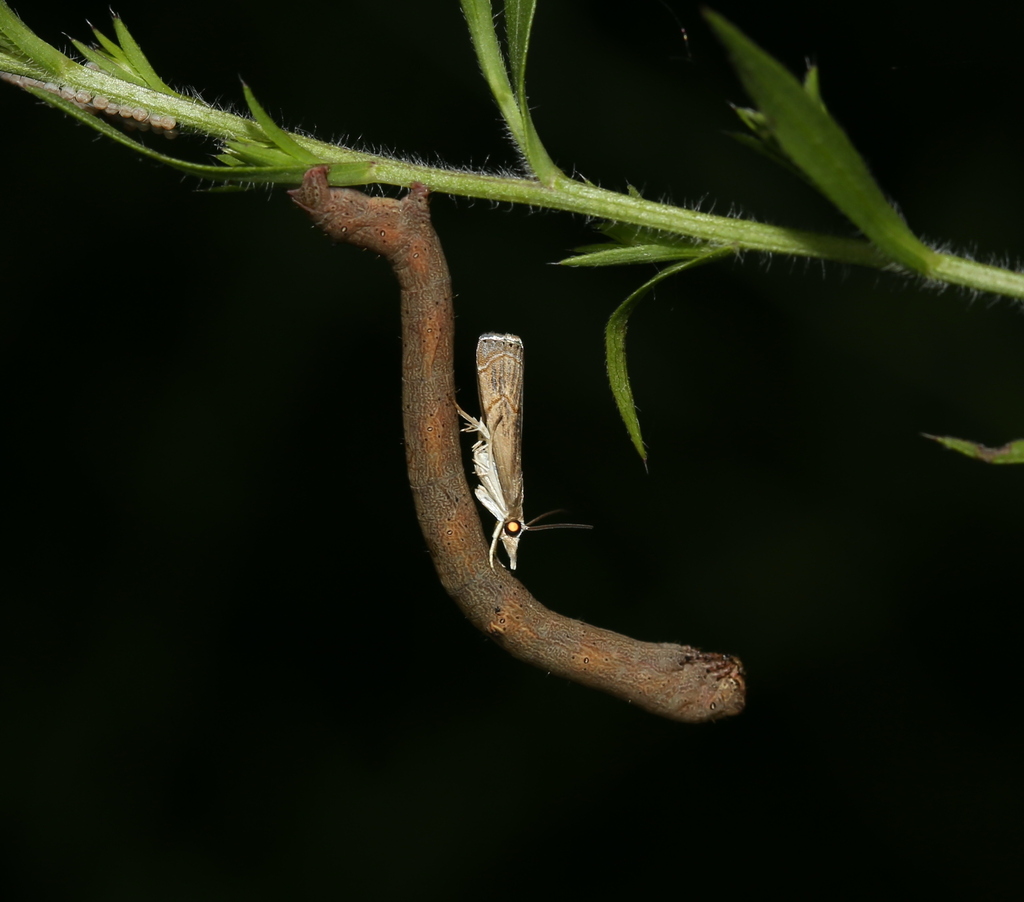
(c) David George, some rights reserved (CC BY) · licence
Family: Crambidae · Class: Insecta · Order: Lepidoptera
Parapediasia teterrella (Bluegrass Webworm Moth) is a California animal in the Crambidae family.
The Bluegrass Webworm Moth (Parapediasia teterrella) is a small member of the grass moth family Crambidae. Adults typically measure 12 to 18 mm in wingspan, with forewings displaying a pale brown to buff coloration marked by darker brown longitudinal streaks and subtle crosslines. The hindwings are lighter, ranging from pale gray to whitish with reduced markings. Males can be distinguished from females by their more pointed forewings and feathery antennae. At rest, adults hold their wings closely against the body in a characteristic triangular profile typical of crambid moths. This species has a wide distribution across North America, ranging from southern Canada through the United States into northern Mexico. In California, Parapediasia teterrella occurs throughout much of the state, from coastal regions to inland valleys and foothills. The species has been documented in multiple counties across diverse elevational zones, though it appears most common in areas with suitable grass habitat. Bluegrass Webworm Moths inhabit open grasslands, prairies, agricultural areas, and disturbed sites where their host grasses are present. The species shows particular association with bluegrass species (Poa spp.) and other cool-season grasses, though larvae may also feed on various other graminoids. Adults are typically found in areas ranging from sea level to moderate elevations, frequenting both native grasslands and anthropogenic habitats such as lawns, golf courses, and agricultural margins. Larvae construct silken webs or tubes at the base of grass clumps, where they feed on grass blades and crowns during night hours. The caterpillars are pale green to brownish with dark heads and reach approximately 15 to 20 mm in length when fully developed. Multiple generations occur annually in warmer regions, with adults flying from spring through fall. Peak flight activity typically occurs during evening and nighttime hours, when adults are attracted to artificial lights. Mating occurs shortly after emergence, with females depositing eggs singly or in small clusters on or near host plants. Parapediasia teterrella is not currently listed under federal or state endangered species legislation. The species appears to maintain stable populations across its range and has likely benefited from human activities that create suitable grass habitat. Agricultural practices, urbanization, and the widespread cultivation of turf grasses have potentially expanded available habitat for this adaptable species. In some regions, larvae are considered minor turf pests due to their feeding damage to grass crowns and roots, though economic impact is generally limited. The species demonstrates considerable ecological adaptability, successfully colonizing both native and introduced grass communities. Climate change may affect the species' distribution and phenology, particularly in terms of the number of annual generations and seasonal timing of adult flights. However, the broad host range and habitat tolerance of Parapediasia teterrella suggest it will likely persist across much of its current range under changing environmental conditions.
Classification
Class: Insecta · Order: Lepidoptera · Family: Crambidae
Frequently asked questions
How is Parapediasia teterrella classified?
Parapediasia teterrella belongs to class Insecta, order Lepidoptera, family Crambidae.
What family does Parapediasia teterrella belong to?
Parapediasia teterrella is in the Crambidae family.
What is Parapediasia teterrella?
The Bluegrass Webworm Moth (Parapediasia teterrella) is a small member of the grass moth family Crambidae.
Is Parapediasia teterrella found in California?
Yes. Parapediasia teterrella is recorded in California in The California Species Project's catalogue.
Related species
Other California species in the same genus, family, or bioregion.
Data from The California Species Project — 14,000+ California species with verified data from CNPS, CDFW, USFWS, and more.