Parapsyche extensa
King's Creek Parapsyche Caddisfly
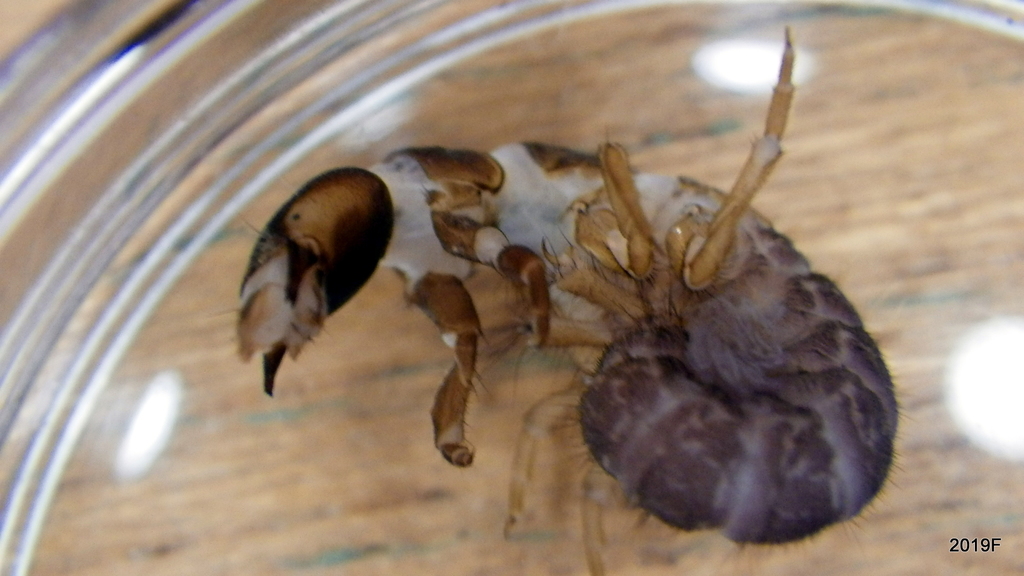
no rights reserved · CC0
Family: Hydropsychidae · Class: Insecta · Order: Trichoptera
Conservation status: G1 S1
Parapsyche extensa (King's Creek Parapsyche Caddisfly) is a California animal in the Hydropsychidae family.
The King's Creek Parapsyche Caddisfly is an aquatic insect in the family Hydropsychidae, subfamily Arctopsychinae. As a member of the order Trichoptera, this species exhibits the typical caddisfly life cycle with aquatic larval stages and terrestrial adults. Adult caddisflies generally possess elongated antennae, tent-like wing posture when at rest, and reduced or absent mouthparts. Specific morphological details for Parapsyche extensa have not been comprehensively documented in available literature. This species has an extremely restricted range, endemic to California with a global rank of G1, indicating it is critically imperiled worldwide. The species' distribution appears to be limited to a single watershed system, as suggested by its common name referencing King's Creek. Current range data indicates the species occurs in a very localized area within California, though specific geographic boundaries require additional documentation. The King's Creek Parapsyche Caddisfly inhabits freshwater aquatic environments, typical of the Hydropsychidae family. Larvae of hydropsychid caddisflies generally construct fixed retreats or nets in flowing water, often attaching to rocks, logs, or vegetation in streams and rivers. The subfamily Arctopsychinae typically favors cool, well-oxygenated streams with moderate to fast flow rates. Specific habitat requirements for P. extensa, including elevation range, water temperature preferences, and substrate requirements, have not been well documented in available scientific literature. Like other members of the Hydropsychidae family, larval stages are likely filter-feeders, using silk nets to capture organic particles, algae, and small invertebrates from the water column. Adults typically emerge during specific seasonal periods and engage in mating flights near water sources. The species' life cycle duration, breeding seasonality, and specific ecological interactions within its aquatic ecosystem remain poorly studied. Detailed behavioral and ecological studies are needed to understand reproduction timing, larval development periods, and adult longevity. The species' conservation status reflects its extreme rarity, with both global and state rankings of G1 and S1 respectively, indicating critical imperilment. As of December 2025, the species appears on the U.S. Fish and Wildlife Service species database but does not currently hold federal listing status under the Endangered Species Act. The highly restricted range makes this species particularly vulnerable to habitat degradation, water quality changes, climate change impacts, and human activities affecting stream ecosystems. Threats likely include watershed development, agricultural runoff, altered hydrology, and temperature increases associated with climate change. The limited scientific documentation for this species represents a significant knowledge gap in California's aquatic invertebrate diversity. This species is included on the California Department of Fish and Wildlife's Special Animals List. Conservation efforts would benefit from targeted surveys to better define the species' current distribution, population size, and specific habitat requirements. Given the critical conservation ranking, immediate attention to watershed protection and water quality maintenance within the species' range is essential for preventing extinction. Long-term monitoring programs and research into the species' ecology are crucial for developing effective conservation strategies.
Classification
Class: Insecta · Order: Trichoptera · Family: Hydropsychidae
Conservation status
G1 S1
Frequently asked questions
How is Parapsyche extensa classified?
Parapsyche extensa belongs to class Insecta, order Trichoptera, family Hydropsychidae.
What family does Parapsyche extensa belong to?
Parapsyche extensa is in the Hydropsychidae family.
Is Parapsyche extensa protected or of conservation concern?
Parapsyche extensa carries the following status: G1 S1.
What is Parapsyche extensa?
The King's Creek Parapsyche Caddisfly is an aquatic insect in the family Hydropsychidae, subfamily Arctopsychinae.
Is Parapsyche extensa found in California?
Yes. Parapsyche extensa is recorded in California in The California Species Project's catalogue.
Related species
Other California species in the same genus, family, or bioregion.
Data from The California Species Project — 14,000+ California species with verified data from CNPS, CDFW, USFWS, and more.