Parasaissetia nigra
Black Scale
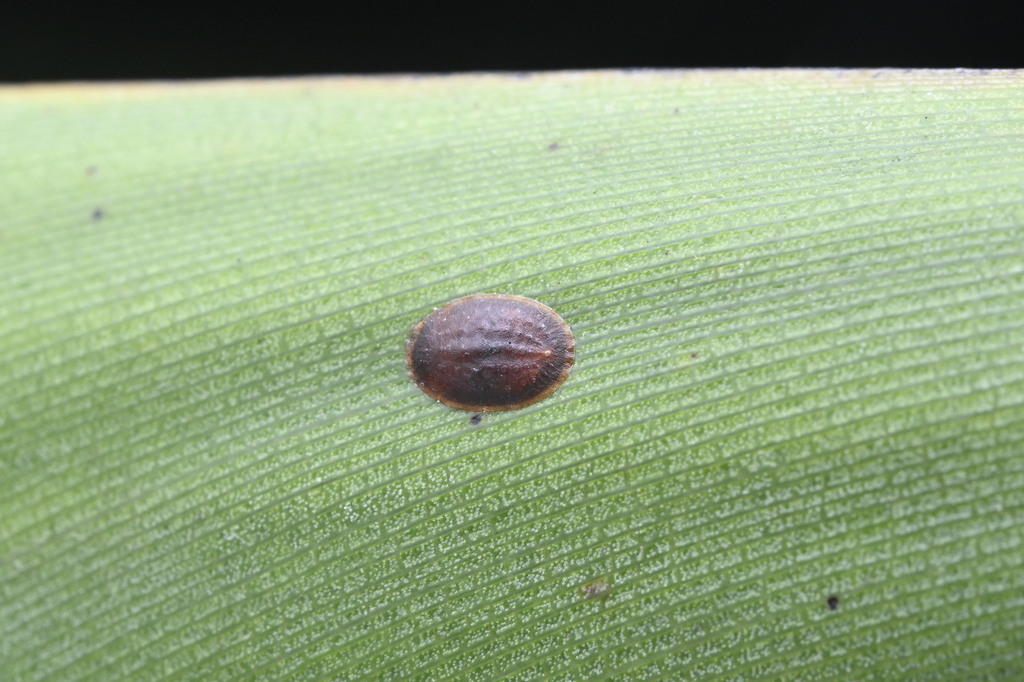
(c) Saryu Mae 前 朝琉, some rights reserved (CC BY) · licence
Family: Coccidae · Class: Insecta · Order: Hemiptera
Parasaissetia nigra (Black Scale) is a California animal in the Coccidae family.
The black scale (Parasaissetia nigra) is a soft scale insect in the family Coccidae that parasitizes a wide variety of host plants. Adult females are characterized by their dark brown to black, oval-shaped bodies that measure approximately 3-5 mm in length. The dorsal surface is typically smooth and convex, with a glossy appearance that distinguishes this species from other scale insects. Males are smaller and winged, though they are rarely observed due to their brief lifespan. Black scale has a cosmopolitan distribution and occurs throughout California, particularly in coastal and inland valleys where suitable host plants are abundant. The species is found in both natural and cultivated environments across the state's Mediterranean climate zones. While native to Africa, black scale has become established in warm temperate and subtropical regions worldwide, including much of California's agricultural and urban landscapes. This scale insect inhabits a diverse range of plant communities, from citrus groves and ornamental gardens to native chaparral and oak woodland ecosystems. Black scale demonstrates extensive host plant range, parasitizing numerous plant species including citrus trees, oleander, pittosporum, olive, and various native California shrubs (UC IPM 2024). The species thrives in areas with mild winters and warm summers, typically in lower elevation zones where temperatures remain favorable for year-round development. Black scale exhibits a complex life cycle with multiple generations per year in California's climate. Females are parthenogenetic, reproducing without mating and giving birth to live young rather than laying eggs. Each female produces numerous offspring during her lifetime (UC IPM 2024). The mobile crawler stage disperses to find suitable feeding sites on host plants, where they insert their stylets into plant tissue to feed on phloem sap. As they mature, the scales become sessile and develop their characteristic protective waxy covering. The species shows seasonal population peaks typically occurring in late spring and early fall. From a conservation perspective, black scale is not a protected species but rather is considered an agricultural and horticultural pest. The insect can cause significant economic damage to citrus crops and ornamental plants by reducing plant vigor, causing chlorosis, and promoting sooty mold growth through honeydew production. Biological control programs have been implemented using parasitic wasps, including species in the genus Metaphycus, which help regulate black scale populations (UC IPM 2024). Integrated pest management strategies combine biological control with selective pesticide applications when necessary. Climate change may influence the species' distribution and seasonal activity patterns, potentially expanding its range into previously unsuitable areas as temperatures warm. The species serves as a host for various natural enemies and plays a role in food webs, supporting populations of beneficial insects and other arthropods that feed on scale insects and their honeydew secretions.
Classification
Class: Insecta · Order: Hemiptera · Family: Coccidae
Frequently asked questions
How is Parasaissetia nigra classified?
Parasaissetia nigra belongs to class Insecta, order Hemiptera, family Coccidae.
What family does Parasaissetia nigra belong to?
Parasaissetia nigra is in the Coccidae family.
What is Parasaissetia nigra?
The black scale (Parasaissetia nigra) is a soft scale insect in the family Coccidae that parasitizes a wide variety of host plants.
Is Parasaissetia nigra found in California?
Yes. Parasaissetia nigra is recorded in California in The California Species Project's catalogue.
Related species
Other California species in the same genus, family, or bioregion.
Data from The California Species Project — 14,000+ California species with verified data from CNPS, CDFW, USFWS, and more.