Parasemia plantaginis
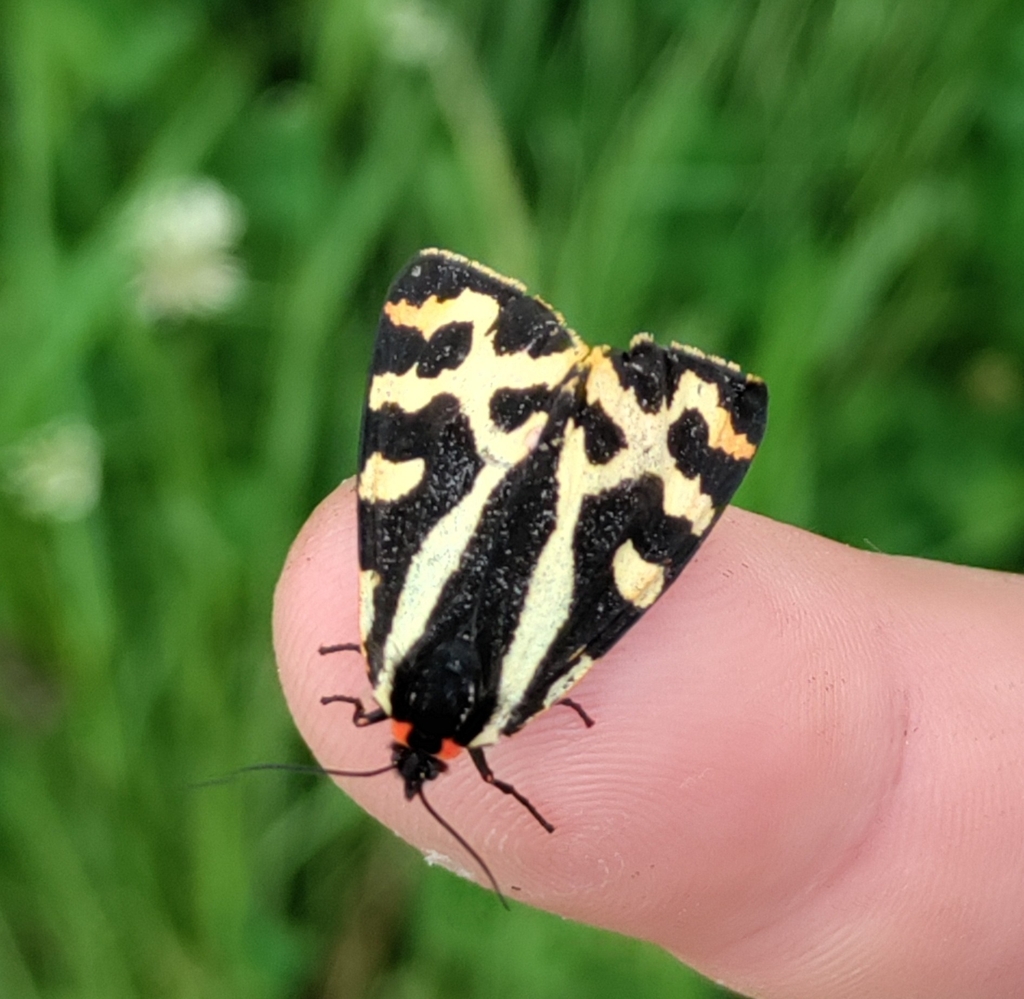
(c) David Sandler, some rights reserved (CC BY) · licence
Family: Erebidae · Class: Insecta · Order: Lepidoptera
Parasemia plantaginis is a California animal in the Erebidae family.
Parasemia plantaginis, commonly known as the wood tiger moth or plantaginis tiger moth, is a medium-sized moth in the family Erebidae. Adults have a wingspan of 30-45 mm (1.2-1.8 inches), with males typically smaller than females. The forewings display a distinctive pattern of white or cream-colored bands and spots on a dark brown to black background. Males exhibit sexual dimorphism, with forewings that are often more contrasted and hind wings that are typically yellow to orange with black spots or bands. Females usually have more subdued coloration, with forewings showing less contrast and hind wings that may be white, yellow, or pink with black markings. The thorax and abdomen are covered in dense, dark hairs with white or yellow bands. This species has a widespread distribution across northern regions of North America and Eurasia. In North America, populations occur from Alaska and northern Canada south through the mountainous regions of the western United States, including California. California populations are primarily found in the Sierra Nevada and northern Coast Ranges, typically at elevations above 1,500 meters (4,900 feet). The species also occurs in scattered montane locations throughout the Rocky Mountains and extends into the boreal forests of Canada. Parasemia plantaginis inhabits open woodlands, meadows, and forest clearings in montane and subalpine zones. The species shows a preference for areas with diverse herbaceous plant communities and is often associated with coniferous forest edges. Adults are typically found in habitats with abundant wildflowers, which serve as nectar sources. The species demonstrates cold tolerance, with populations persisting in areas that experience extended winter snow cover. Adults are primarily nocturnal and are attracted to artificial lights. Flight period varies by elevation and latitude but typically occurs from late spring through early summer, with peak activity in June and July. Females deposit eggs on various herbaceous plants, particularly those in the plantain family (Plantaginaceae), including species of Plantago. Larvae also feed on plants in the families Asteraceae and Rosaceae. The caterpillars are densely hairy with black, white, and orange bristles arranged in distinct bands. Development typically requires one year, with larvae overwintering and pupating the following spring in cocoons constructed among leaf litter or low vegetation. The conservation status of Parasemia plantaginis in California is not well documented, and the species lacks formal protection under state or federal endangered species legislation. Climate change poses potential threats to high-elevation populations through habitat shifts and altered precipitation patterns. The species may be sensitive to changes in montane ecosystem composition and the timing of snowmelt, which affects host plant phenology and adult emergence timing. Habitat fragmentation from development and recreational activities in montane areas may impact local populations, though the species' broad host plant range and widespread distribution suggest it is not currently at high risk of extinction.
Classification
Class: Insecta · Order: Lepidoptera · Family: Erebidae
Frequently asked questions
How is Parasemia plantaginis classified?
Parasemia plantaginis belongs to class Insecta, order Lepidoptera, family Erebidae.
What family does Parasemia plantaginis belong to?
Parasemia plantaginis is in the Erebidae family.
What is Parasemia plantaginis?
Parasemia plantaginis, commonly known as the wood tiger moth or plantaginis tiger moth, is a medium-sized moth in the family Erebidae.
Is Parasemia plantaginis found in California?
Yes. Parasemia plantaginis is recorded in California in The California Species Project's catalogue.
Related species
Other California species in the same genus, family, or bioregion.
Data from The California Species Project — 14,000+ California species with verified data from CNPS, CDFW, USFWS, and more.