Paravaejovis confusus
Yellow Devil Scorpion
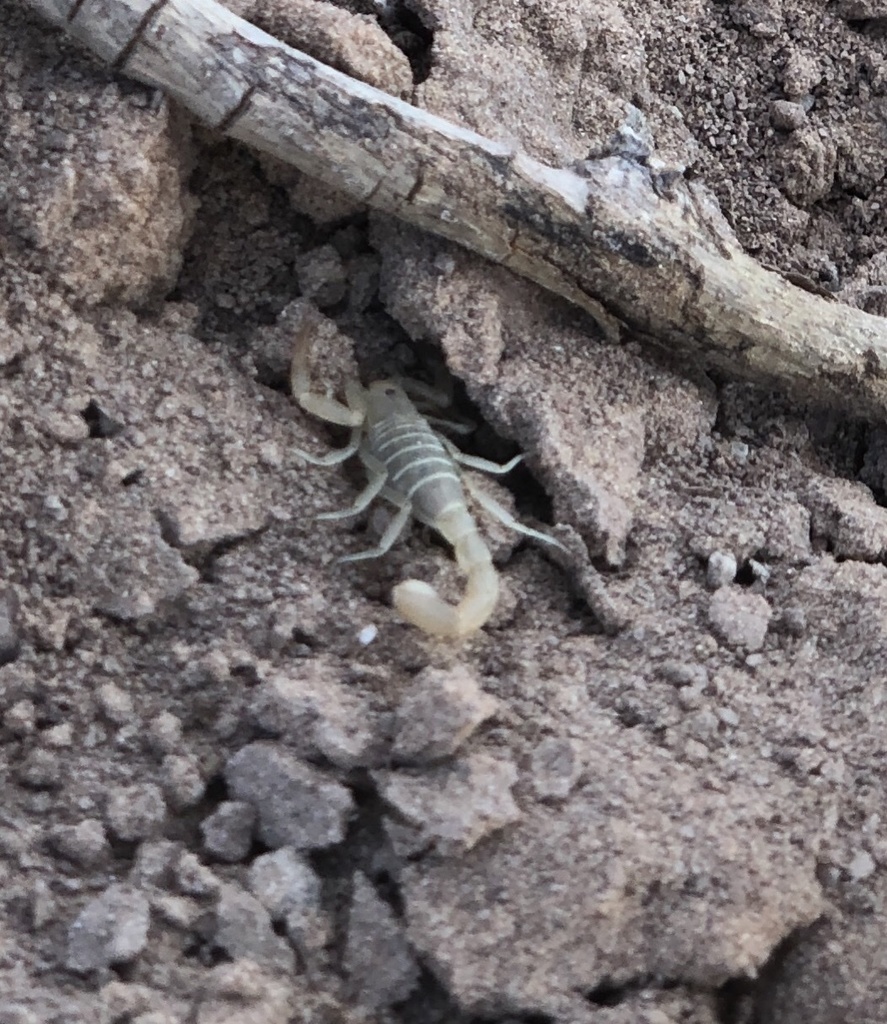
(c) Xochitl Zambrano, some rights reserved (CC BY) · licence
Family: Vaejovidae · Class: Arachnida · Order: Scorpiones
Paravaejovis confusus (Yellow Devil Scorpion) is a California animal in the Vaejovidae family.
The Yellow Devil Scorpion (Paravaejovis confusus), also known as the Yellow Ground Scorpion, is a small arachnid belonging to the family Vaejovidae. This species exhibits the typical scorpion body plan with four pairs of walking legs, prominent pedipalps ending in pincer-like chelae, and a segmented tail (metasoma) ending in a venomous stinger (telson). Like other members of its genus, P. confusus displays a yellowish to light brown coloration that provides effective camouflage against desert substrates. The species can be distinguished from related scorpions by specific morphological characteristics of the pedipalps and tail segments, though detailed taxonomic identification often requires examination under magnification. Paravaejovis confusus occurs across portions of the southwestern United States, with documented populations in California, Nevada, Arizona, Utah, Idaho, and extending into Texas. The species appears to have a relatively broad distribution within suitable desert and semi-arid habitats throughout this region. In California, the species is found in desert regions, though specific county-level distribution data requires further documentation. This scorpion inhabits desert and semi-arid environments, typically occurring in areas with sandy or rocky soils that provide suitable substrates for burrowing or shelter-seeking behavior. The species shows preference for habitats with sparse vegetation characteristic of desert scrubland and similar arid ecosystems. Like other desert scorpions, P. confusus likely seeks shelter under rocks, in crevices, or in shallow burrows during daylight hours to avoid extreme temperatures and desiccation. Yellow Devil Scorpions are nocturnal predators that emerge after dark to hunt for small invertebrate prey. Their diet likely consists primarily of insects, spiders, and other small arthropods that share their habitat. The species uses its pedipalps to capture prey and may use its stinger to subdue larger or more active prey items. Reproduction follows typical scorpion patterns, with females carrying developing young on their backs after birth. Mating likely involves complex courtship behaviors common to scorpions, including a promenade à deux where males guide females over deposited spermatophores. Currently, Paravaejovis confusus does not appear on federal or state endangered species lists and lacks formal conservation status designation. The species has been documented with 1,758 observations on iNaturalist, suggesting it may be relatively common within appropriate habitats (iNaturalist 2025). However, like many desert arachnids, populations may face pressure from habitat modification, urban development, and climate change effects on arid ecosystems. The Idaho Department of Fish and Game includes the species in their wildlife database, indicating recognition of its presence in state fauna inventories. Scientific documentation for this species remains limited, and the information presented here is based on available sources including BugGuide, iNaturalist, and state wildlife databases. Additional research on population trends, detailed habitat requirements, and ecological relationships would enhance understanding of this desert arachnid's conservation needs.
Classification
Class: Arachnida · Order: Scorpiones · Family: Vaejovidae
Frequently asked questions
How is Paravaejovis confusus classified?
Paravaejovis confusus belongs to class Arachnida, order Scorpiones, family Vaejovidae.
What family does Paravaejovis confusus belong to?
Paravaejovis confusus is in the Vaejovidae family.
What is Paravaejovis confusus?
The Yellow Devil Scorpion (Paravaejovis confusus), also known as the Yellow Ground Scorpion, is a small arachnid belonging to the family Vaejovidae.
Is Paravaejovis confusus found in California?
Yes. Paravaejovis confusus is recorded in California in The California Species Project's catalogue.
Related species
Other California species in the same genus, family, or bioregion.
Data from The California Species Project — 14,000+ California species with verified data from CNPS, CDFW, USFWS, and more.