Paravaejovis puritanus
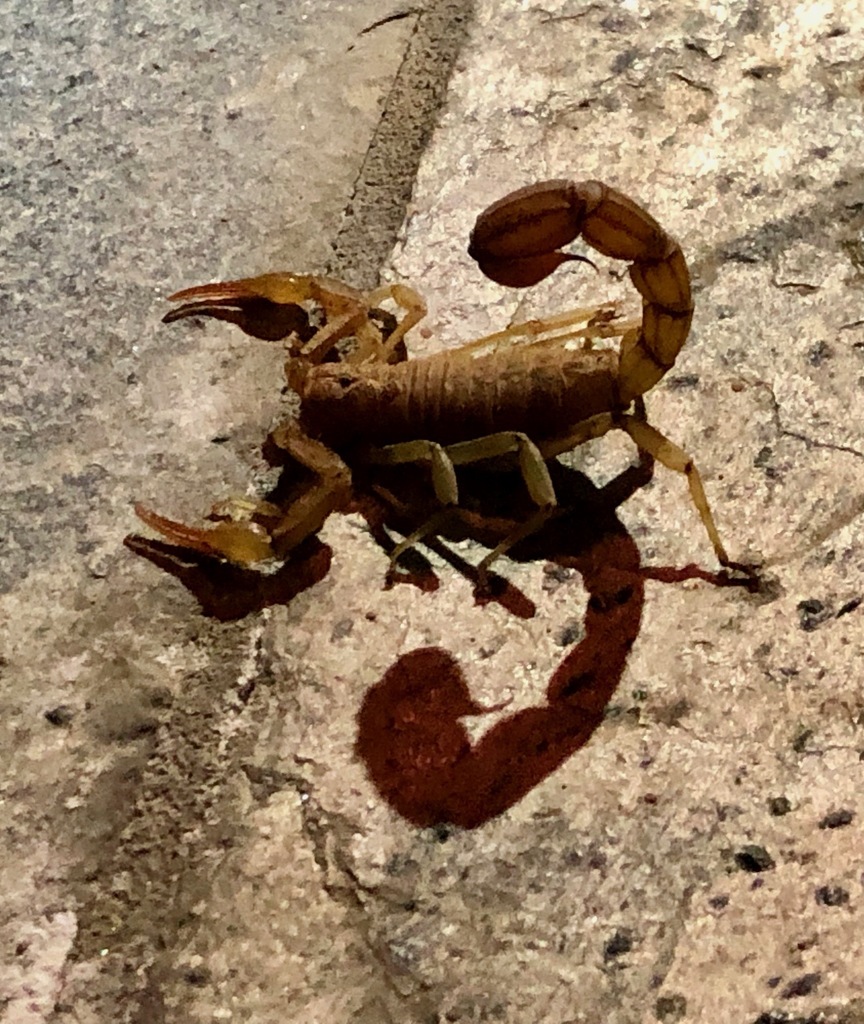
(c) desertnaturalist, some rights reserved (CC BY) · licence
Family: Vaejovidae · Class: Arachnida · Order: Scorpiones
Paravaejovis puritanus is a California animal in the Vaejovidae family.
Paravaejovis puritanus is a member of the family Vaejovidae, commonly known as the desert or mountain scorpions. This species belongs to the order Scorpiones within the class Arachnida, representing one of the numerous scorpion species found in North America. The physical characteristics of P. puritanus follow the typical vaejovid body plan, featuring the distinctive scorpion morphology with four pairs of walking legs, prominent pedipalps (pincers), and a segmented metasoma (tail) terminating in a venomous stinger. Like other members of the Vaejovidae family, this species likely exhibits the characteristic relatively slender build compared to the more robust buthid scorpions, though specific morphometric data for this species remains undocumented in accessible literature. The geographic distribution and habitat preferences of Paravaejovis puritanus have not been comprehensively documented in available scientific literature. The genus Paravaejovis historically included species found in southwestern North America, particularly in desert and semi-arid regions. However, recent taxonomic revisions within the Vaejovidae family have resulted in significant reorganization of genus-level classifications, and the current valid status and distribution of P. puritanus requires verification through updated systematic studies. Habitat requirements for this species remain poorly documented. Members of the Vaejovidae family typically inhabit rocky substrates, desert scrublands, and mountainous terrain where they seek shelter under rocks, in crevices, or in shallow burrows. These scorpions generally prefer areas with moderate moisture retention while avoiding extremely arid conditions. Elevation ranges and specific microhabitat preferences for P. puritanus have not been established in the scientific literature. Ecological information regarding the behavior and life history of Paravaejovis puritanus is extremely limited. Like other vaejovid scorpions, this species likely exhibits nocturnal activity patterns, emerging at night to hunt small arthropod prey including insects, spiders, and other arachnids. Reproduction probably follows the typical scorpion pattern of complex courtship behaviors, with females giving birth to live young that remain on the mother's back during early developmental stages. Specific details regarding breeding seasons, gestation periods, and brood sizes remain unknown for this species. The conservation status of Paravaejovis puritanus has not been formally assessed by state or federal agencies. The species does not appear in current listings from the U.S. Fish and Wildlife Service or California Department of Fish and Wildlife databases as of December 2025. This absence may reflect either stable populations not requiring protection, insufficient data to warrant assessment, or potential taxonomic uncertainty regarding the species' current valid status. The lack of comprehensive biological and ecological data represents a significant knowledge gap that limits effective conservation planning for this species. Scientific documentation for this species remains extremely limited. The information presented here represents available data, but comprehensive studies of P. puritanus ecology, distribution, and taxonomy are needed to fully understand this scorpion's biological requirements and conservation needs.
Classification
Class: Arachnida · Order: Scorpiones · Family: Vaejovidae
Frequently asked questions
How is Paravaejovis puritanus classified?
Paravaejovis puritanus belongs to class Arachnida, order Scorpiones, family Vaejovidae.
What family does Paravaejovis puritanus belong to?
Paravaejovis puritanus is in the Vaejovidae family.
What is Paravaejovis puritanus?
Paravaejovis puritanus is a member of the family Vaejovidae, commonly known as the desert or mountain scorpions.
Is Paravaejovis puritanus found in California?
Yes. Paravaejovis puritanus is recorded in California in The California Species Project's catalogue.
Related species
Other California species in the same genus, family, or bioregion.
Data from The California Species Project — 14,000+ California species with verified data from CNPS, CDFW, USFWS, and more.