Paravilla splendida
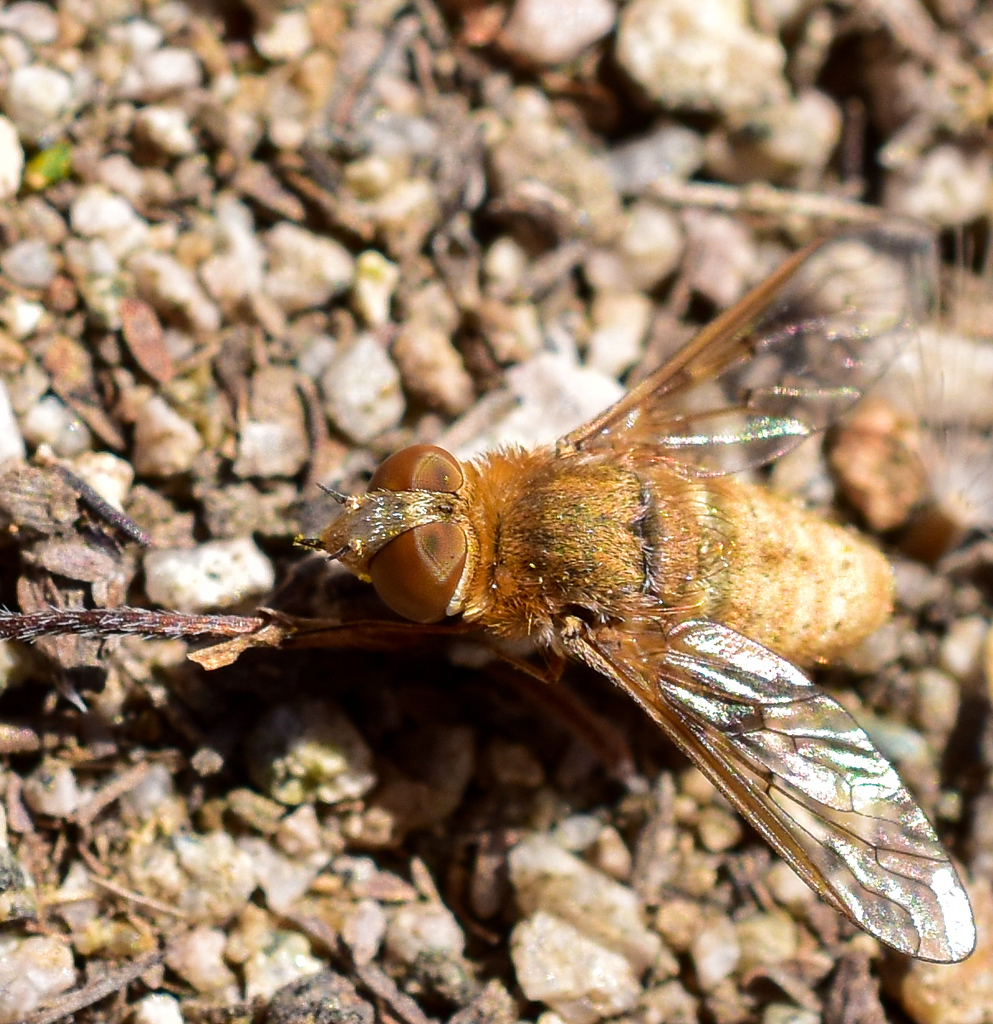
(c) Nicolás Villaseca Merino, some rights reserved (CC BY-SA) · licence
Family: Bombyliidae · Class: Insecta · Order: Diptera
Paravilla splendida is a California animal in the Bombyliidae family.
Paravilla splendida is classified within the family Bombyliidae, commonly known as bee flies, in the order Diptera. Bombyliidae is a large family of flies characterized by their robust, often fuzzy bodies and hovering flight patterns that resemble bees or other hymenopterans. Members of this family are typically beneficial insects, with adults serving as pollinators while larvae often function as parasitoids of other insects. However, comprehensive scientific documentation for Paravilla splendida specifically is extremely limited in current literature and taxonomic databases. The genus Paravilla, if valid, would be part of the broader bee fly assemblage, but detailed morphological descriptions, distribution records, and ecological information for this particular species are not readily available in standard entomological references. Bee flies in general are found across diverse habitats and exhibit considerable variation in size, coloration, and host associations. Adults typically feed on nectar and are often observed hovering near flowers, while larvae develop as parasitoids or predators in the nests or bodies of other arthropods. Without specific documentation, it is not possible to provide details about this species' physical characteristics, geographic range within California, specific habitat requirements, or conservation status. The taxonomic validity of Paravilla splendida requires verification through consultation with dipteran taxonomists and examination of type specimens. Scientific documentation for this species remains extremely limited despite thorough searches of available entomological databases and literature. The information presented here reflects the general characteristics of the Bombyliidae family to which this species is assigned. Detailed studies of this taxon's biology, distribution, host relationships, and ecological role have not been documented in accessible scientific literature. We welcome contributions of verified scientific data, photographs, specimen records, or field observations to enhance this species account. Researchers encountering specimens that may represent this species should consult with dipteran specialists for proper identification and documentation.
Classification
Class: Insecta · Order: Diptera · Family: Bombyliidae
Frequently asked questions
How is Paravilla splendida classified?
Paravilla splendida belongs to class Insecta, order Diptera, family Bombyliidae.
What family does Paravilla splendida belong to?
Paravilla splendida is in the Bombyliidae family.
What is Paravilla splendida?
Paravilla splendida is classified within the family Bombyliidae, commonly known as bee flies, in the order Diptera.
Is Paravilla splendida found in California?
Yes. Paravilla splendida is recorded in California in The California Species Project's catalogue.
Related species
Other California species in the same genus, family, or bioregion.
Data from The California Species Project — 14,000+ California species with verified data from CNPS, CDFW, USFWS, and more.