Parkesia noveboracensis
Northern Waterthrush
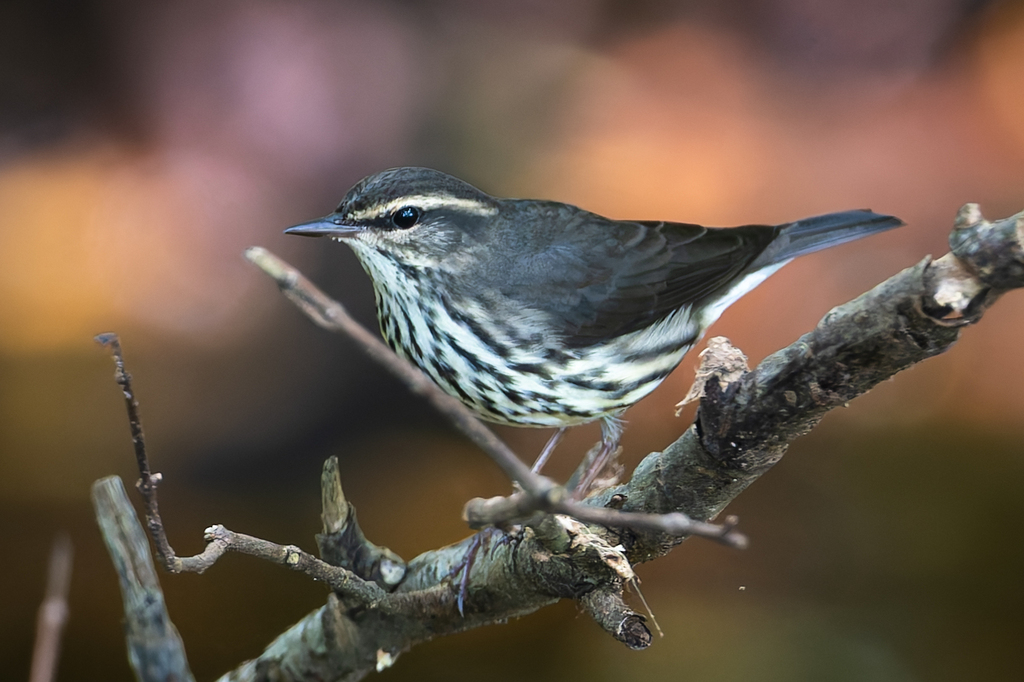
no rights reserved · CC0
Family: Parulidae · Class: Aves · Order: Passeriformes
Parkesia noveboracensis (Northern Waterthrush) is a California animal in the Parulidae family.
The Northern Waterthrush is a medium-sized warbler measuring 12.5 to 15 centimeters (4.9 to 5.9 inches) in length with a wingspan of 21 to 24 centimeters (8.3 to 9.4 inches). Adults weigh 13 to 25 grams (0.46 to 0.88 ounces). The species displays olive-brown to dark brown upperparts with a distinctive whitish to yellowish supercilium (eyebrow stripe) bordered above and below by dark brown stripes. The underparts are whitish to pale yellow with dense dark brown streaking extending from the throat to the undertail coverts. The bill is dark, straight, and relatively long for a warbler, adapted for probing. Both sexes appear similar, though males may show slightly more pronounced streaking during breeding season. The Northern Waterthrush breeds across boreal forests from Alaska to Newfoundland, extending south into the northern United States including northern Minnesota, Wisconsin, Michigan, and parts of New England. In California, the species occurs primarily as a migrant and rare winter visitor. During migration, Northern Waterthrush can be found throughout the state, with records from coastal areas, Central Valley wetlands, and montane regions. The species is most frequently observed from late April through May during spring migration and from August through September during fall migration. This species inhabits wooded swamps, bogs, slow-moving streams, and lakeshores with dense vegetation. Breeding habitat consists of northern coniferous and mixed forests near water, including black spruce bogs, alder swamps, and areas around beaver ponds. During migration and winter, Northern Waterthrush utilizes a broader range of wetland habitats including freshwater marshes, riparian woodlands, mangrove swamps, and wooded streams. The species shows strong preference for areas with standing or slow-moving water and dense understory vegetation. Northern Waterthrush are ground-foraging insectivores that wade in shallow water while searching for prey. They exhibit a characteristic walking gait with constant tail-bobbing and head-pumping motions. The diet consists primarily of aquatic and terrestrial insects, including beetles, flies, caterpillars, ants, and mosquitoes, supplemented by spiders, small crustaceans, and occasionally small fish. Breeding occurs from May through July, with females constructing cup-shaped nests on the ground or in low vegetation near water. Clutch size ranges from three to six eggs, with an incubation period of 12 to 13 days. The Northern Waterthrush is not federally listed and maintains stable populations across most of its range. The North American Bird Conservation Initiative identifies the species as a moderate conservation priority due to potential threats from habitat loss and climate change. Breeding habitat faces pressure from logging, development, and altered hydrology in boreal regions. Climate change may shift suitable breeding habitat northward, potentially reducing available habitat. The species' dependence on wetland ecosystems makes it vulnerable to water management practices and drought conditions during migration and wintering periods.
Classification
Class: Aves · Order: Passeriformes · Family: Parulidae
Frequently asked questions
How is Parkesia noveboracensis classified?
Parkesia noveboracensis belongs to class Aves, order Passeriformes, family Parulidae.
What family does Parkesia noveboracensis belong to?
Parkesia noveboracensis is in the Parulidae family.
What is Parkesia noveboracensis?
The Northern Waterthrush is a medium-sized warbler measuring 12.5 to 15 centimeters (4.9 to 5.9 inches) in length with a wingspan of 21 to 24 centimeters (8.3 to 9.4 inches).
Is Parkesia noveboracensis found in California?
Yes. Parkesia noveboracensis is recorded in California in The California Species Project's catalogue.
Related species
Other California species in the same genus, family, or bioregion.
Data from The California Species Project — 14,000+ California species with verified data from CNPS, CDFW, USFWS, and more.