Parnopes borregoensis
Borrego Parnopes Cuckoo Wasp
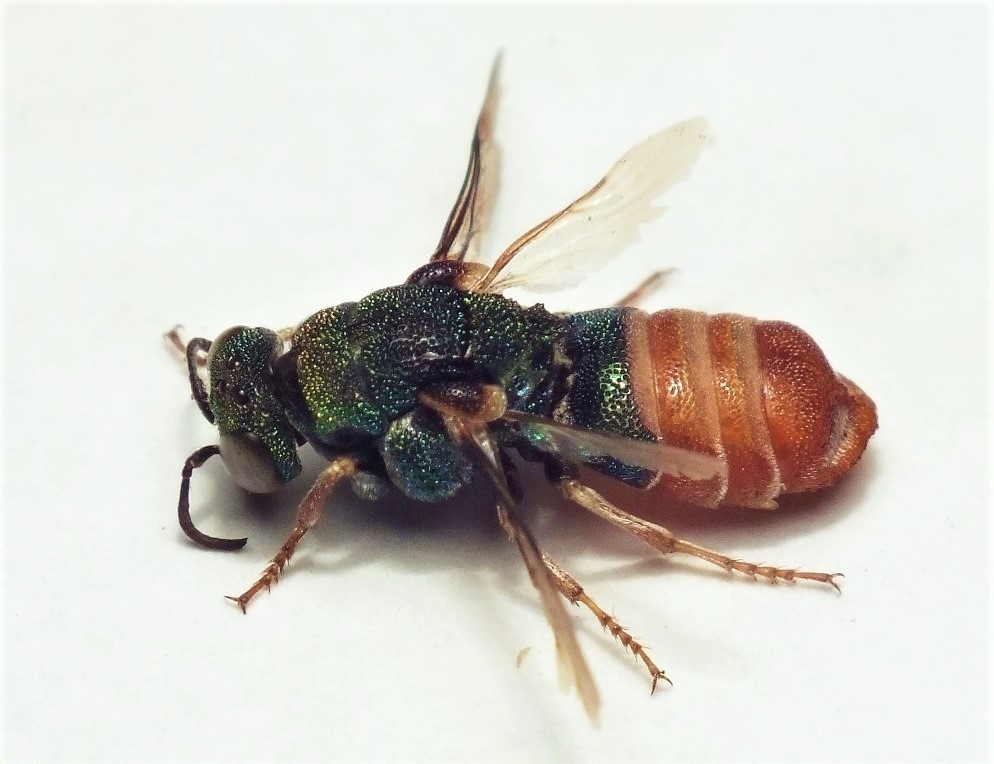
(c) Иван Пристрем, some rights reserved (CC BY) · licence
Family: Chrysididae · Class: Insecta · Order: Hymenoptera
Conservation status: G1G2 S1S2
Parnopes borregoensis (Borrego Parnopes Cuckoo Wasp) is a California animal in the Chrysididae family.
Parnopes borregoensis, commonly known as the Borrego Parnopes cuckoo wasp, is a rare chrysidid wasp endemic to southern California. This species belongs to the family Chrysididae, a group of metallic wasps known for their parasitoid lifestyle. Like other members of the genus Parnopes, this species exhibits the characteristic metallic coloration typical of cuckoo wasps (BugGuide), though specific morphological details for P. borregoensis have not been extensively documented in the scientific literature. The species is known only from the Borrego Desert region of San Diego County, California, as reflected in its scientific name. This extremely limited distribution makes P. borregoensis one of California's most geographically restricted insects. The type locality and current known range appear confined to the desert areas around Borrego Springs and the broader Anza-Borrego Desert State Park region. Parnopes borregoensis inhabits desert environments characteristic of the Colorado Desert subdivision of the Sonoran Desert. The species occurs in areas dominated by desert shrub communities, likely at elevations typical of the Borrego Valley floor and surrounding bajadas. The specific microhabitat requirements within this desert ecosystem remain poorly documented, though the species presumably requires the presence of suitable host species for reproduction. As a member of the Chrysididae, P. borregoensis exhibits a parasitoid life cycle typical of cuckoo wasps. Adult females likely seek out the nests of solitary bees or wasps to deposit their eggs, with the developing larvae consuming the host's provisions and eventually the host larva itself (BugGuide). The specific host relationships for this species have not been documented, though other Parnopes species are known to parasitize various aculeate Hymenoptera (BugGuide). Seasonal activity patterns and reproductive biology remain unstudied for this species. Parnopes borregoensis holds a conservation ranking of G1 globally, indicating it is critically imperiled worldwide (NatureServe). The species does not appear to have been assigned a California state ranking. This ranking reflects the species' extremely limited known distribution and potentially small population size. The species faces threats common to desert-endemic insects, including habitat modification, urban development pressure in the Borrego Springs area, and potential impacts from recreational activities in desert habitats (NatureServe). Climate change may pose additional long-term threats through alterations to desert precipitation patterns and temperature regimes. The species does not currently appear on federal or state endangered species lists, though its conservation status ranking suggests it warrants monitoring and potential protection measures. Scientific documentation for this species remains extremely limited, and additional research is needed to understand its basic biology, distribution, and conservation needs.
Classification
Class: Insecta · Order: Hymenoptera · Family: Chrysididae
Conservation status
G1G2 S1S2
Frequently asked questions
How is Parnopes borregoensis classified?
Parnopes borregoensis belongs to class Insecta, order Hymenoptera, family Chrysididae.
What family does Parnopes borregoensis belong to?
Parnopes borregoensis is in the Chrysididae family.
Is Parnopes borregoensis protected or of conservation concern?
Parnopes borregoensis carries the following status: G1G2 S1S2.
What is Parnopes borregoensis?
Parnopes borregoensis, commonly known as the Borrego Parnopes cuckoo wasp, is a rare chrysidid wasp endemic to southern California.
Is Parnopes borregoensis found in California?
Yes. Parnopes borregoensis is recorded in California in The California Species Project's catalogue.
Related species
Other California species in the same genus, family, or bioregion.
Data from The California Species Project — 14,000+ California species with verified data from CNPS, CDFW, USFWS, and more.