Paropsis atomaria
Dotted Paropsine Leaf Beetle
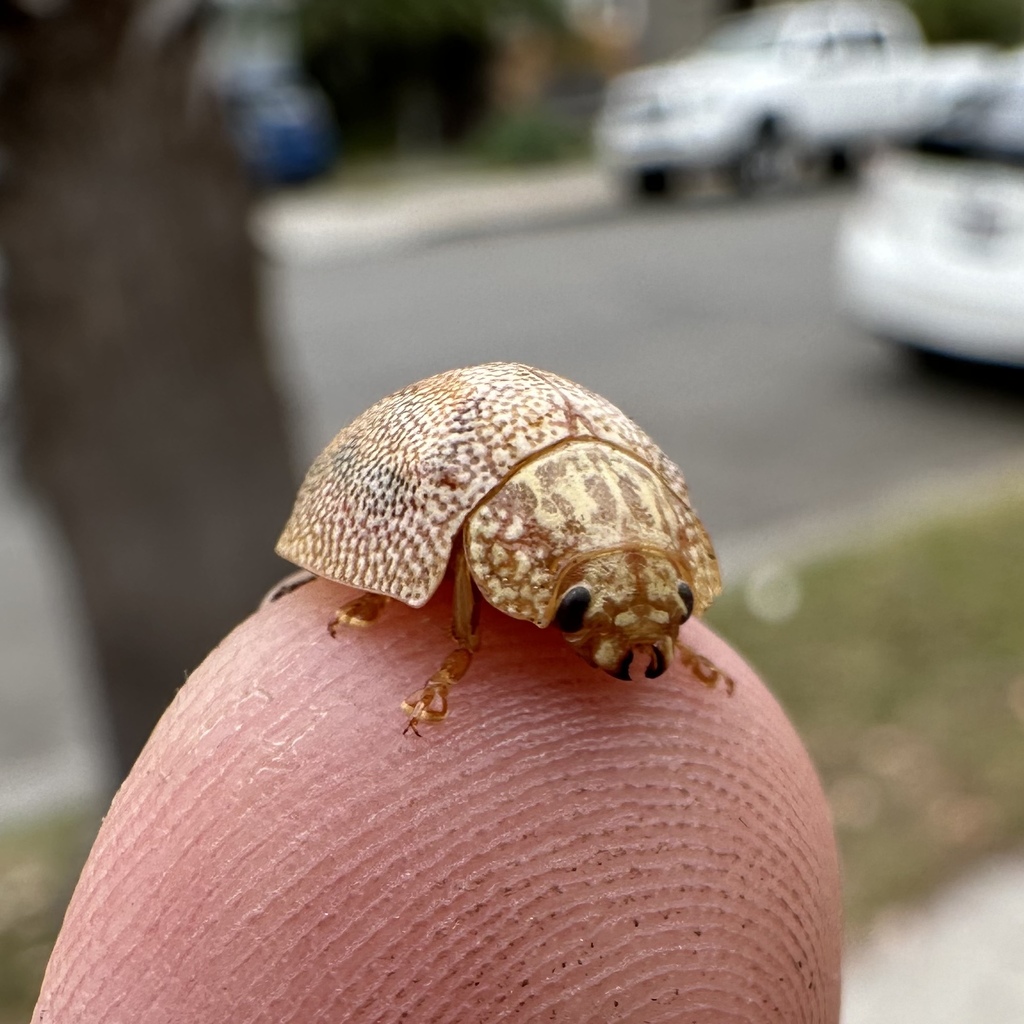
no rights reserved · CC0
Family: Chrysomelidae · Class: Insecta · Order: Coleoptera
Paropsis atomaria (Dotted Paropsine Leaf Beetle) is a California animal in the Chrysomelidae family.
The Dotted Paropsine Leaf Beetle is an invasive leaf beetle measuring approximately 3/8 inch (9.5 mm) in length. Adults are oval-shaped with distinctive yellow and orange markings and black spots on their wing covers (elytra). The bright coloration makes them conspicuous against green eucalyptus foliage. Females deposit 20-100 eggs in circular clusters around young stems and leaves. Larvae are initially yellowish with black heads and black posterior ends. Through four larval instars, they develop black stripes along the dorsal and lateral surfaces of their bodies. Mature larvae possess defensive glands at their rear ends that discharge protective droplets when threatened (UC Cooperative Extension). Native to eastern Australia from Adelaide to Brisbane, this species was first discovered in North America in August 2022, feeding on lemon-scented gum (Corymbia citriodora) in Los Angeles (UC Cooperative Extension). The beetle has rapidly spread throughout Southern California and is currently established in Los Angeles, Orange, San Diego, and San Bernardino counties, with unconfirmed reports from Ventura County. This represents the first North American record for this species. The species feeds exclusively on plants in the family Myrtaceae, particularly eucalyptus and Corymbia species. In California, it has been documented feeding on over 20 eucalyptus species including red gum (E. camaldulensis), blue gum (E. globulus), silver dollar gum (E. polyanthemos), sugar gum (E. cladocalyx), and lemon-scented gum (C. citriodora). Both adults and larvae are leaf-feeders, causing significant defoliation of host trees. In its native range, P. atomaria produces two generations annually during summer months. A single female can produce up to 600 eggs deposited at leaf or twig tips. In California, the species maintains two generations per year with peak feeding activity occurring during spring and fall seasons (UC Cooperative Extension). Larvae feed openly on foliage before dropping to the ground to pupate in leaf litter. The species can rapidly build high population densities, leading to severe defoliation of susceptible eucalyptus trees. As a recently introduced invasive species, the Dotted Paropsine Leaf Beetle poses a significant threat to California's eucalyptus trees, which have been part of the state's landscape since the mid-1800s. The beetle's ability to cause rapid defoliation and potential tree mortality makes it a pest of concern for urban forestry and landscape management. This introduction continues a pattern of eucalyptus-feeding beetle invasions in California, following other notable introductions including the eucalyptus longhorned borer in 1984. The species' broad host range and rapid reproductive capacity suggest it will continue expanding its range within California's eucalyptus-growing regions.
Classification
Class: Insecta · Order: Coleoptera · Family: Chrysomelidae
Frequently asked questions
How is Paropsis atomaria classified?
Paropsis atomaria belongs to class Insecta, order Coleoptera, family Chrysomelidae.
What family does Paropsis atomaria belong to?
Paropsis atomaria is in the Chrysomelidae family.
What is Paropsis atomaria?
The Dotted Paropsine Leaf Beetle is an invasive leaf beetle measuring approximately 3/8 inch (9.5 mm) in length.
Is Paropsis atomaria found in California?
Yes. Paropsis atomaria is recorded in California in The California Species Project's catalogue.
Related species
Other California species in the same genus, family, or bioregion.
Data from The California Species Project — 14,000+ California species with verified data from CNPS, CDFW, USFWS, and more.