Parvindela lunalonga
Meadow Tiger Beetle
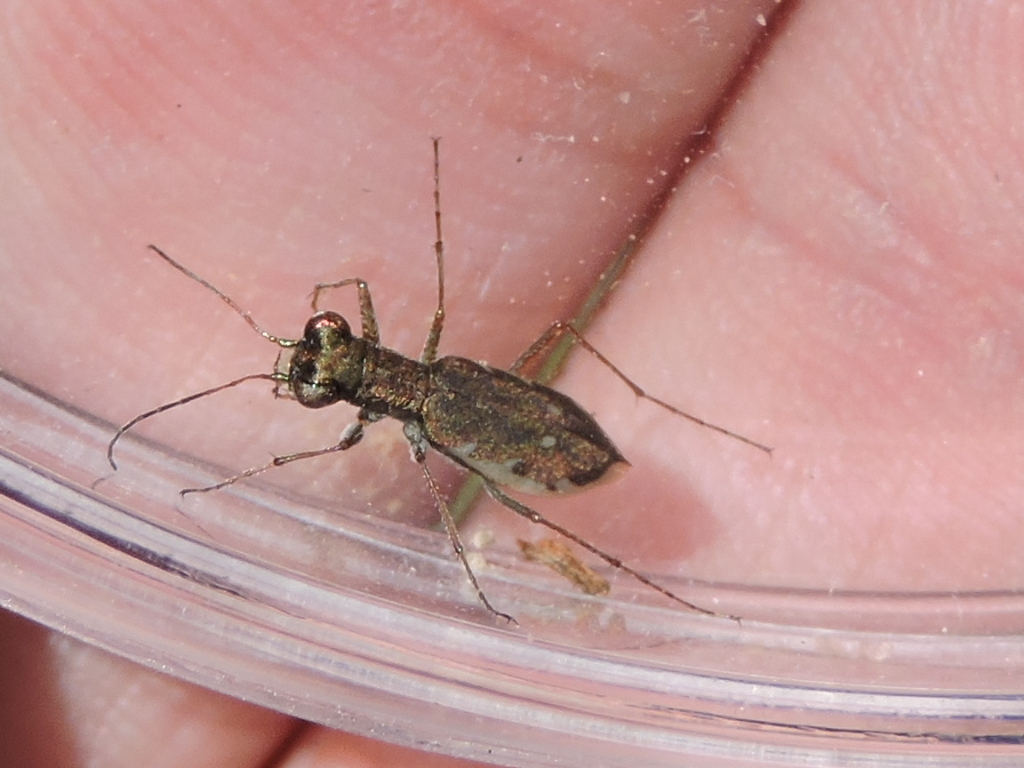
(c) Sam Kieschnick, some rights reserved (CC BY) · licence
Family: Carabidae · Class: Insecta · Order: Coleoptera
Parvindela lunalonga (Meadow Tiger Beetle) is a California animal in the Carabidae family.
The Meadow Tiger Beetle (Parvindela lunalonga) is a predatory ground beetle in the family Cicindelidae. This species represents one of the many tiger beetles native to western North America, distinguished by its specific habitat preferences and geographic distribution. Physical characteristics of P. lunalonga follow the typical tiger beetle body plan, with an elongated form adapted for rapid pursuit of prey. Like other Parvindela species, adults possess prominent mandibles used for capturing and processing small arthropod prey. The species exhibits the metallic coloration common to many tiger beetles, though specific details of size and coloration patterns have not been comprehensively documented in available literature. The Meadow Tiger Beetle occurs from northern California through northwestern Mexico, indicating a distribution along the Pacific Coast region (Kippenhan research, Colorado State University). This range suggests the species is adapted to Mediterranean and semi-arid climate zones characteristic of this geographic corridor. The species appears to be associated with specific habitat types that support its predatory lifestyle and reproductive requirements. Habitat preferences for P. lunalonga center on meadow environments, as indicated by its common name. Tiger beetles in this genus typically require open areas with appropriate soil conditions for larval development and adequate prey populations. The larval stage involves burrow construction in suitable substrate, where individuals remain for extended periods during development. Adult activity patterns likely follow seasonal cycles common to western tiger beetles, with peak activity during warmer months when prey arthropods are most abundant. Behavioral ecology of the Meadow Tiger Beetle includes the active hunting strategies characteristic of Cicindelidae. Adults are visual predators that pursue small arthropods across open ground, using their speed and agility to capture prey. The species likely exhibits territorial behavior during breeding season, with males establishing and defending territories that attract females for mating. Larval development occurs in vertical burrows where individuals ambush passing prey items. Like other tiger beetles, P. lunalonga probably requires multiple years to complete development from egg to adult. Conservation status information for Parvindela lunalonga remains limited in available databases. The species does not appear on federal or state listing status documents, suggesting it may not currently face immediate conservation concerns. However, meadow habitats throughout California and the broader western region face ongoing pressures from urban development, agricultural conversion, and climate change effects. Tiger beetles are often sensitive to habitat modification due to their specific microhabitat requirements and relatively limited dispersal capabilities. Taxonomic research has validated tiger beetles as a distinct family within Coleoptera, with Parvindela lunalonga representing one component of this diverse group (ResearchGate 2020). The species serves as an indicator of healthy meadow ecosystem function through its role as both predator and prey species within these communities. Further research is needed to document specific population trends, detailed habitat requirements, and potential conservation needs for this western North American endemic species.
Classification
Class: Insecta · Order: Coleoptera · Family: Carabidae
Frequently asked questions
How is Parvindela lunalonga classified?
Parvindela lunalonga belongs to class Insecta, order Coleoptera, family Carabidae.
What family does Parvindela lunalonga belong to?
Parvindela lunalonga is in the Carabidae family.
What is Parvindela lunalonga?
The Meadow Tiger Beetle (Parvindela lunalonga) is a predatory ground beetle in the family Cicindelidae.
Is Parvindela lunalonga found in California?
Yes. Parvindela lunalonga is recorded in California in The California Species Project's catalogue.
Related species
Other California species in the same genus, family, or bioregion.
Data from The California Species Project — 14,000+ California species with verified data from CNPS, CDFW, USFWS, and more.