Passerculus sandwichensis alaudinus
Bryant's Savannah Sparrow
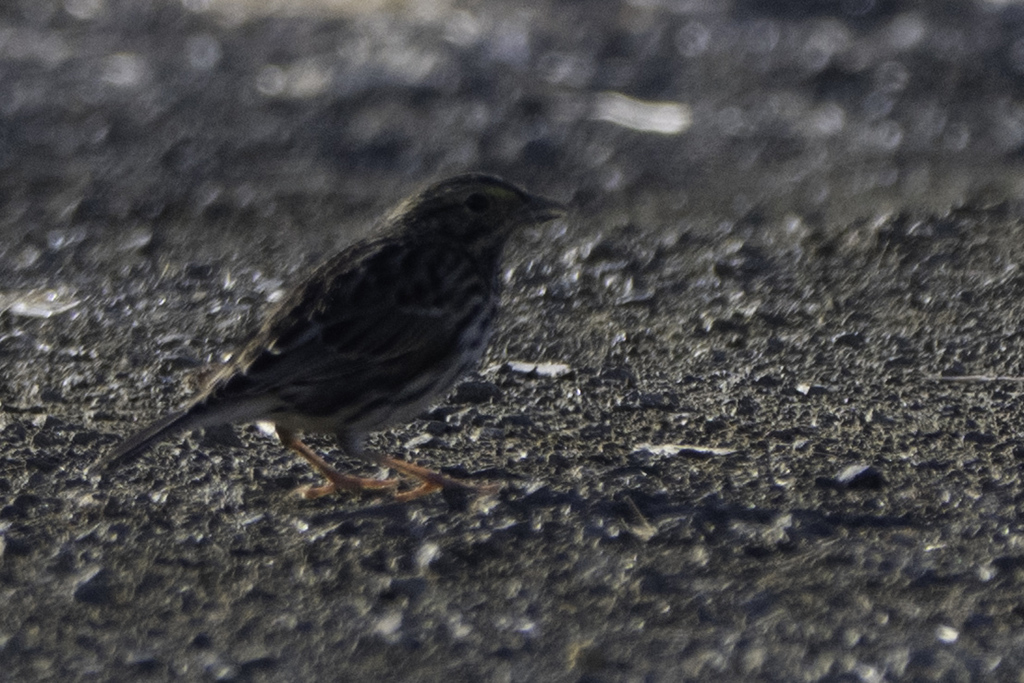
(c) cello caruso-turiello, some rights reserved (CC BY) · licence
Family: Passerellidae · Class: Aves · Order: Passeriformes
Conservation status: G5T3 S3
Passerculus sandwichensis alaudinus (Bryant's Savannah Sparrow) is a California animal in the Passerellidae family.
Bryant's Savannah Sparrow is a subspecies of the widespread Savannah Sparrow, distinguished by its adaptation to California's coastal salt marsh environments. Adults measure approximately 11-17 cm (4.3-6.7 inches) in length with a wingspan of 18-25 cm (7.1-9.8 inches). Males are typically about 5% larger than females in body size, though both sexes exhibit similar plumage patterns. The subspecies displays the characteristic Savannah Sparrow features including streaked brown upperparts, whitish underparts with dark streaking on the breast and flanks, and often a pale yellow supercilium above the eye. Bryant's Savannah Sparrow occurs exclusively along the California coast, with populations concentrated in the San Francisco Bay Area salt marshes and select coastal wetlands from Humboldt County south to San Luis Obispo County. Historical records indicate the subspecies was more widely distributed in coastal marshes, but current populations are largely restricted to remaining tidal salt marsh habitats around San Francisco Bay, including areas in Alameda, Contra Costa, Marin, San Mateo, Santa Clara, Solano, and Sonoma counties. The subspecies inhabits tidal salt marshes dominated by pickleweed (Salicornia spp.), cordgrass (Spartina spp.), and alkali heath (Frankenia salina). These birds prefer areas with a mosaic of dense vegetation for nesting cover and more open areas or channels for foraging. They typically occupy the middle to upper marsh zones where vegetation provides adequate cover while remaining accessible during high tides. Bryant's Savannah Sparrows show strong site fidelity and rarely venture far from their marsh territories. Breeding occurs from March through August, with peak nesting activity in May and June. Females construct cup-shaped nests in dense vegetation, typically 15-30 cm above ground or high tide level. Clutches contain 2-6 eggs, with an average of 3-4 eggs per clutch. The diet consists primarily of insects and other arthropods during the breeding season, including flies, beetles, caterpillars, and spiders. Seeds become increasingly important during fall and winter months, particularly from pickleweed and other salt-tolerant plants. The subspecies exhibits limited seasonal movement, remaining within or near breeding territories year-round. Bryant's Savannah Sparrow is designated as a California Species of Special Concern and holds a global rank of G5T3, indicating the subspecies faces moderate conservation risk despite the widespread nature of the parent species (California Department of Fish and Wildlife). Primary threats include habitat loss and degradation due to urban development, sea level rise, invasive plant species, and altered tidal regimes from diking and fill activities. The subspecies has experienced significant population declines coinciding with the loss of approximately 95% of San Francisco Bay's historic tidal marshlands. Current conservation efforts focus on habitat restoration, invasive species control, and protection of remaining salt marsh areas through preserve acquisition and management.
Classification
Class: Aves · Order: Passeriformes · Family: Passerellidae
Conservation status
G5T3 S3
Frequently asked questions
How is Passerculus sandwichensis alaudinus classified?
Passerculus sandwichensis alaudinus belongs to class Aves, order Passeriformes, family Passerellidae.
What family does Passerculus sandwichensis alaudinus belong to?
Passerculus sandwichensis alaudinus is in the Passerellidae family.
Is Passerculus sandwichensis alaudinus protected or of conservation concern?
Passerculus sandwichensis alaudinus carries the following status: G5T3 S3.
What is Passerculus sandwichensis alaudinus?
Bryant's Savannah Sparrow is a subspecies of the widespread Savannah Sparrow, distinguished by its adaptation to California's coastal salt marsh environments.
Is Passerculus sandwichensis alaudinus found in California?
Yes. Passerculus sandwichensis alaudinus is recorded in California in The California Species Project's catalogue.
Related species
Other California species in the same genus, family, or bioregion.
Data from The California Species Project — 14,000+ California species with verified data from CNPS, CDFW, USFWS, and more.